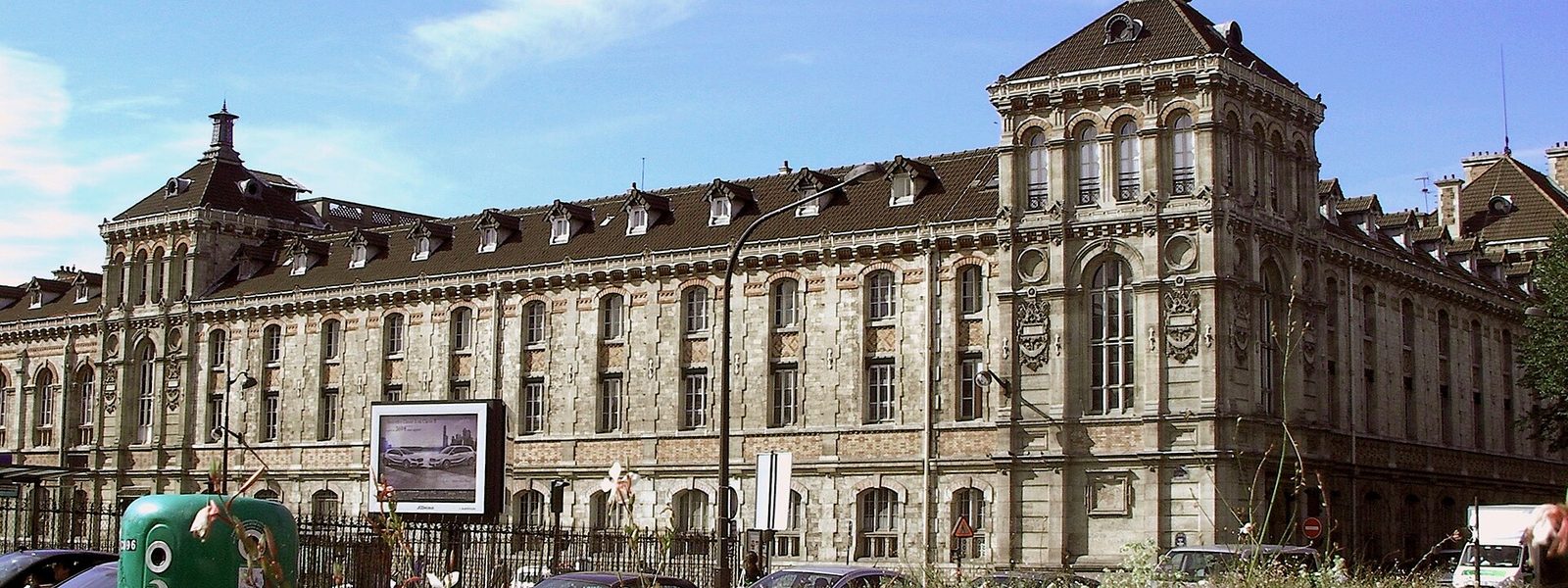
For readers new to the French system: a prépa (classe préparatoire aux grandes écoles, or CPGE) is a two-year, sometimes three-year, programme taken straight after the baccalauréat, inside a lycée. It prepares students for the competitive entrance exams, the concours, of the top engineering and business schools. It is famously demanding, and in an age where software solves an integral in a second, some families now wonder whether two years of solving them by hand still make sense.
I teach mathematics and prepare lycée students for prépa. As I see it, prépa keeps its value for a particular kind of student, and that profile is a little narrower than it was ten years ago.
Families have not walked away
According to the French higher education ministry's statistics note of February 2026, prépas had 87,100 students at the start of the 2025 academic year, a stable figure after a sharp rise the year before. The breakdown is more mixed: first-year enrolment fell 2.8%, while the science track grew 1.5% and the business and humanities tracks declined.
I do not know whether AI explains the first-year dip. The note does not say, and one year's movement can have many causes. What the figures do show is that families keep choosing the science prépas.
What two years of prépa actually build
People describe prépa by its syllabus. It is better understood as a regime. Four-hour written tests at a desk, with no phone or computer. Khôlles every week: one student at the board, facing a teacher, on a problem they have never seen. Concours written papers taken the same way, then oral exams. None of it can be handed to a tool, which is why the school diploma that follows still carries weight as a signal: the student has reasoned alone, at length, under pressure.
The content matters too. Linear algebra, probability, optimisation, programming in Python: the raw material of machine learning. A student finishing the second year of the MP or MPI track has the tools to understand how an AI model is built, not only how to use one. In the business prépa, AI has even become a subject of study: revision sites for the ECG concours publish notes on its regulation and its effect on companies, for the language and management papers.
And there is the door it opens. The concours lead to the most sought-after engineering schools and to the leading business schools. For a student aiming at Polytechnique, Mines, Centrale, HEC or ESSEC in their main degree programme, prépa remains the widest path.
What the schools at the end of the road are saying
The schools that recruit through the concours have not swapped mathematics for AI. They have added AI on top. In May 2026, École polytechnique announced a compulsory artificial intelligence course for all second-year students of its engineering programme from September 2026, drawing on its ten departments, from biology to economics. One of the course leads explains that using these systems rigorously requires a high level of technical mastery. Back in 2020, HEC Paris and Institut Polytechnique de Paris launched a joint centre for AI and data science, Hi! PARIS, aiming to triple within five years the number of students trained in those fields.
These schools want graduates who can judge what a machine produces, and they rely on prépa to deliver the mathematical grounding that makes this possible.
One story that sometimes travels in garbled form: on 1 April 2025, a student website for business prépas announced that concours papers would be written by ChatGPT from 2026. It was an April Fool, labelled as such at the bottom of the article. The papers are still set by examiners and sat at a desk.
The other routes
| Route | What it offers | What it asks |
|---|---|---|
| Prépa, then a grande école | The concours of the top engineering and business schools, very solid mathematics | Two years, sometimes three, at a pace not everyone sustains |
| A grande école bachelor | An international programme taught in English, straight after the bac | A selective file, often high fees, and it is not the engineering degree or the flagship grande école programme |
| CPES | A three-year multidisciplinary degree run by a lycée with a university | An excellent file, and a plan less focused on the concours |
| University abroad | EPFL, ETH Zurich, British or American universities, often with direct entry after the bac | Each country's own calendar and tests, sometimes very high fees |
I compare the bachelors in HEC, Bocconi, ESSEC and CentraleSupélec bachelors and the CPES in CPES admission. For a student drawn to both prépa and Switzerland, EPFL after prépa shows the two can follow one another.
Which students I still recommend it to
I recommend prépa
- To the student who enjoys mathematics for its own sake and can stay stuck on a topic for weeks.
- To the one aiming at a top engineering or business school's main programme.
- To the one still unsure about a career: prépa delays the choice without closing doors.
I advise against it
- For the student going by default, because their grades allow it.
- For the one with a clear plan abroad, in English, who should spend the final year of lycée on it.
- For the one who needs to see straight away what their learning is for: a bachelor or a five-year post-bac school will suit them better.
The question of level is handled separately, with Parcoursup figures, in which prépa with which grades. AI does not change the first criterion: a student who does not like working alone on a hard problem will have two difficult years, with or without a machine beside them.
This choice starts in première, the second-to-last year of lycée, with the choice of specialities, then the expert maths option in the final year. That is what I look at with families in a level and guidance assessment: the student's real level in maths, and the routes that suit them. To plan the whole path up to applications, get in touch.