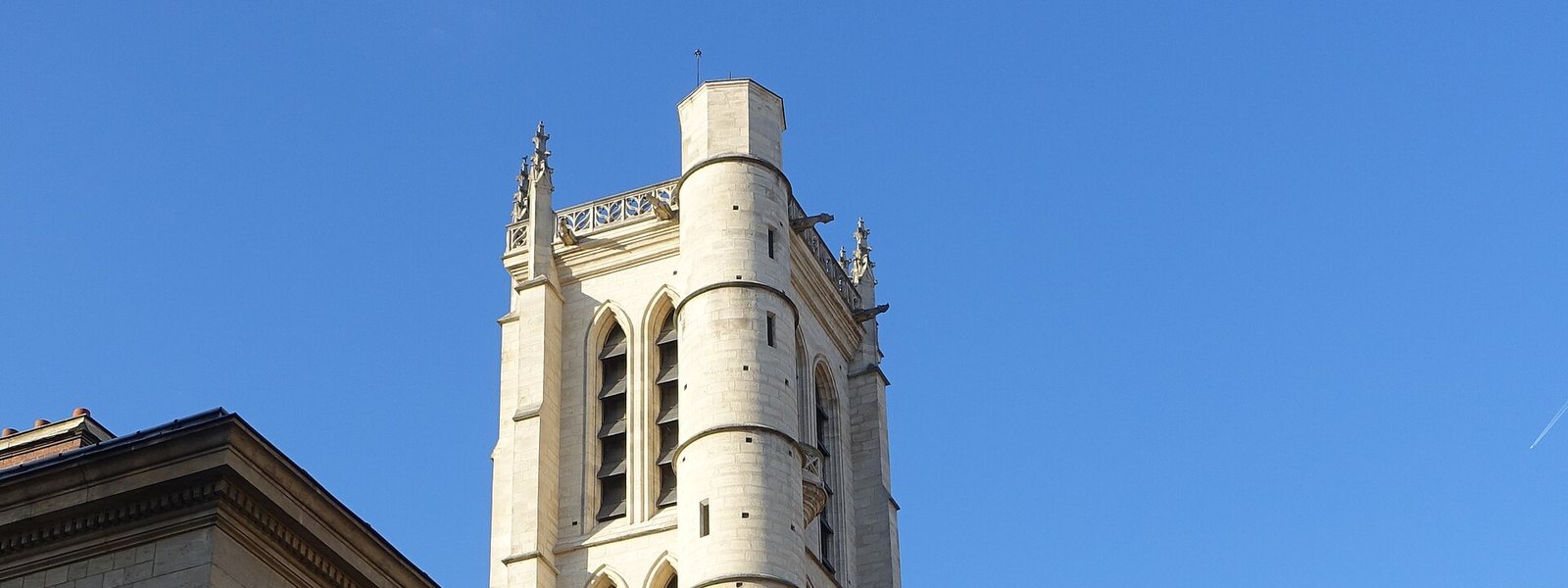
The CPES (cycle pluridisciplinaire d'études supérieures) was created in 2012 by PSL University and the Lycée Henri-IV, a Paris state lycée on the Montagne Sainte-Geneviève. It is a three-year bachelor's programme that borrows its intensity and small classes from the French prépas (the two-year intensive programmes for the top grandes écoles), and its freedom to specialise and research training from the university. For a very strong student torn between a prépa and a university degree, it is often the option that ticks the most boxes. It is also highly selective.
CPES Henri-IV: the admission rate
PSL states in its FAQ for September 2026 entry that its multidisciplinary bachelor's programmes have a selectivity rate of 4%, and that about 240 students are admitted to the first year, across five tracks. Three of them spend their first year at the Lycée Henri-IV: Sciences; Humanities and Society; Economics, Society and Law. A fourth, Data Science, Arts and Culture, is taught at the Lycée Louis-le-Grand. The fifth, Sciences for a Sustainable World, is taught mainly in English, on a PSL campus in the 5th arrondissement.
Applications are made per track, on Parcoursup, France's national higher-education application platform, and each track counts as one choice. The choice is final: students cannot switch tracks after enrolment. The CPES sits in Parcoursup's selective bachelor's category, separate from the prépas.
What the admissions committee looks at
PSL describes its method with unusual precision. The committee relies first on the fiche Avenir, the form completed by the student's school: final-year grades subject by subject, the class average, and teachers' comments. It looks first at grades and class rankings in the subjects of the chosen track. School reports come as a complement. The cover letter is compulsory and read "carefully", to check that the student knows the programme and has a genuine interest in its subjects.
There is no minimum average, and PSL explains why: averages vary too much from one school to another. What counts is strength across all the track's subjects, since the programme is multidisciplinary, and the ranking within the class. PSL sums up the typical profile in one sentence: students who are usually top of their class and solid in every subject of the chosen track.
In practice, a student brilliant in maths but weak in humanities has little chance in Humanities and Society, and the reverse holds for Sciences. And rank counts as much as the grade: a 16 out of 20 in a class averaging 15 does not mean the same as a 16 in a class averaging 11.
Maths specialism required in every track
This is the point many families miss: whatever the track, even Humanities and Society, the maths specialism of the French baccalauréat is required. The second specialism depends on the track: a science specialism for Sciences, ideally economics and social sciences or geopolitics for Economics, Society and Law, philosophy and literature or economics for Humanities and Society. The common expectations call for a very good level in maths, the ability to reason rigorously, and a recommended B2 level in English, with C1 in French.
A humanities-minded student who drops the maths specialism at the end of the penultimate year therefore rules out the CPES, even though they may have had the profile. That decision is made in the spring of the penultimate year, when students choose their two final-year specialisms, and that is when it needs thinking through.
CPES or prépa: what separates them
PSL is explicit: the CPES does not prepare for the grandes écoles' competitive exams and does not replace a prépa. It is a complete three-year programme leading to a university diploma with bachelor's degree status. Afterwards, the FAQ reports 100% of graduates continuing to a master's or a grande école. Those aiming for the ENS or an engineering school enter through the routes reserved for university students, on file, sometimes with an interview or tests, not through the prépa competitive exams. For a business school, PSL rather recommends a dedicated prépa.
The pace is that of a prépa: twenty-five to thirty hours of classes a week in first year, classes that rarely exceed forty students, work to prepare between sessions. The cost is that of a French public university: about €178 in annual tuition plus a €105 student life contribution, and free for scholarship holders.
Example: the 2026 Parcoursup round. The figures quoted here, 240 first-year places, 4% selectivity, €178 in tuition, come from the FAQ published by PSL for September 2026 entry. They are checked each year on the programme's Parcoursup page.
Preparing a CPES application
The file is built over the last two years of lycée, and the committee reads it mainly through grades and rankings. The student therefore needs to be solid everywhere, in maths first, since it is common to all tracks, and avoid a weak spot in any subject. The cover letter is prepared as a real piece of writing: show that you know the programme, its majors and its research training, and why this track rather than a prépa.
That is what we build with families at Carmine: choosing between CPES and prépa according to the profile, setting the specialisms, working on the letter. For maths, I prepare students in private lessons, and to compare with the prépas, see Which prépa with which grades.