MPSI (maths, physics and engineering science) is the science prépa most in demand among students who are good at maths, and the most selective of the tracks. A prépa is one of the two-year preparatory classes for the grandes écoles, and in 2025, six in ten students admitted to an MPSI had a mention très bien at the bac, the top honours band, 16/20 and above. But that national figure lumps together classes that have nothing in common. Between Saint-Louis and an MPSI in a provincial county town, the gap in recruitment is considerable, and it is that gap which should shape the list of choices.
I went back to the public data from Parcoursup, the national online admissions platform, for the 2025 intake. For each of the 124 MPSI classes that admitted at least ten students, I took the share of their intake by mention and their taux d'accès, the share of applicants who received an offer. I then sorted them into four tiers.
A reminder, because it avoids misunderstandings: selection is based on the school reports of première and terminale (the penultimate and final years of lycée), not on the bac. The mention is only a marker of the level of those admitted. Since it follows the average, très bien from 16, bien between 14 and 16, it remains the best public indicator available.
Tier 1: the classes that admit only très bien students
Eighteen classes recruit at least 90% très bien students. Bien students (14 to 16) account on average for 4% of the intake, assez bien students (12 to 14) for none. The median taux d'accès is 14%, and it falls much lower in the most sought-after classes.
| Lycée | City | Admitted with très bien | Of whom félicitations | Taux d'accès | Places |
|---|---|---|---|---|---|
| Louis-le-Grand | Paris 5th | 90% | 46% | 4% | 144 |
| Henri-IV | Paris 5th | 98% | 45% | 6% | 96 |
| Pierre-de-Fermat | Toulouse | 97% | 36% | 7% | 144 |
| Sainte-Geneviève | Versailles | 98% | 74% | 9% | 140 |
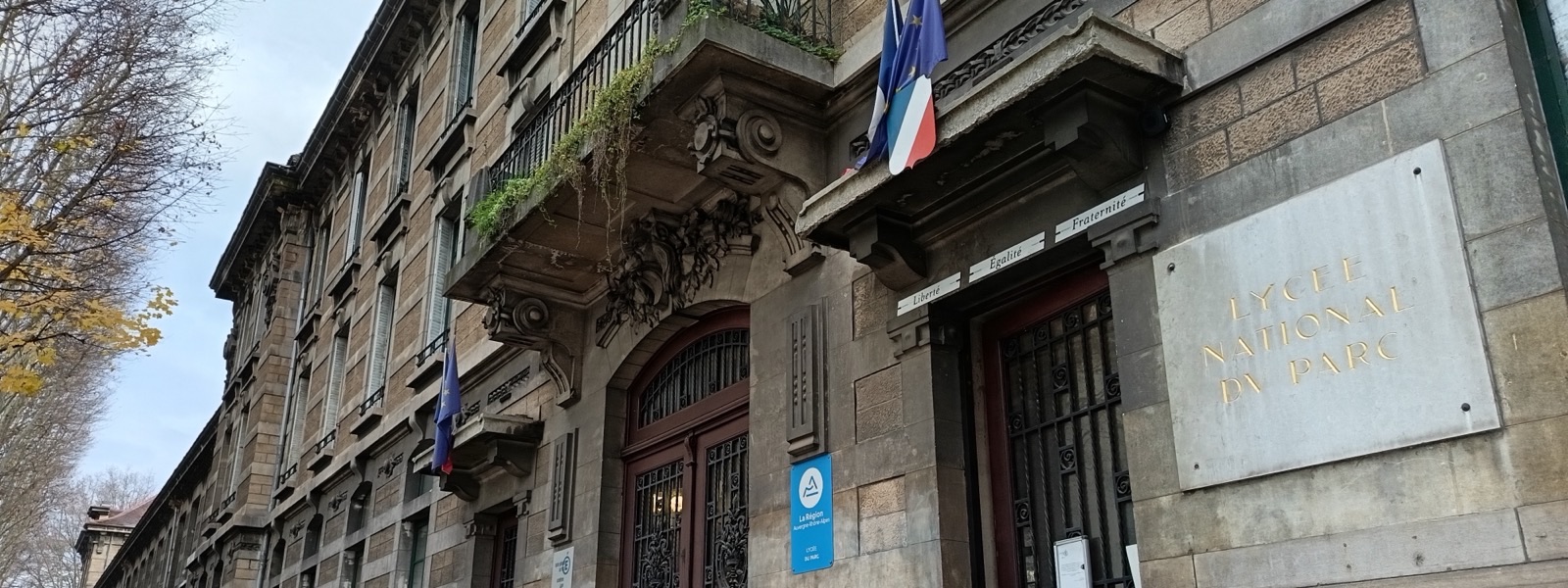
| Le Parc | Lyon | 99% | 58% | 10% | 142 |
| Hoche | Versailles | 92% | 42% | 10% | 48 |
| Saint-Louis | Paris 6th | 99% | 60% | 13% | 192 |
| Stanislas | Paris 6th | 95% | 32% | 14% | 96 |
| Louis-Pasteur | Neuilly-sur-Seine | 90% | 17% | 15% | 90 |
| Lakanal | Sceaux | 98% | 11% | 16% | 48 |
| Blaise-Pascal | Orsay | 93% | 22% | 17% | 84 |
| Aux Lazaristes | Lyon | 99% | 52% | 17% | 90 |
The other six classes in this tier are Joffre in Montpellier, Chateaubriand in Rennes, Clemenceau in Nantes, Descartes in Tours, Bellevue in Toulouse and La Borde Basse in Castres.
Two remarks on this table. First, a très bien is not enough. At Sainte-Geneviève, three admitted students in four had the félicitations du jury, which means an average of 18 at the bac. Second, the taux d'accès does not tell the whole story, and another figure published by Parcoursup explains why: the rank of the last applicant called. To fill its 144 places, Louis-le-Grand only had to go down to the 348th applicant on its list, because nearly everyone it calls accepts. Saint-Louis, with 192 places, had to go down to the 1,272nd, because some of the students it calls end up choosing Louis-le-Grand or Henri-IV. For an applicant, this means a class like Saint-Louis reaches much further down its list than you would imagine.
Tier 2: the major classes in Paris and the regions, open to very strong applications
Twenty-one classes recruit between 70 and 90% très bien students. Bien students make up 18% of the intake on average, so a student at 15 with an excellent level in maths has a place there. The median taux d'accès rises to 20%.
In Paris, this tier includes Charlemagne, Condorcet, Chaptal, Janson-de-Sailly and Buffon. In the Île-de-France region around Paris, Michelet in Vanves, Marcelin-Berthelot in Saint-Maur and Sainte-Marie in Antony. Elsewhere in France, Faidherbe in Lille, Montaigne in Bordeaux, Corneille in Rouen, Henri-Poincaré in Nancy, Champollion in Grenoble, Kléber in Strasbourg, Thiers in Marseille, Masséna in Nice and La Martinière Monplaisir in Lyon.
Tier 3: where bien students are the majority, or close to it
Twenty-eight classes, with between 40 and 70% très bien students. Bien students account for 41% of the intake on average. For a solid student around 14 or 15, this is the core of the list of choices. The median taux d'accès is 33%.
Examples: Fénelon and Fénelon Sainte-Marie in Paris, Jeanne-d'Albret in Saint-Germain-en-Laye, François-Ier in Fontainebleau, Camille-Jullian in Bordeaux, Blaise-Pascal in Clermont-Ferrand, Carnot in Dijon, Malherbe in Caen, Berthollet in Annecy, the lycée international in Valbonne, and the military lycées of Saint-Cyr and Aix-en-Provence.
Tier 4: the classes that recruit widely
Fifty-seven classes, with under 40% très bien students. Bien students make up nearly half the intake, and students with an assez bien or no mention more than a third. The median taux d'accès is 49%. In Paris, Jacques-Decour, Paul-Valéry and Pierre-Gilles-de-Gennes belong to this tier. In Île-de-France, Albert-Schweitzer in Le Raincy, Camille-Pissarro in Pontoise and Jacques-Amyot in Melun.
These classes are not dead ends. They lead to the competitive entrance exams like the others. What differs is the average level of the class, and therefore the pace and the place a student takes within it. For a student who improved late, a class in this tier where they end up in the top half is often worth more than a big-name class where they would be struggling by November.
How I use this to build a list
I start with the student's real level in mathematics, which does not always show in the overall average. A student with an average of 15 and 18 in maths does not have the same application as a student at 15 with 14 in maths, and prépa admissions panels see it straight away. Then I spread the choices: two or three classes in the tier above their level, most of them in the tier where their profile is well represented, and a few classes in the tier below.
MP2I, the newer prépa geared towards computer science, follows the same logic with slightly less demanding recruitment: 53% très bien among its admitted students, against 59% in MPSI. If your child is also drawn to physics, see the PCSI page. For a comparison across all the tracks, Which prépa with which grades.