“With an average of 15, what can my child aim for?” It is the question I hear most often in première (the penultimate year of lycée), and it is also the one that gets the worst answers. On forums, everyone has a cousin who got into Henri-IV with 14, or was turned down by Saint-Louis with 17. Those stories may well be true, but they tell you nothing about your own child.
There is a far more solid source, and almost nobody uses it. For every prépa (the two-year preparatory classes for the grandes écoles), Parcoursup, the national online admissions platform, publishes how its admitted students break down by the mention they obtained at the bac. I went through the 2025 figures, prépa by prépa. What follows is my reading of them.
First, what these figures actually measure
One precaution before anything else. Prépas select on the school reports of première and terminale (the final year of lycée), not on the bac, whose results only come out in July. So the mention is not the selection criterion. It is a snapshot of the level of the students who were admitted, taken after the fact.
That snapshot still tells you a great deal, because the mention follows the average, on the French scale out of 20: très bien (the top honours band) from 16 upwards, bien from 14 to 16, assez bien from 12 to 14. A student who sits around 15 at lycée is in bien territory. To work out what they can aim for, the right question becomes: in which prépas do students at this level make up a real share of those admitted?
The tracks do not ask for the same thing
This is the first thing the figures show, and it changes how the question should be asked. Talking about “prépa” in general does not mean much: an MPSI (maths, physics and engineering science) and a PTSI do not recruit the same profile at all.
In MPSI, six admitted students in ten had a mention très bien. In PTSI, barely one in four. In between, PCSI (physics, chemistry and engineering science), ECG (the economics and business track) and BCPST (biology, chemistry, physics and earth sciences) take in plenty of bien students, who make up a good third of their intake.
Within a single track, the gap is wider still
The national average hides a very clear hierarchy. Take MPSI: out of 124 classes, 18 admit practically nobody but très bien students, with 90% or more of their intake at that level. At the other end, 69 classes recruit at least half their students without a très bien.
| Track | Classes | Almost all très bien (90% and over) | At least half admitted without très bien | Median taux d'accès |
|---|---|---|---|---|
| MPSI | 124 | 18 | 69 | 33% |
| MP2I | 41 | 4 | 22 | 25% |
| PCSI | 138 | 12 | 93 | 42% |
| ECG advanced maths | 101 | 8 | 69 | 44% |
| BCPST | 54 | 2 | 39 | 42% |
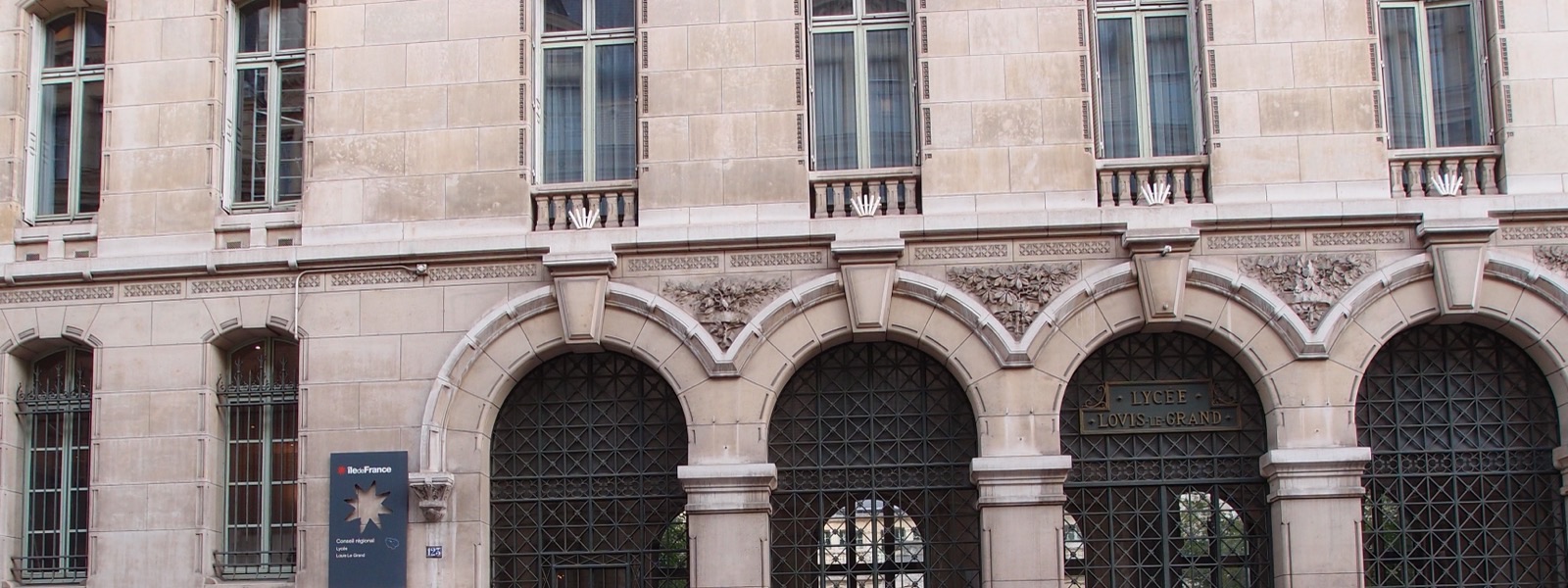
For a family, this is good news. The prépas everyone dreams of, Louis-le-Grand, Henri-IV, Saint-Louis, Sainte-Geneviève, the lycée du Parc in Lyon, are only a handful. Alongside them, dozens of solid classes that send students to engineering or business schools every year recruit widely at mention bien level.
With 17, with 15, with 13: what it looks like
Around 17 and above. On paper, every door is open, including the classes where more than 90% of the intake had a très bien. The figure that matters then is the taux d'accès, the share of applicants who received an offer. In MPSI, Louis-le-Grand admitted only 4% of its applicants in 2025, Henri-IV 6%. At this level everyone has excellent marks. What separates candidates is the teachers' comments on the reports, their real level in mathematics and how consistent they have been over two years.
Around 15. This is the most common case, and the one where a well-built list of choices makes all the difference. In the most selective classes, bien students account for only 1 to 10% of the intake. There is no reason to rule out applying, but no reason to count on it either. The core of the list should be the prépas where bien students make up a quarter, a third or half of those admitted. In MPSI as in PCSI, there are dozens of them.
Around 13. The door stays open, but in fewer classes. In MPSI, assez bien students make up only 9% of the intake nationally. Yet in some classes, students with an assez bien or no mention at all are over 30%. PTSI and ECG applied maths take more of these profiles. At this level the question is no longer only “which prépa” but also “how do we raise the maths before the application goes in”, since the reports from the first term of terminale still count.
One piece of advice I give every family: build the list of choices on several levels. Two or three very selective classes for ambition, most of the choices in classes where your child's profile is well represented, and a few classes where they would be above the average of those admitted. A list made up entirely of Louis-le-Grand and Sainte-Geneviève is the surest way to end the summer without an offer.
The figures, track by track
Each track has its own hierarchy of lycées. For MPSI, I ranked all 124 classes by the profile of their intake, with their taux d'accès: that is the subject of the page What grades for an MPSI. I did the same work for PCSI, where the real question around 15 is usually whether to choose MPSI or PCSI, for the ECG prépa, where the level in maths counts as much as the lycée, and for BCPST, the most open of the major tracks.
These are the figures for the 2025 intake. Parcoursup publishes them again every year.