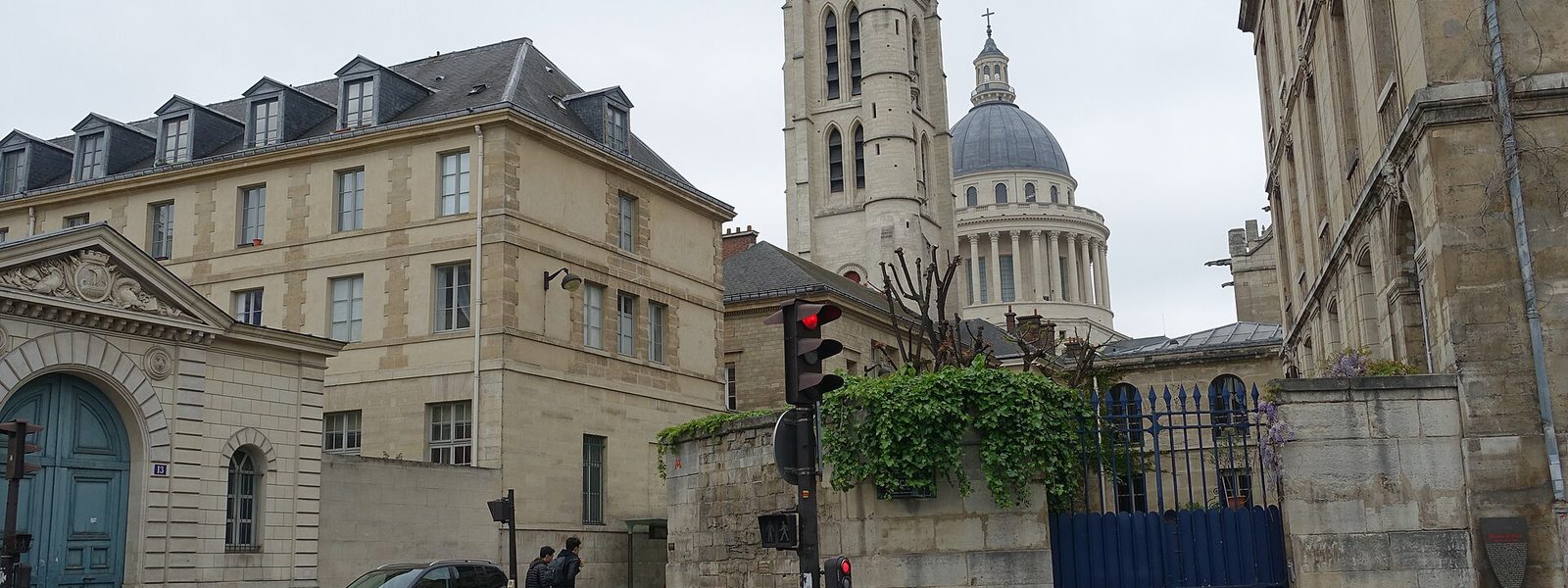
Henri-IV and Louis-le-Grand are the two public lycées on the hill of Sainte-Geneviève, in Paris's Latin Quarter, and the most famous schools in France. They are free. They admit most students at the start of seconde, the first year of the French lycée (Year 11 in England, 10th grade in the US), at about fifteen. And the way they choose those students depends on one thing families don't control: where the child lives and goes to school the year before.
Since 2022 there have been two separate procedures. Students who live in Paris and attend a Paris collège in troisième (the last year of middle school, Year 10 or 9th grade) are ranked by Affelnet, the Paris education authority's allocation software, with no application file at all. Everyone else, including families abroad, sends a real file that the schools read. Expatriate families usually belong to the second group, which is the more open of the two.
Lives in Paris and attends a Paris collège
- Ranks Henri-IV and Louis-le-Grand as first and second choices in Affelnet, in May.
- Ranked on a points score: troisième grades, a bonus for means-tested grant holders, a bonus linked to the collège's social index.
- No letter, no head teacher's report, no file.
Everyone else, including students abroad
- Online file on the education authority's platform, from mid-January to early April.
- Report cards from the last two years and a form completed by the current head teacher.
- Criteria: academic excellence, involvement in and outside school, motivation, grant status.
- Then the same two choices entered in Affelnet in May.
Applying from abroad, or from outside Paris
A family living in London, Singapore or Lyon applies through the Académie de Paris's online platform for cursus spécifiques, the programmes with their own admissions. The file holds the report cards from the previous year and the first term of the current year (the second term is optional for seconde), and the form signed by the head of the current school. Students from French private schools without a State contract (hors contrat) also sit tests; the academy's page mentions tests for no other group.
The published criteria go beyond grades: the academy lists "involvement in and outside the school" and motivation alongside academic excellence. For a student at a French lycée abroad, that is where a solid record of activities, competitions or responsibilities can count. The same file covers both schools, ranked in order of preference, and up to ten choices in total, including the international sections of other Paris lycées. Henri-IV and Louis-le-Grand must stay first and second.
In 2022, researchers at the Institut des politiques publiques counted 2,935 applications to the two schools, 1,255 of them from outside the Paris academy. One rule catches families out: a student who does not live in Paris must also apply for a place where the family lives. If both schools say no, Paris offers nothing else. For a family moving to Paris, the academy asks for a second, parallel request for an ordinary Paris lycée.
Example: the timeline for September 2026 entry.
Platform opened on 12 January 2026. Seconde files completed by 7 April 2026, at noon according to Henri-IV (the academy's own infographic said 3 April, so work to the earlier date). International sections closed on 10 March.
Affelnet choices entered from 4 to 26 May. Results on 30 June, with enrolment required within days or the place can be lost. For Louis-le-Grand's European English and Chinese sections, a separate file follows once the place is confirmed, then a thirty-minute interview.
Applying from a Paris collège: a points race
For Paris students, both lycées count as "sector 1", the nearest category, wherever the family lives. Every candidate gets the same 32,640-point sector bonus, so the address gives no advantage. What separates them is the grades of troisième, capped at 9,600 points, a 600-point bonus for grant holders, and a bonus tied to the social index of the collège. Grades from the year before don't count, nor does the brevet exam.
After the first year, researchers at the Institut des politiques publiques and a 2023 study for the Fondapol think tank, built partly on score sheets that families obtained from the authority, showed how tight this is. The conversion of grades into points makes no difference between 15 and 20 out of 20 in a subject. In 2022, 234 of the 344 Paris students admitted had the maximum score. For a student from an advantaged collège without a grant, a single term below 15 in PE was enough to drop below the threshold. Places were also shared between collèges with high, middle and low social indices, so a student from a high-index collège competed with others who almost all had top marks.
The practical lesson for a Paris family: in troisième, being consistently above 15 in every subject, art and PE included, beats being brilliant in three and average in one.
The second door: entering in première
For entry into première, the year after seconde (Year 12, 11th grade), there is a single procedure for everyone, Paris students included. Everybody sends a file through the same platform, judged on the same criteria as outside candidates, with a deadline at the end of April and places limited to vacancies. The Affelnet score plays no part.
Ministry figures published with the 2025 results give a sense of its size: Louis-le-Grand had 253 students in seconde and 312 in première, Henri-IV 250 and 280. These are different year groups, but a gap like that implies real entries in première. For a family relocating to Paris a year later than planned, this door matters.
What families and students report
Since the reform, French forums keep returning to the same confusion: students around 18 out of 20 turned down, parents looking for a flaw in a file that was never read. Before the reform, on a students' forum at Louis-le-Grand, one message reported, from the school, 300 favourable opinions for about 260 places. At this level the margins are tiny either way.
On life inside, student reviews are more nuanced than the legend. At Louis-le-Grand, "demanding and kind" and mutual help come up often; at Henri-IV, opinions swing between "an incredible atmosphere" and pressure that some find hard, depending on the class. A student used to being top of the class can find himself in the middle, and must be able to live with that.
Alternatives at the same level
The calendars don't wait for each other, so I always build the list before any result is known. Stanislas, the leading Catholic school in Paris, reads files in the order they arrive from the autumn before entry, long before the Affelnet results; see Stanislas admission. Franklin opens seconde applications in mid-September (Franklin admission). For a bilingual child, the international sections of Paris public lycées are applied for on the same platform, with a language test in March, and are often the most open route. For a student whose real goal is a top prépa, the lycée matters less than families think: the Parcoursup data in Which lycée for a top prépa show that a student at the top of a good lycée has a real place in the leading classes.
That is where we start at Carmine: working out which procedure applies to the child, building a list that still holds if both schools say no, and keeping every deadline from September to June. When the file is read by teachers, for seconde from abroad or for première, we prepare it with the student. Our school entry support page explains how.