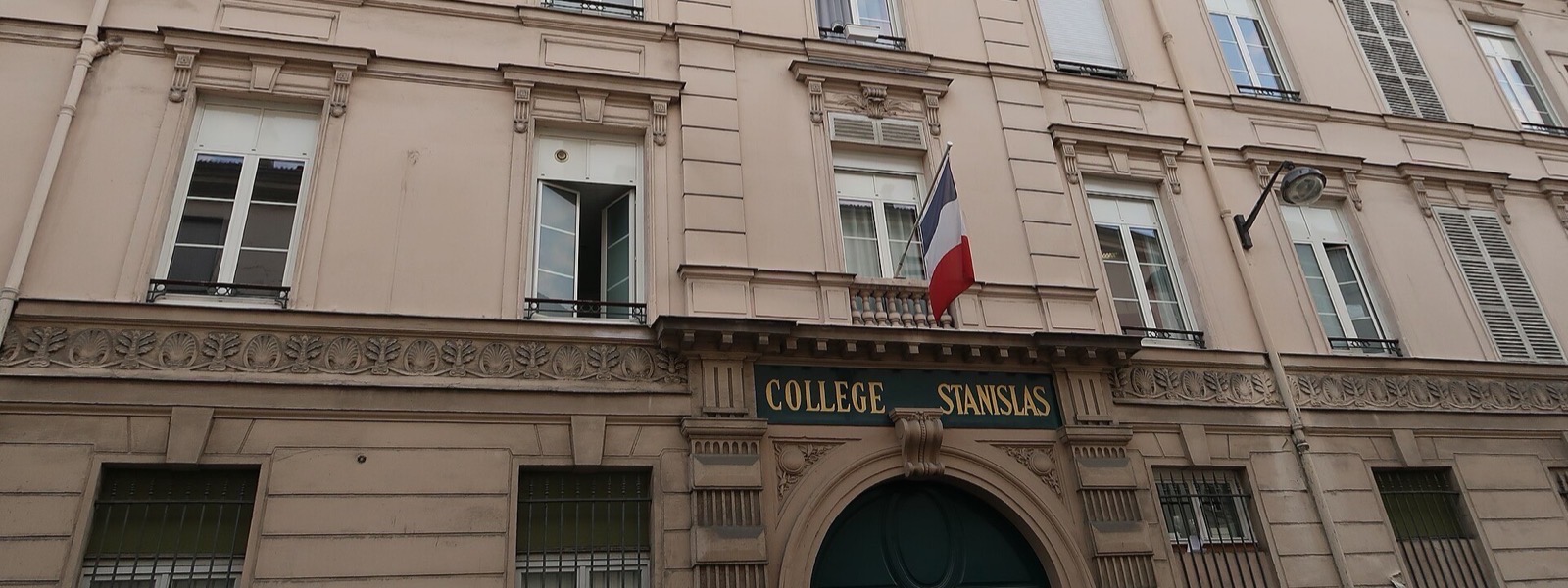
Stanislas has one peculiarity that families often discover too late. The school publishes no dates at all: no opening date, no closing date, no date for decisions. All it says is that applications are reviewed "on receipt".
Those two words have a consequence many families miss. There is no admissions campaign in the sense that the École alsacienne or Saint-Jean de Passy run one, with a window for submitting applications followed by a review of all of them together. At Stanislas, files are read as they come in, in the order they arrive, and places are filled as the year goes on. An application submitted in March is very likely to be read when some of the places have already been given out.
The only signal: when the application fee opens
With no calendar to go on, you have to read the clues. The one observable signal is the opening of payment for the application fee for the following school year. For September 2027 entry, it opened in September 2026. From that moment applications can be submitted, and that is when you need to be ready.
The practical rule is simple. At Stanislas, you apply in the autumn of the year before entry, as soon as the application fee can be paid. Waiting for the second-term reports so as to "present a stronger file" is a poor calculation, since the school asks for them during the year anyway.
The application, stage by stage
The procedure differs for primary school, collège (lower secondary, ages 11 to 15) and lycée (upper secondary, ages 15 to 18). Everywhere it starts with online pre-registration and payment of the application fee. After that, the routes diverge.
Primary school
- Everything is done online. An application sent by post or by email is not considered.
- Skills records or the teacher's assessment for nursery school, except for petite section (age 3), and for CP (the first year of primary, age 6), the recommendation to move up into CP.
- From CE1 (age 7) onwards, the previous year's national assessments in French and maths, and the school reports.
- A letter of motivation in Word format, "written without the help of AI", the school specifies.
Collège and lycée
- Online pre-registration, then a paper file to hand in at reception or send by post.
- A letter of motivation from the parents, and at lycée a letter from the pupil.
- All of the previous year's reports, then those for the current year and the mock exams, sent as they come in.
- Livret de famille (the official family record book), ID photo, custody ruling in case of divorce, invoice for the application fee.
The school mentions no written test. The bulletins (school reports) take its place, and Stanislas goes further than most of its neighbours by also asking for mock exam results. A failed brevet blanc (the mock of the brevet, the national exam at the end of collège) or a failed bac blanc (mock baccalauréat) therefore weighs on the application just as much as a term's reports.
For a pupil aiming for Stanislas in seconde (the first year of lycée, age 15 to 16), the consequence is direct: the whole of troisième (the last year of collège, age 14 to 15) counts, mock brevet included. And in maths, where the gaps between schools are most visible, an average that dips in the second term is noticed straight away.
The interview: the pupil and both parents
If admission looks possible, the school offers a meeting. The pupil and parents are seen together, by the censeur (the deputy head in charge of the collège or the lycée) or by the director of Stanislas in person. At primary level, the head of the primary school sees the family.
The school writes that every enrolment is "always conditional on a meeting". So there is no admission on paper alone. Nor does the meeting guarantee a place. It is a real stage of the selection, and should be prepared as one.
If the answer is positive, enrolment only becomes final after three things: a supplementary file signed by both parents, written acceptance of the school's rules and educational project, and payment of a deposit. Even then, it depends on the third-term report carrying the recommendation to move up to the next year.
The educational project is far from a side document. Stanislas is a Catholic school, and it asks families to accept the project formally before enrolment. Read it before writing the letter of motivation: the letter is a response to it.
The weekly rhythm, worth knowing before you choose
One practical point weighs on family life and is rarely mentioned: at collège and lycée, there are lessons every Saturday. From quatrième (age 13 to 14), pupils also have lessons on Wednesday morning. There are no Wednesday lessons in primary, sixième or cinquième (the first two years of collège, ages 11 to 13).
Fees
Stanislas is a private school sous contrat, meaning under contract with the French state, so tuition costs a fraction of what international schools charge.
The level at the end
Stanislas publishes its baccalauréat results, and they show how demanding the school is. In the 2026 session, out of just under three hundred candidates, the school had 27 mentions très bien (the highest honours grade) with the jury's congratulations, 150 mentions très bien and 103 mentions bien (the grade below): 95.5% of pupils obtained a bien or très bien. Seven pupils won prizes at the Concours général, the national academic competition, the same year.
The level at the end explains the level at entry. A school where six graduates in ten get the top honours grade recruits pupils who can keep up that pace from their first year there, and it checks this in their school reports.
What you will have to guess
- No dates: no opening, no closing, no decision date.
- No number of places per year group, no number of applications, no admission rate.
- No interview criteria.
What can be known is enough to act on. Apply in the autumn, as soon as the application fee opens. Send every report and every mock exam as soon as you receive it. And prepare for the family interview, starting from the educational project.