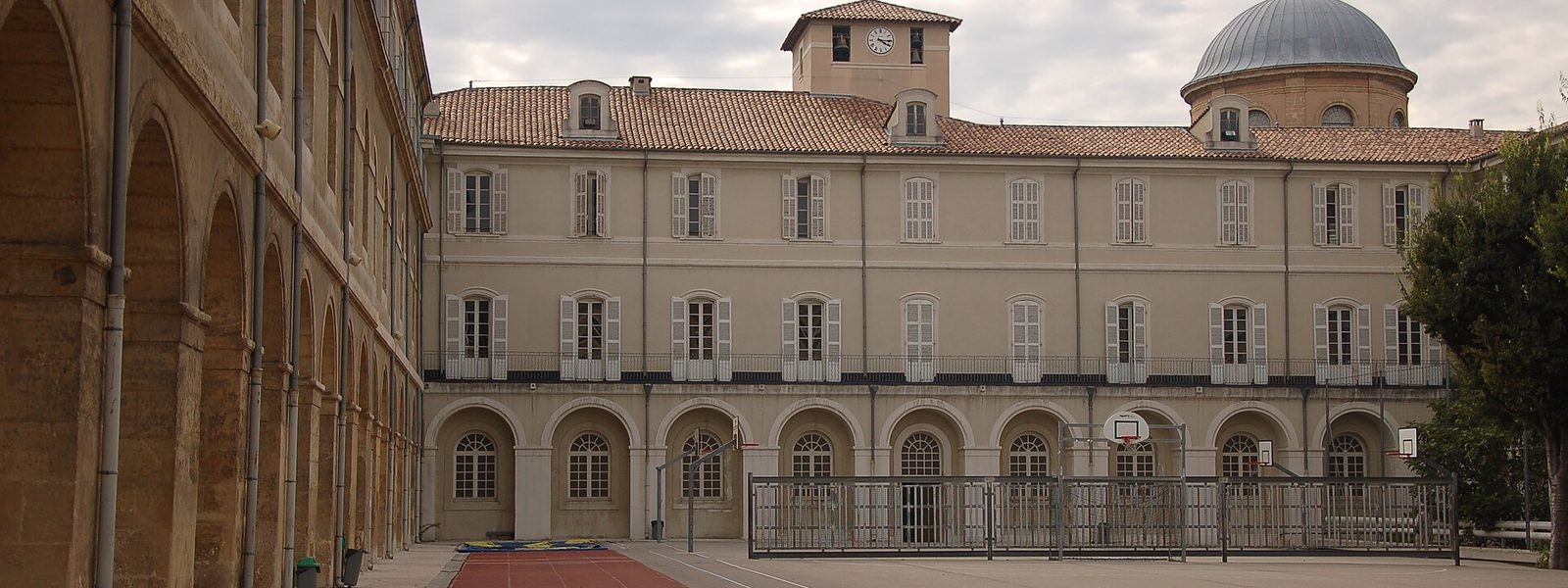
Every spring, families search for the best lycée in France (the lycée covers the last three years of school, from seconde to terminale, ending with the baccalauréat) and find league tables where Louis-le-Grand, Henri-IV, Stanislas and Franklin compete for first place. These lists answer badly the question parents are really asking: in which school will my child progress the most, and which one opens the path they are aiming for? To answer it, you have to go back to the figures published by the French Ministry of Education, and to what they measure.
Where the rankings of French lycées come from
The only public data on lycée results are the value-added indicators, known as IVAL, calculated by the statistics department of the Ministry of Education (the DEPP). They have existed since 1993 and are published every spring for the previous baccalauréat session. There are three: the bac pass rate, the rate of honours (mentions), and the access rate, which measures the share of students entering seconde who obtain the bac in the same school.
For each, the DEPP calculates an expected result, taking into account the students' age, their results at the end of middle school and their social background. Value added is the gap between the observed result and that expected result. The ministry warns from the outset that these indicators "are not intended to establish a ranking", and gives the reason: a high pass rate may come from a school having "received good students […] without any particular effort on its part".
Press league tables are therefore not ministry publications. When a headline names the best lycée in France, the useful reflex is to go back to the three official indicators, and above all to value added.
Best lycée in France 2026: what the 2025 bac results say
The table gives the official figures for the 2025 session, published on 3 April 2026, for a few schools that top the searches. Value added is shown in brackets, in percentage points.
| Lycée | Status | Bac pass rate | Honours | Access seconde → bac |
|---|---|---|---|---|
| Louis-le-Grand, Paris 5th | State | 100% (+1) | 97% (+4) | 98% (+5) |
| Henri-IV, Paris 5th | State | 99% (0) | 91% (0) | 95% (+2) |
| Stanislas, Paris 6th | Private, state-contracted | 100% (0) | 99% (+3) | 97% (+4) |
| Saint-Louis-de-Gonzague (Franklin), Paris 16th | Private, state-contracted | 100% (0) | 99% (+3) | 85% (−8) |
| Sainte-Marie, Neuilly | Private, state-contracted | 100% (0) | 98% (+1) | 88% (−6) |
| Lycée du Parc, Lyon | State | 98% (−1) | 80% (−4) | 94% (+4) |
| Jeannine Manuel, Paris 15th | Private, state-contracted | 100% | 99% | 99% |
For Jeannine Manuel, the ministry publishes no value added for 2024 or 2025. At Louis-le-Grand, 230 of the 309 candidates obtained the highest honours (mention très bien), 83 of them with the jury's congratulations.
The raw rates are all close to 100%: they separate no one. Value added hovers around zero, which means these results were expected given the students these schools recruit. The access rate is what separates them: 85% with a gap of −8 means that some students who entered in seconde did not sit the bac in the school, whether they left of their own accord or were asked to. It is the indicator to look at when you wonder whether a school keeps the students who struggle.
Best lycée in France: state or private
The ministry also publishes each school's social position index, the IPS, calculated from the parents' occupations. In September 2025, the national average for general lycées was 120.2: 115.2 in the state sector, 134.7 in the private sector. The Paris average was 137.7. The schools in the table are all well above: 142.3 at Louis-le-Grand, 143.3 at Henri-IV, 155.9 at Jeannine Manuel, 158.5 at Stanislas, 160.2 at Franklin.
The schools at the top of the league tables are therefore those that recruit the most privileged students with the best grades on entry. That says nothing against them: a class where everyone works fast pulls a good student upwards, and that is what families are paying for. But the state-or-private question is settled less on the bac, which everyone passes, than on three things: the pace of the class, the international offer (international sections, the BFI, the IB), and the route into the prépas and universities the student is aiming for.
The best lycée for what?
A student aiming for a top scientific prépa (the two-year classes that prepare for the grandes écoles) should look at where the students admitted to those classes come from: we did it with Parcoursup data in Which lycée for a top prépa. A student aiming for London, Lausanne or the United States will need a school that knows how to write recommendation letters in English and offers an international section or the BFI. The two do not always overlap. The best lycée in France for one is not the best for the other.
Best lycée in Paris: how to get into seconde
In Paris state schools, entry into seconde goes through Affelnet, the online allocation system. Its points scale gives the main weight to catchment: 32,640 points for a school in the student's first sector, against at most 9,600 points for grades. Henri-IV and Louis-le-Grand are the exception. A student in troisième (the last year of middle school) at a Paris collège and living in Paris applies to them through Affelnet, as first and second choices only; the two schools then count as their first sector wherever they live, and the ranking is decided on results, with a bonus for scholarship students and a bonus linked to the social index of their collège.
Students who are not at school in Paris, or do not live there, submit an application on a dedicated platform, open from mid-January to early April. The education authority assesses it on three criteria: academic excellence, commitment and motivation, scholarship status. This is the route for families returning from abroad.
In the state-contracted private sector, each school sets its own procedure: application, school reports, sometimes tests and an interview, with a calendar that often starts in the autumn of troisième. We have described those of Stanislas, Franklin and Jeannine Manuel.
Dated figures. Results of the 2025 bac session, published by the ministry on 3 April 2026; social index for September 2025. Paris calendar for September 2026 entry: Henri-IV and Louis-le-Grand applications from 12 January to 7 April 2026, Affelnet choices from 4 to 26 May, results on 30 June. The 2027 dates appear on the Paris education authority's website during the winter.
Choose a school, not a place in a ranking
The right choice starts with the student: their real level in maths, their pace, the path they are aiming for, the city where the family will be in three years. A very selective school can be the best environment for one student, and a source of exhaustion for another who would sit in the bottom quarter of the class. It is a choice to prepare from quatrième, for the grades in the file as much as for the application calendar.
That is what we do with families at Carmine: choosing the lycée according to the plan, building the application, preparing tests and interviews. And when maths is what is missing, I work on it with the student in private lessons.