Families abroad often assume France works like England: a list of famous boarding schools, each with its own house system and a fee to match. It doesn't. France has very few schools built around boarding, and the ones with the best academic results are mostly ordinary Catholic day schools that happen to keep a few dozen beds. They sit under contract with the State, which pays the teachers, so their fees are a fraction of what an English or Swiss boarding school charges. A handful of international boarding schools near Paris charge prices closer to Switzerland.
To find the schools worth considering, I crossed two official files from the French Ministry of Education. The national school directory flags every lycée (the last three years of secondary school, ages 15 to 18) that offers accommodation: 357 private lycées under State contract do. The ministry's results indicators then give, for the 2025 baccalauréat, the share of students who passed with a mention (an honours grade), the share who stayed from the first lycée year to the final exam, and a value-added score. Very few schools come out well on both lists. I then checked each one on its own website.
Top private schools in France with boarding
| School | Boarding | Passed with honours | Stayed through to the bac |
|---|---|---|---|
| Stanislas, central Paris | Lycée, girls and boys | 99% (+3) | 97% (+4) |
| Saint-Dominique, Neuilly | Co-ed, 20 to 30 lycée beds | 100% (+6) | 95% (+3) |
| Notre-Dame de Sion, central Paris | Girls, from age 15 | 99% (+4) | 97% (+5) |
| Les Chartreux, Lyon | From age 13, co-ed | 95% (+3) | 89% (−3) |
| L'Ermitage, Maisons-Laffitte | Ages 11 to 18, 5 or 7 days | 95% (+8) | 90% (0) |
| École des Roches, Normandy | Ages 11 to 18, 5 or 7 days | 64% | 65% |
Almost every good French school posts near-total honours rates, so that column barely separates them. The one I read first is the third: the share of students who start the lycée at the school and sit the baccalauréat there. At 97%, the school keeps its students. Below 90%, some left along the way, by choice or not. For a boarder who has moved away from home for this school, that is the number that matters. The French ranking system and how to read it are explained in Best high schools in France.
Boarding in a French school that feeds the top prépas
A word on prépas first, since French families talk of little else. Classes préparatoires are two-year courses after the baccalauréat that prepare students for the entrance exams of the grandes écoles (Polytechnique, HEC, the Écoles normales supérieures). The best ones are concentrated in a few Paris lycées, and some of those lycées recruit heavily from their own final-year classes.
Stanislas is the clearest case. Its lycée has boarding for girls and boys, with two supervised study periods a day, one in the late afternoon and one after dinner, and a return on Sunday night "by 10pm sharp". In 2026-2027, boarding costs €10,195 a year on top of €2,784 tuition. Enrolment, boarding included, binds the family for the full year. Several former students on Diplomeo, a French review site, describe the boarding house as the tightest-knit part of the school. Stanislas also runs its own prépas, and Parcoursup data show that a large share of its prépa intake comes from its own lycée: the figures are in Which lycée for a top prépa.
Saint-Dominique, in Neuilly just west of Paris, had a 100% honours rate in 2025 with a value added of +6, which is unusual. Its co-ed boarding house has 73 places, but only 20 to 30 are for lycée students; the rest go to older students, including those in the prépas of Neuilly. Full board for a lycée student is €8,200 in 2026-2027. One rule changes everything: you can only ask for a boarding place once the school has accepted the child. Admission first, then a bed if one is free.
Notre-Dame de Sion, also in central Paris, boards about sixty girls from the first year of lycée. There is a weekday option, Sunday evening to Friday evening, and a seven-day option designed for families living outside Paris or abroad. Admission to the boarding house is by a separate interview. For an expatriate family that wants the French curriculum and the baccalauréat, this is one of very few seven-day arrangements inside a top Paris school.
International boarding schools near Paris
Two schools near Paris are built for international families, with prices that belong to another market.
L'Ermitage, in Maisons-Laffitte, has a bilingual French track under State contract and an IB track taught mainly in English. Boarders aged 11 to 18 live in four houses and come from 26 nationalities. In 2026-2027 the bilingual track costs €28,500 a year in the last two years with five-day boarding and €39,900 with seven-day boarding. The IB Diploma costs €46,800 and €53,900, plus a €3,500 development fee on entry. A new seven-day boarder from abroad adds €1,200 for the visa process and a €2,000 expense account. The French track's results are strong: 95% honours, value added +8.
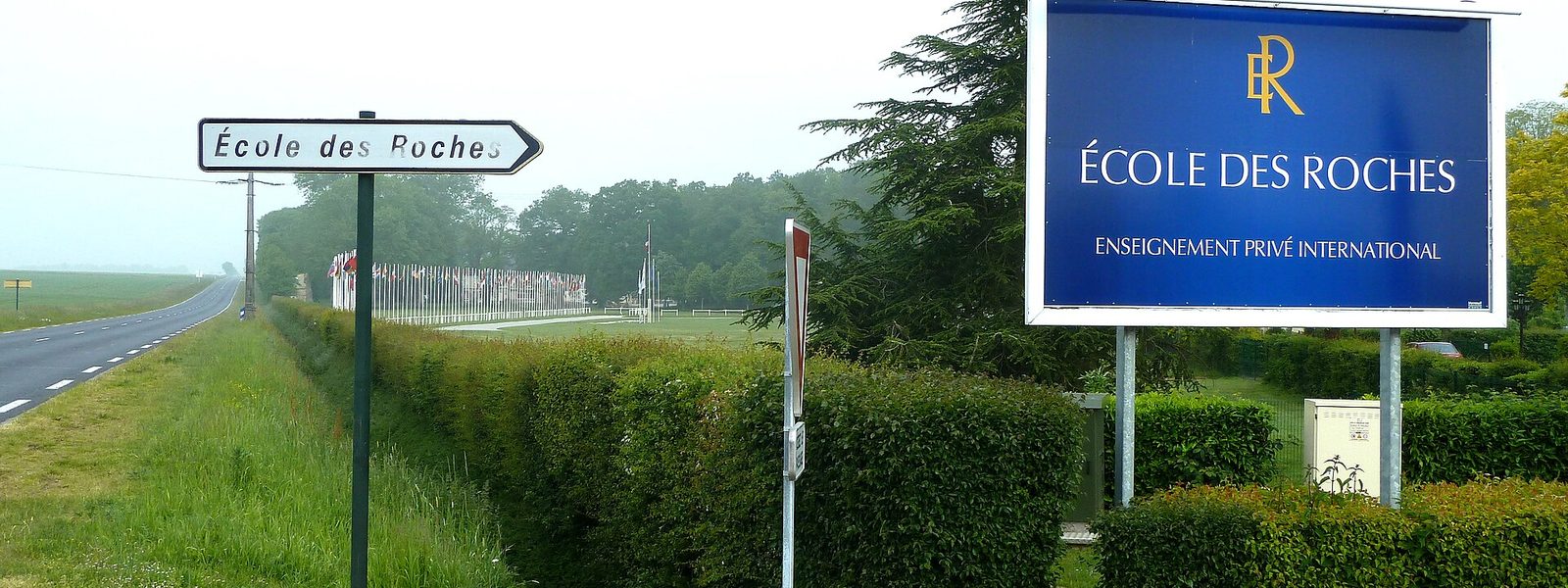
The École des Roches sits on a 50-hectare campus in Normandy, a little over an hour from Paris. It offers a French track under State contract, the IB, and French-as-a-foreign-language stays from two weeks to a year. In 2026-2027, the French-track lycée costs €35,640 with five-day boarding and €45,540 with seven; the IB costs €47,520 and €57,420. There is a one-off €5,900 registration fee and, for seven-day boarders, €2,500 of compulsory laundry service. The ministry's figures for its small French track are modest: 64% honours and 65% of students staying through to the bac. Families choose the Roches for boarding life, the IB and an international peer group, not as a route into a Paris prépa.
The gap is the State contract. At Stanislas or Saint-Dominique the State pays the teachers and the family pays the rest; an international school funds everything, including English, the IB and supervised weekends. A family that wants its child to stay in the French system and sit the French baccalauréat can do so in a contract school with seven-day boarding for around a fifth of the international price. If the plan is clearly English-speaking universities, the fair comparison is with the Swiss schools, which I cover in How to get into Le Rosey.
House rules that surprise families from abroad.
At Notre-Dame de la Galaure, a Catholic boarding school in the Drôme valley with 90% honours in 2025, boarders hand in their phones on arrival and get them back on Tuesday and Thursday evenings only. There is no Wi-Fi, and first-year lycée students sleep four to six to a room.
At Les Chartreux in Lyon, 315 boarders from age 13 share rooms of two to four.
Weekends are the question to ask first. Stanislas boarders go home and come back on Sunday night; at Saint-Dominique, the paid weekend option is for post-bac students only. A child whose parents live in Dubai or Singapore needs a seven-day formula, or a guardian in France.
How I narrow the list
I start with the child. A teenager boarding to aim for a scientific prépa needs real supervised evening study and a class that pulls him or her upwards. One heading for a UK or US university needs English, a counsellor who knows UCAS or the Common App, and a boarding life that doesn't isolate a newcomer. Then I look at the stay-through rate, the real number of beds (twenty is not a hundred), and the timing: Stanislas reads applications in the order they arrive, as explained in Stanislas admission, and a boarding application sent in spring often arrives too late.
That is the work we do at Carmine with families in France and abroad: picking two or three schools that suit the child, keeping each school's calendar, preparing the file and the interviews, for the school and for the boarding house. Our school entry support page describes how it works.