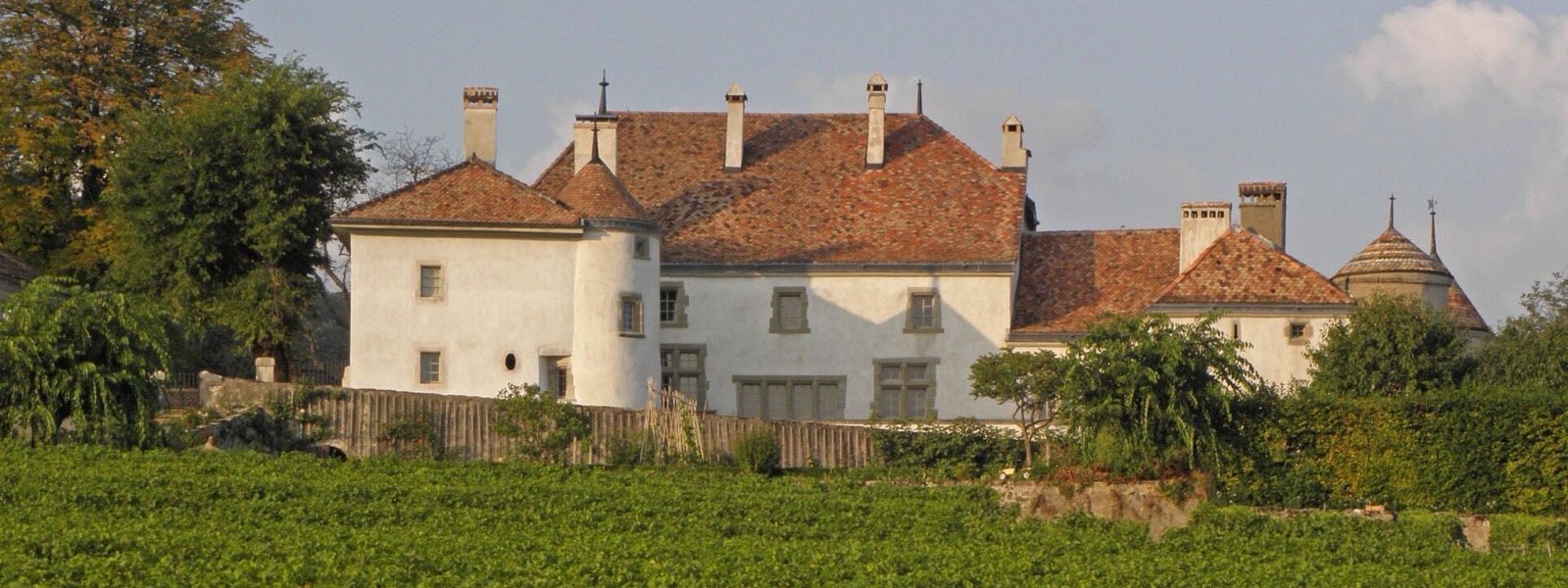
Two things decide an application to Le Rosey, and families prepare for neither.
The first is a date. Depending on the year group, you apply on a rolling basis or inside a closed session, and families who misread which regime they fall under discover in February that the door shut in October. The second is an entrance assessment whose content the school does not publish, and about which almost everything in circulation is invented.
This article sets out what the school publishes, with its own figures, and what I saw of the exam while preparing a candidate.
The costly point: two admission regimes
Le Rosey numbers its year groups the French way, counting down from class 9 to Terminale. Classes 3, 2 and 1 correspond to UK Years 10, 11 and 12, and to US Grades 9, 10 and 11. That numbering drives the calendar.
Classes 9 to 4: UK Years 4 to 9
- Rolling admissions, no fixed session.
- The school encourages families to register between June and September of the year before entry.
- The committee meets weekly and returns one of four decisions: acceptance, deferral, waiting list, denial.
- No published cut-off: it is the place that closes, not the calendar.
Classes 3, 2 and 1: UK Years 10 to 12
- Three sessions, which the school calls “rounds”.
- A complete file due in early October, late November or mid-February of the year before entry, with a decision about a month later.
- In the first two rounds the third outcome is deferral to the next. In the third it is the waiting list.
- After the third round, only the waiting list or refusal remain.
The process, in five steps
- Step 1The online application formIt starts everything, and it is what places you in a session or in the rolling track.
- Step 2School record and a medical reportThe medical report must be completed by your doctor. Few families anticipate it, and it holds up whole applications.
- Step 3Campus visit and entrance testsBoth on the same day, on site, and no earlier than fifteen months before the intended entry year. Tests in mathematics, in English or French, and in the candidate's mother tongue. They are marked by Rosey teachers, not by an outside body.
- Step 4Interview with an academic advisorDuring the visit. The advisor also answers the student's questions: it is a conversation, not an oral exam.
- Step 5Review by the Admissions CommitteeA file is only considered once it is complete, the tests marked and the fee paid. It is then read in detail by three people including the Headmaster, before the weekly admissions meeting.
What is actually on the exam: what I saw
Le Rosey does not publish the content of its entrance assessment. So I can only speak to what I saw at close range, once: a student I prepared, applying for entry into class 2, UK Year 11, two years ago. He was admitted.
The one thing worth knowing is counter-intuitive: the paper covered the previous year's syllabus, not the year ahead. For entry into class 2, that meant the class 3 syllabus, UK Year 10. Nothing advanced, nothing designed to trip a candidate up, nothing that assumed he had worked ahead.
I read it as a deliberate choice. The school is not trying to rank candidates on material they have not been taught; it checks that what should already be secure really is. It is less interested in how far a student can go than in whether the foundations hold.
Most families' instinct is to push their child ahead. For this paper, the opposite works: you go back.
That is where strong students get caught. A student averaging a solid grade almost always has two or three topics from the past year that were never properly consolidated: he worked around them, compensated elsewhere, and his marks never showed it. In class it passes. On a paper that tests nothing else, it shows at once.
In practice, for entry into class 2, the topics that surface most often:
- Algebraic manipulation and equations. Expanding, factorising, solving, without sign errors and without a calculator. It underpins everything that follows, and it decays fastest.
- Ratio, percentage and functions. Reading a real situation and translating it. A student who can apply a formula but cannot decide which one has not mastered the topic.
- Pythagoras, similar triangles and right-angled trigonometry. Knowing which one applies, and why.
- Written reasoning. A correct but unjustified answer earns little. A student used to writing down the result alone loses marks on every question.
Useful preparation is therefore a few weeks of targeted consolidation, not a head start. Identify the three or four shaky topics, rebuild them until they are automatic, and relearn how to set out an argument. It is less impressive than an intensive course. It is what works.
Nationality quotas, missing from every guide
In its own FAQ the school asks “How important are nationality quotas?” and answers in one word: “Very.” It adds that it is “very strict about overall nationality or language group numbers at all levels”.
For a French-speaking family this is the heaviest fact in the whole process, and it appears in no guide. Le Rosey is a French-speaking school in Romandy: the French language group is, by construction, among the most sought after. An excellent file can therefore be deferred or refused for a reason that has nothing to do with the child.
The school says as much when describing deferral: it happens “in cases where the competition is fierce (because of linguistic quotas for example)”.
For a French family, this changes three things. Applying early counts twice over, because the quota fills. A deferral is not a verdict on your child, and it cannot be fought by sending in better reports. And the school itself points to a way out: its sister school, Le Régent International School, may offer a place to candidates unsuccessful at Le Rosey for lack of space or because of nationality or language quotas.
The cost, in the school's own figures
Le Rosey publishes its financial conditions, which almost no Swiss boarding school does. The figures below are for 2027-2028, for classes 5 to Terminale. A separate document covers the Juniors.
- Within ten days of admission, CHF 72,800 confirms the place. That sum combines the first term's fees, non-refundable on withdrawal, and a CHF 18,000 guarantee deposit against extra expenses, the surplus of which is returned at the end of the term following the student's departure. Miss the deadline and the place is cancelled.
- Second term, CHF 54,800, due by 31 March 2027.
- Third term, CHF 54,800, due by 31 January 2028.
- Withdrawal must be notified in writing by 31 March. After that date the first term's fees stay with the school.
One contractual quirk worth knowing: enrolment renews automatically each year unless the parents or the school end it. That is not a trivial rollover when the sum at stake is CHF 164,400.
What the fee covers, and what it does not
The package is wider than families expect. It includes all academic classes, textbooks, laboratories and the library, every sport including the ski pass, golf, riding and sailing, group music, visual arts, drama, cookery, board and lodging on both campuses, local residence taxes, third-party liability insurance, linen and laundry, transport of belongings between Rolle and Gstaad, evening and weekend activities, compulsory expeditions, the mountain programme, performances, and the entirety of university counselling.
What falls outside is billed as extra expenses four times a year, and is deemed approved if parents do not contest it in writing within thirty days. On top sit compulsory items the document does not price: the ceremonial uniform, a navy blazer with the Rosey crest, grey flannel trousers and a Rosey tie for boys, a white dress, blazer and scarf for girls, plus sports and expedition kit.
Three optional lines are priced: private instrumental tuition at CHF 3,800 a year per weekly period, and mother-tongue language tuition outside the standard curriculum at CHF 2,800 a year per weekly period, so CHF 8,400 for three. The languages already inside the curriculum are English, French, German, Spanish and Italian.
Scholarships, and a sentence worth knowing
Le Rosey and its foundation award three to five partial scholarships a year. The school is clear that it awards no full scholarships, and that successful families must contribute significantly to the fees and cover all non-compulsory costs in full. A financial aid request carries a CHF 500 application fee.
Two statements by the school say something about the house. First: Le Rosey has no endowment fund, school fees are its sole source of finance, and it neither asks for nor accepts donations towards development of any kind.
The second matters most to families being approached by consultants: “Le Rosey does not pay agents or intermediaries; families who use their services will pay them directly; agents, etc. have no influence over admissions decisions.”
Nobody can sell you a place at Le Rosey, and that includes me. We can help you prepare the file and the exam; the decision belongs to the school, and it makes a point of saying so.
The profile the school says it looks for
Le Rosey publishes three criteria, and only one is academic.
- Intellectual ability. Framed as a threshold, not a ranking: every candidate must be capable of keeping up with the programmes leading to the French or International Baccalaureate.
- Language. Not vital for Juniors aged eight to twelve. From twelve, a candidate must understand one of the two working languages. From fifteen, they must master one.
- Character and values. The school writes that it is very important that the values set out in its Codes are shared by the candidate and their family, and that it favours active, curious and ambitious candidates.
Talent in sport or the arts counts too: developing a student's talents is presented as a hallmark of the school. French families, used to a purely academic file, consistently underestimate this.
What you will not know before applying
- The content and marking of the exam. The subjects are known. The format, the length, the expected standard and the pass mark are not.
- The interview criteria. The school says only that an academic advisor meets the candidate and answers their questions.
- Any selectivity data. No number of applications, no places per year group, no admission rate.
On these three points, everything in circulation is rumour. So I advise families to work on what they control: the right session, a complete file first time, and solid foundations on the day of the exam.