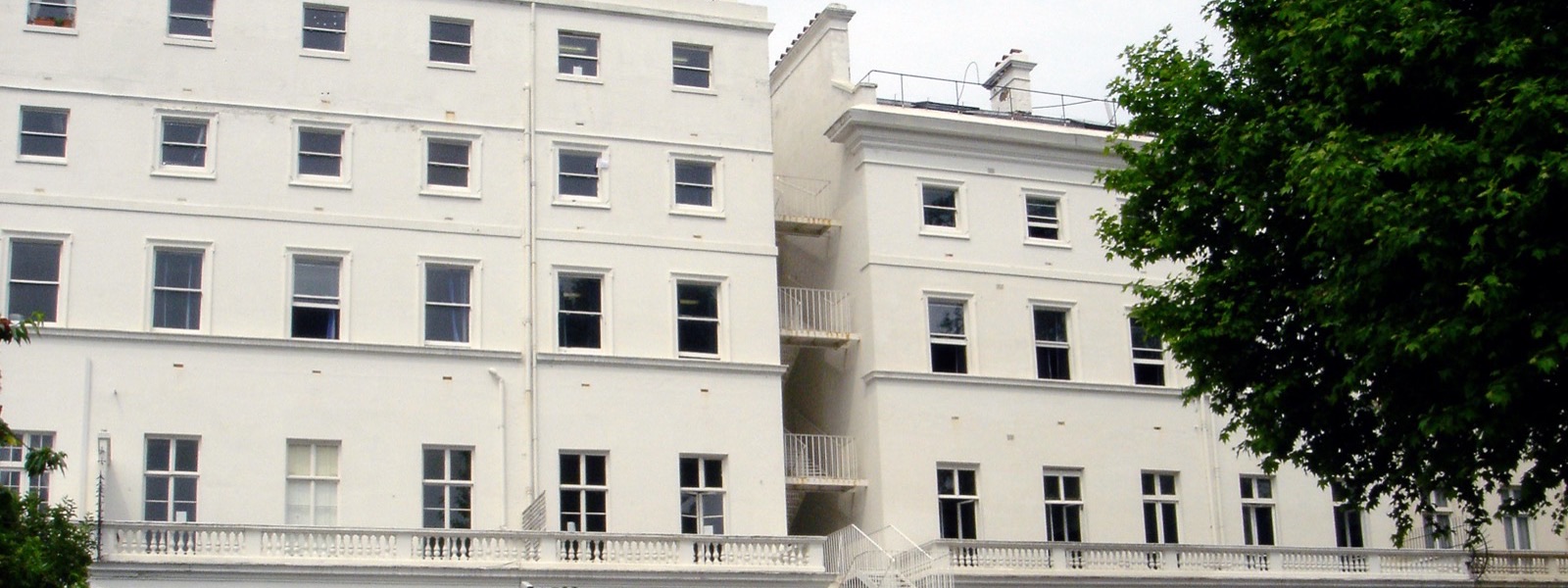
London is home to the largest French community outside of France : more than 300,000 French nationals live and work here. This community has naturally produced one of the densest networks of French schools in the world. The Lycee Charles de Gaulle in South Kensington, the College Francais Bilingue de Londres (CFBL), the Lycee International de Londres Winston Churchill in Wembley: these institutions educate thousands of students in the French curriculum. And these students share a persistent problem with mathematics. Not because they lack ability. But because nobody in London can help them properly.
After guiding more than 1,100 students toward elite institutions, I see the gap between French and British mathematics every day. They are two different worlds. And French families in London who search for math tutoring discover very quickly that British tutors, even the best ones, are unable to help a student preparing for the French baccalaureate. Our online tutoring solves this problem.
Three schools, one shared mathematical challenge
The French school landscape in London is rich and diverse, but the three main institutions share one thing in common: they follow the French national curriculum, with all the mathematical rigor that entails.
The Lycee Charles de Gaulle, located in South Kensington, is the flagship. Founded in 1915, it is one of the oldest French schools abroad. It covers primary through Terminale (12th grade) and prepares students for the French baccalaureate. Its academic environment is demanding, and the level in mathematics conforms to the most rigorous Parisian standards.
The CFBL (College Francais Bilingue de Londres) enrolls students from primary through college (middle school) in a bilingual French-English setting. The transition to lycee (often to the Lycee Charles de Gaulle or Winston Churchill) is a critical moment when gaps in mathematics, if they exist, become brutally visible.
The Lycee International de Londres Winston Churchill, in Wembley, is the most recent institution. It offers a French curriculum enriched with an international dimension and also prepares students for the baccalaureate. Its positioning attracts families considering both British universities and elite French tracks.
Why French math and A-Levels are two different universes
The British system teaches mathematics in a fundamentally different way from the French system. A-Level Mathematics is modular: students choose units (Pure Mathematics, Statistics, Mechanics) and study them in a relatively independent manner. The approach is pragmatic, oriented toward solving concrete problems, and the calculator is a central tool.
The French system is deductive, formalist, and integrated. Mathematics is not divided into isolated modules. It forms a logical edifice where each concept builds upon the previous one. Proof is at the heart of instruction: from middle school onward, students must prove what they assert. By Terminale, proof exercises represent a major portion of the baccalaureate assessment. A student who finds the correct answer without proving it systematically loses points.
A British tutor trained in A-Levels will teach your child how to apply methods. A French tutor will teach them how to construct an argument. These are two different competencies. And the French baccalaureate demands the second, not the first. This is why a Lycee Charles de Gaulle student working with a British tutor risks not only failing to progress, but developing methodological habits that actively harm their results.
Pain points by level
College (6eme - 3eme / grades 6-9)
College is a period when difficulties set in silently. The shift from concrete to abstract mathematics, which begins in 5eme (7th grade) with literal calculus and intensifies in 4eme (8th grade) with geometric proofs, is a decisive turning point. Bilingual students, accustomed to navigating between two languages, sometimes face specific difficulties with French mathematical vocabulary: technical terms, problem phrasing, writing conventions. A "si et seulement si" (if and only if) in the French mathematical context has no exact equivalent in the way math is taught in English at this level.
The brevet des colleges, at the end of 3eme (9th grade), is a first national examination that tests the rigor of mathematical writing. Students who have not acquired these reflexes by the end of college arrive at lycee with a structural handicap.
Lycee (Seconde - Terminale / grades 10-12)
Lycee is the moment of truth. Seconde represents a major qualitative leap: functions, trigonometry, vectors, probability. The formalism intensifies considerably. Students who had acceptable grades in college sometimes find their averages in freefall, not because they do not understand the concepts, but because they do not know how to express them with the expected rigor.
In Premiere and Terminale, the mathematics specialization is formidable. Analysis (sequences, limits, continuity, differentiation, integration), algebra, conditional probability, and combinatorics demand a precision and depth that the British system does not reach at the same stage. Students at Charles de Gaulle or Winston Churchill aiming for a Mention Tres Bien at the baccalaureate or admission to French preparatory classes must maintain a constant level of excellence. Every term counts.
Physics and chemistry
French-curriculum physics and chemistry present the same difficulties as mathematics. The French approach is fundamentally mathematized: physical laws are expressed as equations, exercises require formal proofs, and rigor in presenting results (dimensional analysis, significant figures, units) is a grading criterion in its own right. A-Level Physics, though rigorous, does not require the same level of mathematical formalism. Our tutors master the French physics and chemistry curriculum and can support students in both subjects simultaneously.
The online tutoring advantage: only one hour of time difference
Of all the major cities where French expatriate families live, London is the one where online tutoring with France-based tutors is easiest to organize. A single hour of time difference (GMT/BST vs CET) means that sessions can take place at virtually any time of day without logistical constraints.
A lesson at 5 PM Paris time corresponds to 4 PM in London : perfect for a student leaving the Lycee Charles de Gaulle. A lesson at 7 PM Paris time corresponds to 6 PM in London : ideal for a session after snack time and homework. This proximity allows maximum flexibility in scheduling, including weekend and school holiday sessions.
The online format is perfectly suited to mathematics. Shared screens, interactive whiteboards, real-time writing tools: the student writes out proofs, the tutor corrects and guides in real time. The pedagogical quality is identical to in-person lessons, without the constraints of traveling across a city as sprawling as London.
Return to France or Oxbridge: math level is decisive
French families in London frequently find themselves at a strategic crossroads. Some are considering a return to France in the medium term, in which case their child's level in French-curriculum mathematics is absolutely critical. A student who returns to France with gaps in math faces immediate difficulty, because Parisian lycees make no accommodations and do not slow down for a student returning from abroad.
Other families are targeting elite British universities : Oxford, Cambridge, Imperial College, UCL. For these applications, paradoxically, an excellent level in French mathematics is a major asset. The rigor of French proof methodology, the ability to manipulate abstract concepts, the precision of reasoning: these are exactly the qualities that Oxbridge admissions tutors seek. A Lycee Charles de Gaulle student with a 16/20 in the mathematics specialization has a mathematical profile that is objectively stronger than most British candidates.
For families considering American universities, our tutoring support for LFNY students in New York addresses the specificities of the Franco-American dual track. And to understand the challenges of applying to institutions in Brussels and the European sphere, discover our support for students at French schools in Belgium.
The Carmine difference: strategic positioning for post-graduation
At Carmine, every math lesson fits within a comprehensive vision of your child's trajectory. We do not provide isolated academic support. We build the academic foundations that determine post-graduation options : French scientific preparatory classes, Oxbridge, Ivy League, EPFL, Polytechnique.
Our tutors are not students giving lessons between exams. They are specialists in the French curriculum who understand the expectations of the baccalaureate, the selection criteria of preparatory classes, and the academic standards of international universities. They know exactly where your child stands relative to the demands of their ambitions, and they know how to close the gap.
With more than 1,100 students guided toward elite institutions, Carmine possesses expertise that London tutoring agencies cannot offer. We know the profiles that succeed, the gaps that prove costly, and the strategies that make the difference. Your child's transcript is not just a record of grades : it is an admissions file under construction. Every point in mathematics is an investment in their future.