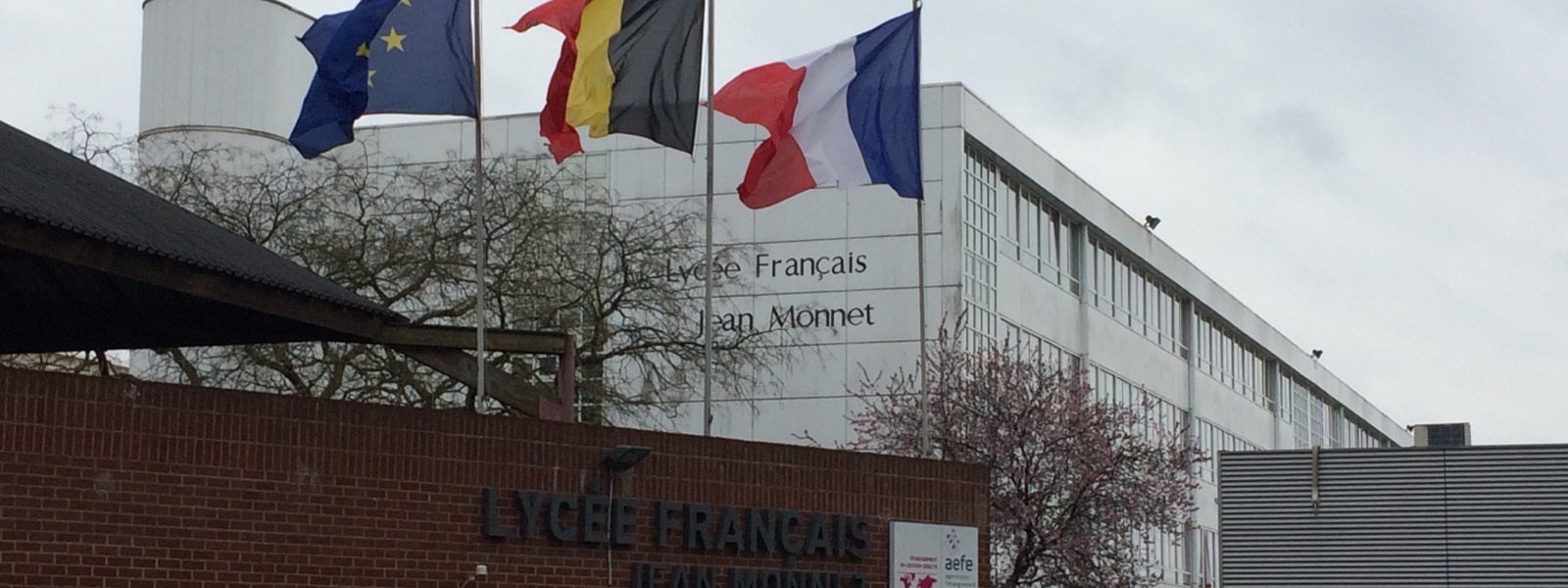
Brussels is perhaps the European capital where the confusion between education systems is most deceptive. French is spoken everywhere. Francophone Belgian schools are on every corner. Parents assume that their child, enrolled at the Lycee Francais Jean Monnet, could easily find a math tutor among the countless private tutors available in Brussels. And this is where the mistake begins. The Belgian mathematics program and the French mathematics program are two fundamentally different things. A Belgian tutor, however excellent, however francophone, does not teach the same curriculum, does not prepare for the same examinations, and does not understand the specific expectations of the French baccalaureate.
After guiding more than 1,100 students through demanding academic trajectories, including numerous families of EU officials based in Brussels, I can confirm that this misunderstanding is the number one source of mathematics difficulties for students at the Lycee Jean Monnet. Families believe they have access to support because they are in a French-speaking environment. In reality, they have access to the wrong support, which is sometimes worse than no support at all.
Lycee Francais Jean Monnet: the epicenter of European families
The Lycee Francais Jean Monnet de Bruxelles is one of the largest institutions in the AEFE network in Europe. It serves thousands of students, from kindergarten through Terminale, in an environment that reflects the unique composition of the French and francophone community in Brussels. The dominant profile: European institution officials. European Commission, European Parliament, Council of the European Union, NATO : Brussels is the institutional capital of Europe, and Jean Monnet is the school where these families educate their children.
This profile creates a particular dynamic. Families are often on rotation: a posting of four to six years, then a return to France or a move to another capital. Children arrive and depart mid-cycle. Some come from other French schools abroad, others from the metropolitan French system, still others from entirely different education systems. This permanent heterogeneity is a considerable pedagogical challenge, and mathematics is the subject where the gaps reveal themselves most brutally.
Jean Monnet has the size and resources to deliver quality education. But the very size of the institution means that individual follow-up is necessarily limited. A mathematics teacher managing multiple classes of thirty students cannot devote sufficient time to a struggling student. And this is where the temptation of a Belgian tutor enters the picture, with the consequences I have described.
French program vs Belgian program: a dangerous confusion
Francophone Belgium has its own mathematics curriculum, defined by the Federation Wallonie-Bruxelles. This program shares a common language with the French program, but that is roughly the only thing they share. The course structure, the progression of concepts, the demonstration methods, the assessment criteria : everything differs. The Belgian program, while solid, does not have the same formal rigor as the French program in terms of proof and deductive reasoning.
In practical terms, a Belgian tutor teaching functions does so within a framework that does not correspond to the French curriculum. Notations may differ. The methods expected in student work are not the same. The way limits, derivatives, and integrals are approached follows distinct pedagogical conventions. A Jean Monnet student working with a Belgian tutor risks not only failing to progress but also acquiring reflexes and habits that will penalize them in French-curriculum assessments.
This is a problem specific to Brussels. In Geneva or in London, families know they are in a foreign education system and deliberately seek out French-program tutors. In Brussels, the linguistic border masks the pedagogical border, and families fall into the trap.
Specific challenges by grade level
At the college level, difficulties are often tied to transitions. A student arriving in Quatrieme from another country, even from another French school, may have specific gaps depending on the quality of instruction at their previous institution. Algebra, geometry, the first encounters with functions : these foundations must be perfectly solid to approach lycee. At Jean Monnet, where family mobility is constant, these transitional gaps are particularly common.
In Seconde, the French program imposes a qualitative leap that catches many students off guard. Reference functions, vectors in the plane, probability, equations and inequalities : all of this demands a level of abstraction that was not required in college. This is the moment when students who have been "managing" suddenly find themselves in difficulty. And for families of EU officials, who often have a very academic view of success, this drop in Seconde grades comes as a shock.
In Premiere and Terminale mathematics specialization, the program reaches a level of rigor that genuinely separates students. Sequences, limits, continuity, derivatives, integrals, advanced probability, three-dimensional geometry : each chapter is dense and relies on perfect mastery of the preceding chapters. A Jean Monnet student targeting scientific preparatory classes, EPFL, or selective universities must not merely keep pace with this program but dominate it. There is no margin for error.
Physics-chemistry: the same problem, amplified
The confusion between French and Belgian programs is even more pronounced in physics-chemistry. The Belgian science curriculum and the French physics-chemistry specialization differ considerably in approach, content, and expectations. A Belgian science tutor does not prepare for the same examinations, does not use the same methods, and does not know the specific conventions of the French baccalaureate. For a Jean Monnet student, working with a Belgian physics-chemistry tutor is just as counterproductive as in mathematics.
Online tutoring: the adapted response to the Brussels context
Online tutoring solves the specific Brussels problem elegantly. Instead of searching locally for a tutor who does not exist (a French-program specialist in an environment where tutors are trained in the Belgian program) Jean Monnet families gain direct access to tutors who have perfect command of the French mathematics and physics-chemistry curriculum.
Our tutors are experienced professionals, specifically trained in the French program. They know the official frameworks, the baccalaureate expectations, the coefficients, the grading methods. They are accustomed to working with AEFE students and understand the specificities of these trajectories : family mobility, transitions between institutions, heterogeneous profiles.
Brussels holds a major advantage over other cities: the timezone. Brussels is on the same timezone as Paris (GMT+1). Lesson slots are therefore perfectly aligned with school schedules, with no timezone constraints whatsoever. Sessions can take place in late afternoon, on Wednesday afternoon, or on weekends, exactly as if the tutor were in France. Video conferencing with interactive whiteboards provides a pedagogical experience identical to in-person instruction, with the additional flexibility of session recording.
The Carmine strategic advantage: tutoring plus post-bac orientation
The Brussels context adds a strategic dimension that standard tutoring agencies completely ignore. Families of European officials face orientation questions that most parents never encounter. Will a child who has lived in Brussels for six years return to France for preparatory classes? Will they stay in Belgium for university? Will they target EPFL in Switzerland? The proximity of Paris (one hour twenty minutes by Thalys) makes the return to France for lycee or preparatory classes perfectly feasible. Some families consider this seriously.
At Carmine, tutoring in mathematics and physics-chemistry is never disconnected from these strategic questions. When we support a Jean Monnet student, we integrate the academic work into a comprehensive vision of their trajectory. If the objective is scientific preparatory classes in Paris, the required math level differs from what suffices for a Belgian engineering school. If the objective is EPFL, the thresholds in mathematics and physics-chemistry specializations are precise and non-negotiable. If the objective is a British university, the academic profile must be positioned differently.
Every hour of tutoring fits into this strategic logic. Our tutors work in coordination with our admissions guidance team to ensure that the work in mathematics and physics-chemistry directly serves the student's post-baccalaureate objectives. This is a coherence that Jean Monnet families will not find anywhere else in Brussels.
The proximity trap: why Brussels families act too late
Paradoxically, the proximity to France and the French-speaking environment of Brussels give families a false sense of security. They tell themselves they will find a tutor when they need one. They tell themselves the Belgian program is "almost the same." They tell themselves the situation is not urgent because they are not in Asia or South America. This false comfort is dangerous.
The French mathematics program does not forgive procrastination, whether you are in Brussels or Tokyo. Every term of unaddressed gaps makes the following term harder. A Seconde student who has not understood reference functions approaches Premiere with a handicap that will worsen exponentially. And when the family realizes in Terminale that the situation is serious, it is often too late to repair three years of fragile foundations.
If your child is at the Lycee Francais Jean Monnet and you are observing difficulties in mathematics or physics-chemistry, the time to act is now. Not after the next parent-teacher conference. Not next term. A precise diagnostic, an adapted work plan, and a tutor who truly masters the French program : this is what makes the difference.