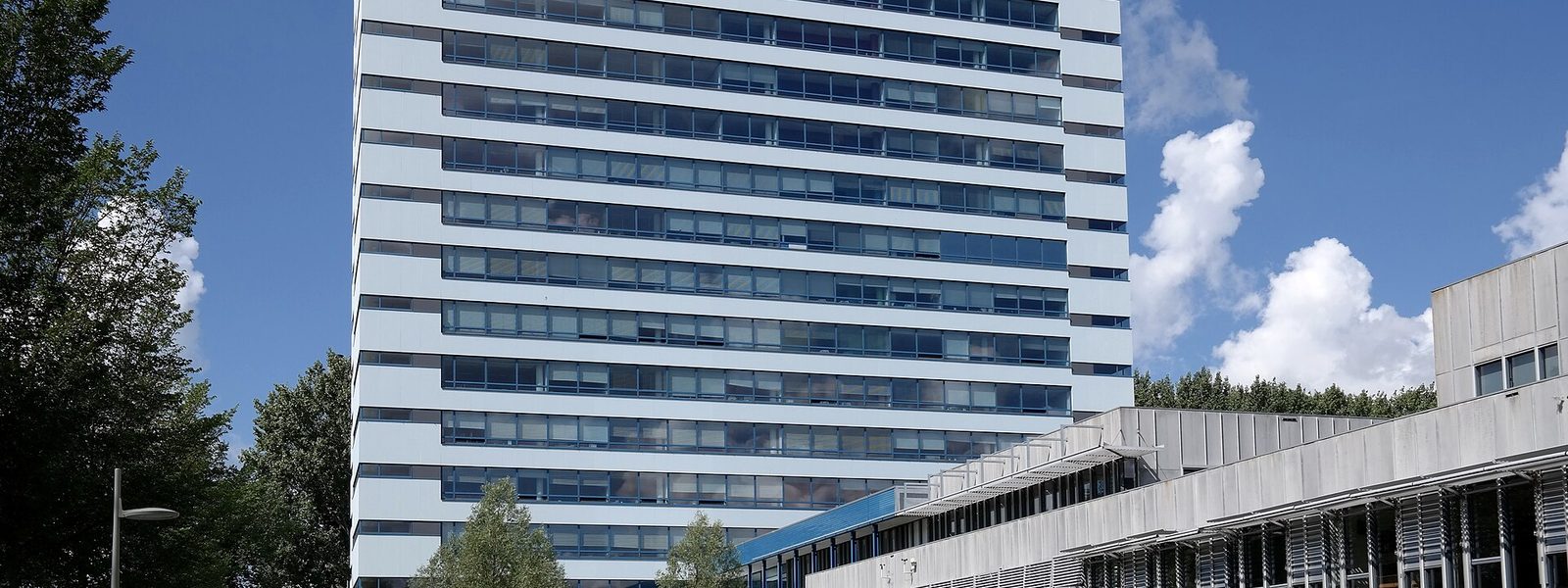
Families coming from the French system tend to see the Netherlands as the easy option in Europe: degrees taught in English, low fees for EU citizens, and no entrance exam. The first two are true. The third depends on the programme. At TU Delft, the English-taught bachelors are capped and rank applicants with an online test. Elsewhere, entry is broad, but students are weeded out during the first year, and the cut is hard.
One portal, two deadlines
Every application goes through Studielink, the national portal, and then through the university's own system. Programmes with a numerus fixus, meaning a fixed number of places, close on 15 January; after that date there is no way in for the following September. Other programmes accept applications until 1 May, the general date given by Study in NL, the official agency. Some universities set earlier dates for non-EU applicants, and the University Colleges run their own rounds.
A student in terminale (the final year of the French lycée, Year 13 or 12th grade) who is still undecided in January has already lost the most sought-after programmes. Families who start looking in spring often find this out too late.
Four bachelors in English at Delft
Most TU Delft bachelors are taught in Dutch: civil, mechanical and electrical engineering, applied physics, applied mathematics, industrial design and architecture among them. The English-taught programmes are Aerospace Engineering, Computer Science and Engineering, Nanobiology (a joint degree with Erasmus MC in Rotterdam) and Earth, Climate and Technology. For the others, a French student needs proof of Dutch or a preparatory language year first.
TU Delft lists the required spécialités (the subjects French students choose for their last two years of lycée) for each programme.
| English-taught bachelor | Required spécialités (French bac général) |
|---|---|
| Aerospace Engineering | Mathematics and physics-chemistry |
| Computer Science and Engineering | Mathematics |
| Earth, Climate and Technology | Mathematics and physics-chemistry |
| Nanobiology | Mathematics and physics-chemistry, plus a VWO-level biology exam |
TU Delft sets no minimum average for the French bac and does not say whether the extra option mathématiques expertes is expected. In practice the selection test covers first-year university material, so a student who dropped maths expertes in terminale starts with a real gap in calculus.
Ranked, not read
Aerospace Engineering has 440 places for 2027-2028: 308 on the English track and 132 on the Dutch-English track, and you can only apply to one. After registering on Studielink, applicants go through three stages. First a "matching" phase in an online learning environment, with a maths and physics level test and self-reflection tasks, compulsory but ungraded. Then a personality questionnaire about study situations. Then an online-proctored selection test in mathematics, physics and first-year topics. The outcome is a ranking number, sent through Studielink in mid-April. A number within 440 means a place; anything above means waiting for others to decline.
The faculty says it provides no past papers and no practice tests. Each applicant may take part three times in total, once a year. An offered place must be accepted on Studielink within two weeks, or it goes to the next number, which has caught out families on holiday.
Computer Science and Engineering has 590 places for 2027-2028, 345 of them on the English track. Its test covers mathematics and logical reasoning, and the ranking combines the test result with a lottery run within score bands. A top score puts a student in the best band but does not fix their exact rank. Holders of a foreign diploma can only join the English track unless they can prove their Dutch.
Open programmes: the selection comes in June
Outside the numerus fixus, a Dutch bachelor admits any applicant with the right subjects. The university may run a "studiekeuzecheck", a short interview or questionnaire about the student's choice, whose advice is not binding for those who applied before 1 May. The real filter is the BSA, the binding study advice at the end of first year. At TU Delft, students must pass 45 of 60 credits in first year, using first-year courses only. Below that, enrolment ends and the student cannot re-enrol in the same programme for four years. A first warning comes in March, based on first-semester results.
This is what French families find hardest to believe. A student admitted without difficulty can be out by August. The first year works more like a French prépa than like a French university licence.
University Colleges
Several universities run a University College: a Liberal Arts and Sciences bachelor in English, taught in small groups, with admission on grades, a personal statement and sometimes an interview. The best known are Amsterdam University College (shared by the University of Amsterdam and VU Amsterdam), Leiden University College in The Hague, and Erasmus University College in Rotterdam. All three charge more than the standard statutory fee.
| Programme | Fees for an EU student | Application rounds |
|---|---|---|
| Amsterdam University College | €5,780 (2027-2028) | 1 December, 1 February, 1 May |
| Leiden University College, The Hague | €5,684 (2026-2027), including a €2,990 college fee | 1 December, then 15 March |
| Erasmus University College, Rotterdam | €5,800 (2026-2027) | 15 January, then 1 May |
AUC strongly encourages applications by the first two dates, and LUC only considers financial support for applicants in the December round. For a student also applying to American universities, December lines up neatly with Early applications in the US.
What it costs
EU students pay the "wettelijk collegegeld", the statutory fee set by the Dutch state: €2,694 for 2026-2027, and €2,771 for 2027-2028 according to the University of Amsterdam. Non-EU students pay an institutional fee, for example €13,500 for most Erasmus University Rotterdam bachelors in 2026-2027. For a French or other EU citizen, tuition is far below the €23,000 first-year fee at Bocconi, covered in Bocconi admission with the French baccalaureate. The big cost is housing.
Housing comes first
The national student housing monitor, published by the Dutch government in September 2026, puts the shortage at about 20,200 units across nineteen student cities for 2025-2026. The share of students renting from private landlords fell from 52% to 45% in two years, as many landlords sold up. For a newcomer with no local network, that is the hardest market. Some summers, universities including the University of Amsterdam have told international students not to come without a room.
TU Delft has rooms reserved with DUWO, the local student landlord, for its international students. On r/TUDelft, students point out that this contract only covers the first year and cannot be renewed, so the search starts again for second year. Local press has also reported listings open to Dutch speakers only. I tell families to treat housing as part of the application, to start the day the place is accepted, and to plan for year two as well.
Less English, more Dutch
The Dutch government has been pushing universities for several years to cut back English-taught teaching. In 2024, Universities of the Netherlands announced that four bachelors would switch fully to Dutch, thirty-five English programmes would add a Dutch track, and twenty-seven would cap English-track intake. The bill that would give universities the legal tools for those caps, "Internationalisering in balans", was still before the lower house in autumn 2026, according to the Dutch Senate's website.
Delft's bilingual tracks are the visible result: in both aerospace and computer science, part of the places sit on a Dutch-English track closed to students without Dutch. The number of English-track places can move from one year to the next, so check the programme's selection page every autumn.
Example: the cycle for September 2027 entry.
TU Delft Aerospace Engineering: Studielink registration by 15 January 2027 at 23:59 CET, matching by 15 February, questionnaire by 25 February, selection test on 11 March 2027, ranking number on 15 April 2027. Computer Science and Engineering: same 15 January 2027 deadline, ranking on 15 April. Amsterdam University College: rounds on 1 December 2026, 1 February and 1 May 2027. All dates from official pages checked in October 2026.
Which student is it for?
Delft suits a student who is strong in maths and physics, took maths expertes, and is comfortable being ranked by a test rather than judged on three years of reports. For a bright but uneven student, that can even help. For one who needs structure, the BSA makes first year risky, and I would look at EPFL too, where the French bac is assessed differently (see EPFL admission with the French baccalaureate), or at ETH Zurich.
The Netherlands fits well alongside Parcoursup and a UCAS application, as long as someone keeps three calendars running and nobody misses 15 January. I have gathered those overlapping dates, from UCAS to McGill, in Study abroad after the French baccalaureate. That is the work we do with families at Carmine: choosing programmes, ordering the applications, preparing for the selection tests and, for the University Colleges, the written statements. To talk it through, get in touch, or see how we support admissions.