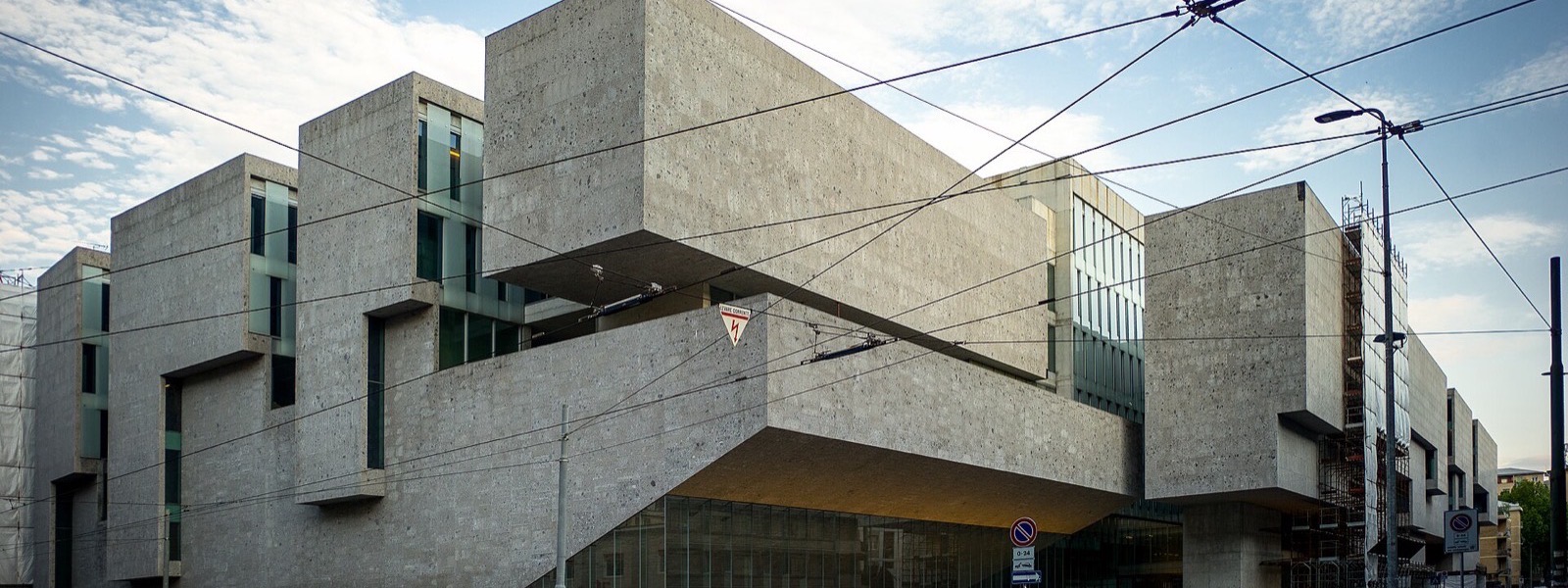
Every year, families in the French system put Bocconi in the second row of their strategy, behind the prépa (the two-year preparatory classes for the French grandes écoles) and behind HEC. In June they discover that selection closed months earlier. Everything follows from this: in Milan, you apply not after the baccalauréat (the French school-leaving exam) but during terminale (the final year of lycée), sometimes even before.
The second surprise is a pleasanter one: among the international applications Bocconi receives, French students are the most represented nationality. You are not heading into unknown territory. You are heading into crowded territory, which is a different thing.
Two rounds a year, and the first closes in September
For entry in September, Bocconi runs only two selection rounds, both during terminale. The first, called Early, closes at the end of September, and its test must be taken a few days before. A family that discovers the subject at the start of terminale has almost always missed it already.
That leaves the Winter round, open from late November to late January. This is the one most students in the French system aim for, and its test is prepared from the autumn.
- Until 19 January 2027Take the online admission testUp to four attempts. This is the only part of the process that can be worked on, and it ends before the application is submitted.
- 25 November 2026 → 26 January 2027, 3 pmSubmit the applicationItalian time. Up to four programmes, ranked by preference.
- Mid-March 2027ResultAdmitted, waiting list or rejected. A waiting list counts as a rejection until a place becomes free.
- Within three weeksPay the enrolment deposit€3,400, non-refundable. It is this step that opens access to the financial aid application, not the other way round.
- 15 March → 5 April 2027Submit the scholarship applicationAnswer by 27 May at the latest. You commit financially before you know what you will pay.
- End of July 2027Send the baccalauréat transcriptIn French, with no translation. This is the only point at which terminale comes into play.
What Bocconi looks at, and what it ignores
Selection rests on two figures, and Bocconi publishes them. The test score counts for 55%. The school average counts for 45%. There is nothing else.
But the average used is not the one you imagine. Bocconi takes the third-to-last and second-to-last years of secondary school. For a student in the French system, those are seconde and première (the first two years of lycée). Terminale does not count in the calculation.
For a student in terminale this is harsh: the academic half of the application is already settled, and only the test is left. For a student in seconde or première it is the reverse, and it is the first thing I tell families who come to me early: this year's grades are the ones that will count in Milan in two years' time. Usually nobody had told them.
A word of caution: the average is calculated out of ten, with a tool locked inside the application portal. Bocconi publishes no formula for converting from the French scale out of twenty. So you cannot estimate where you stand before opening an application.
The test: fifty questions, seventy-five minutes
The test is taken online, from home, under audio and video supervision. There is no exam centre. You may take it in Italian or in English, as you choose, whatever the language of the programme you are applying to. And you may retake it: four attempts are allowed.
This scoring deserves a pause. The penalty for a wrong answer is small, two tenths of a point, while a correct answer earns a full point. Guessing on a five-option question therefore remains slightly favourable. A French student, trained never to write anything they are not sure of, leaves points on the table out of reflex. That is the first thing to unlearn.
Bocconi publishes a full timed simulation with answers, as well as a downloadable sample test and a practice app. It states that there is no official textbook. Nor are there past papers from previous sessions.
The maths level of the test, measured against the French syllabus
Every family asks me the same question: is my child at the level?
For a student who has taken the mathematics spécialité (the in-depth subject chosen in première and terminale), the answer is yes on substance and no on form. The topics belong to collège and seconde: proportions, percentages, linear and quadratic equations and inequalities, linear functions, systems of equations, areas and volumes, arithmetic and geometric sequences, basic counting, simple probability. Nothing beyond what a student in première has mastered.
The difficulty is threefold, and none of it is about level:
- Time. A minute and a few seconds per question. The French method, setting out, working through, writing up, is too slow. Students have to learn to eliminate answers and to estimate, two reflexes the French school system actively discourages.
- Language. The questions are in English and describe economic situations. A student who translates in their head loses ten seconds per question, that is, a sixth of the time.
- Logical and critical reasoning. The non-mathematical part of the test is an exercise in formal logic and argumentative reading that the French lycée covers nowhere. This is where good French students get caught out, because they meet it for the first time on test day.
In practice, a student who is strong in maths and trains on the format for eight to ten weeks reaches their ceiling. A student who meets the format for the first time on the day loses between a quarter and a third of their points on questions they could handle without a clock.
The SAT instead of the test: when it is worth it
The SAT and the ACT are accepted in place of the Bocconi test, on a stated equal footing. The cut-off thresholds are published: below 1040 overall or 520 in any section, the application is not considered. The programme in mathematical sciences and artificial intelligence also requires 600 out of 800 in maths. Scores from before 2022 are not accepted, and the institution code is 7206.
The practical question is which of the two to choose. My answer: the Bocconi test, unless the student is already taking the SAT to apply to the United States. The Bocconi test is free to retake up to four times, can be prepared in a few weeks, and has no native-level English reading section. Taking the SAT solely for Milan means creating an extra difficulty for yourself.
A warning: Bocconi states that it converts the two scores using percentile tables, but it does not publish those tables. So no one can say whether a given SAT score is worth more or less than a given score on Bocconi's own test.
The application: what you are not asked for
Four documents, and that is all: an identity document, the parents' identity documents if the student is a minor, the school reports for seconde and première, and a test result.
No personal statement. No reference letter. No interview. For families who have just read everything that has to be written for an American university, this is disconcerting. It is also good news: nothing can be rescued by the narrative, so nothing can be lost through a French student's awkward English either.
A detail that matters to you: school reports written in French do not need to be translated. Bocconi accepts French, German and Spanish as they are. Families who pay a sworn translator are paying for nothing.
English: the trap of the baccalauréat général
Proof of English is not required to apply. It is required to enrol, once admitted, at B2 level. And that is where the only real trap for a student in the French system lies.
Bocconi publishes the list of diplomas that exempt students from the certificate. The baccalauréat français international (the bilingual international option of the French bac) is on it. The baccalauréat général (the standard French bac) is not. A student at an ordinary French lycée, even one who is excellent in English, even one in a section européenne (an enhanced foreign-language stream), will therefore have to produce a certificate, or take Bocconi's English test. No page on the site says this in so many words. Families usually find out in June, when the certification sessions are full.
The accepted certificates and their thresholds are published: 88 on the TOEFL, 6.5 on the IELTS with at least 6.0 in each section, 110 on the Duolingo, among others.
What it costs, and in what order
€100 to apply, non-refundable. Around €17,000 in tuition per year in 2026-2027, a figure revised every year and published late. A €3,400 deposit on admission, non-refundable. Bocconi also puts the cost of living in Milan at around €32,000 per year, accommodation included, or €1,700 to €1,800 per month.
The order of operations is the hardest point in the whole application, and it is not written anywhere as a warning.
You must be enrolled, and therefore have paid the non-refundable €3,400, before you can submit your financial aid application. The answer comes weeks later. A family admitted in March therefore commits without knowing whether it will receive a one hundred per cent fee waiver, a twenty per cent one, or nothing at all.
On scholarships, Bocconi publishes only percentages: one hundred, eighty, sixty, forty or twenty per cent of fees. No income bands, no amounts in euros, and awards made "while resources last". For a family living in France, the application must go through a partner organisation responsible for establishing the Italian equivalent of the household income assessment. Neither the cost nor the timescale of this step is published. Start it early.
A word on programme names
If you are reading an older guide, you will be looking for acronyms: BIEF, BIEM, BESS, CLEAM. Since the 2027 admissions round, Bocconi no longer uses them. The international finance programme is now called Finance, the management programme is called Management, and so on. Bocconi publishes no conversion table, and several of its own pages still show the old titles.
So check the names on the admissions page itself, not anywhere else. You are allowed four ranked choices: getting an acronym wrong amounts to rejecting yourself.
The five mistakes French families make
- Treating Milan as a plan B. An application submitted as a last resort reads as one. The letter shows it, the programme choices show it, and the application comes after those of families who made a deliberate choice.
- Waiting for the baccalauréat results. The rounds open and close well before. A family that waits until June finds the places already allocated.
- Mixing up the acronyms. The English-taught programmes do not recruit the same profiles and are not equally selective. Applying to the wrong one without knowing it amounts to rejecting yourself.
- Neglecting the proof of English. A section européenne or a distinction in the baccalauréat does not replace the required certificate, and test sessions fill up.
- Underestimating the real cost. Tuition fees depend on declared income, and the financial file has to be prepared at the same time as the academic file, not afterwards.
The grey areas
It is important to be honest about the grey areas, because they determine the strategy.
- The admission rate is not published anywhere, neither overall nor by programme. No average for admitted students, no effective cut-off score. The published thresholds are elimination thresholds, not entry thresholds.
- Selection is a relative ranking for which no history is published. So it is impossible to say in advance "with this score, you are in".
- The amounts for the year you are applying for are published late: tuition, deposit, accommodation and aid thresholds included. The decision to commit is often made before the price is published.
What we do know, on the other hand, is enough to act on: half the application is decided in seconde and première, the other half on a test that can be prepared in two months, and the calendar closes in January. Everything else is noise.