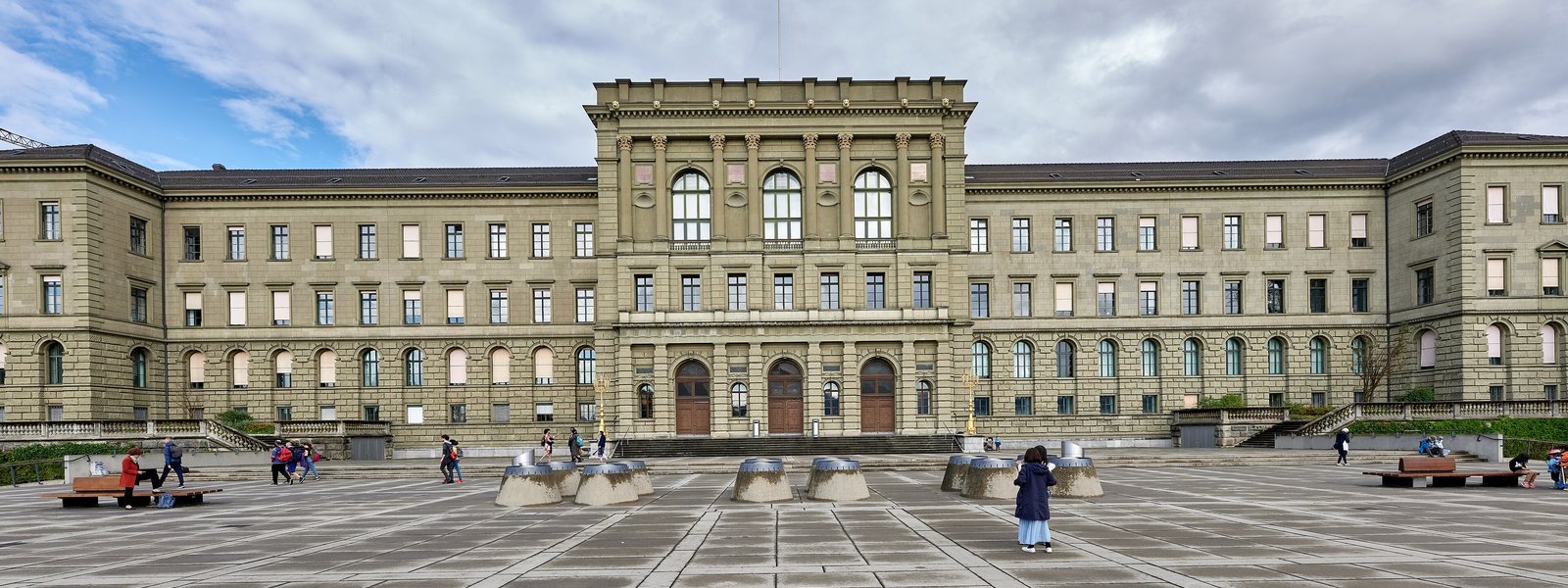
ETH Zurich, the Swiss Federal Institute of Technology in Zurich, is one of the easiest universities to understand for a student with the French baccalauréat: its admission requirements are written out, country by country. A student who meets them gets in without an exam. One who does not sits an entrance exam, and usually loses a year.
Two things nonetheless sink strong applications: the required grade, which is decided as early as the penultimate year of lycée, and language, since Bachelor's studies are taught in German.
ETH Zurich Bachelor admission: the requirements for the French baccalauréat
ETH's official table for the 2026-2027 academic year sets three cumulative requirements for the baccalauréat général:
- Three subjects taken in the last two years of lycée (première and terminale): the maths specialism or the maths expertes option, the life and earth sciences (SVT) or physics-chemistry specialism, and French or the first foreign language.
- An average of at least 14/20 across these three subjects in the final exam.
- A final baccalauréat average (moyenne finale) of at least 16/20.
There is also a curriculum condition: four subjects from physics, chemistry, biology, computer science, another language, geography, history and economics must have been taken during the last three years of secondary school. For a student in the maths and physics-chemistry specialisms, this is almost always the case.
The 16/20 is the real barrier. The final baccalauréat average includes continuous assessment from the last two years: a student who eases off in the penultimate year may have lost ETH before even applying. This application is prepared in that year.
German, the requirement families discover too late
ETH spells it out: the main teaching language of Bachelor's studies is German. Except for native German speakers and holders of a few German-language diplomas, applicants must submit a C1 German certificate by the application deadline, 31 March. The deadline is not negotiable, and ETH offers no German courses.
C1 takes several years of serious work. A student who has studied German as a first or second foreign language since middle school, with good results, can get there by starting in earnest in the penultimate year. A student who has never studied German should look elsewhere, or aim for ETH later, at Master's level, where the language requirements are different.
ETH Zurich admission exam: the reduced entrance examination
A French baccalauréat holder who does not meet the requirements, for example with a final average of 15.5, must sit the reduced entrance examination. It covers mathematics, physics, chemistry and biology, is taken in German in Zurich, every year in the third and fourth weeks of January, and costs CHF 550.
The calendar turns it into an extra year: the exam takes place in the January after the baccalauréat, and studies start the following autumn. The syllabus follows the goals of the Swiss Matura, not those of the French baccalauréat. It is a genuine route, but a demanding one, to be prepared like a competitive exam.
Example: entry in autumn 2027. Online application from 1 December 2026 to 31 March 2027, C1 German certificate included. The baccalauréat diploma is sent on receipt, by 31 August 2027 at the latest. Classes start on 20 September 2027. ETH states that applications are processed within about eight weeks.
What ETH costs for a student from France
Since autumn 2025, ETH has two fee groups. Students who lived in Switzerland when they obtained their school-leaving certificate pay CHF 730 per semester. Other foreign students, including a French baccalauréat holder living in France, pay three times as much, CHF 2,190 per semester. On top of that comes the cost of living in Zurich: ETH publishes a document on living costs for international students.
ETH or EPFL: two different logics
Both Swiss federal institutes of technology ask a French baccalauréat holder for a 16/20 average, but they do not work the same way. EPFL, in Lausanne, teaches in French and ranks applicants by their average within a capped number of places: meeting the requirements earns the right to be ranked, not a place. ETH presents its requirements as a threshold, without announcing any ranking, but demands German. I cover EPFL in detail in EPFL with the French baccalauréat.
The right choice therefore depends on the profile as much as on prestige: a strong German speaker has a real chance in Zurich, a student without German will look to Lausanne. These decisions are made in the first or second year of lycée, while grades and language can still be worked on. That is the work we do with families at Carmine, and for maths I prepare students in private lessons, up to the entrance exam if needed.