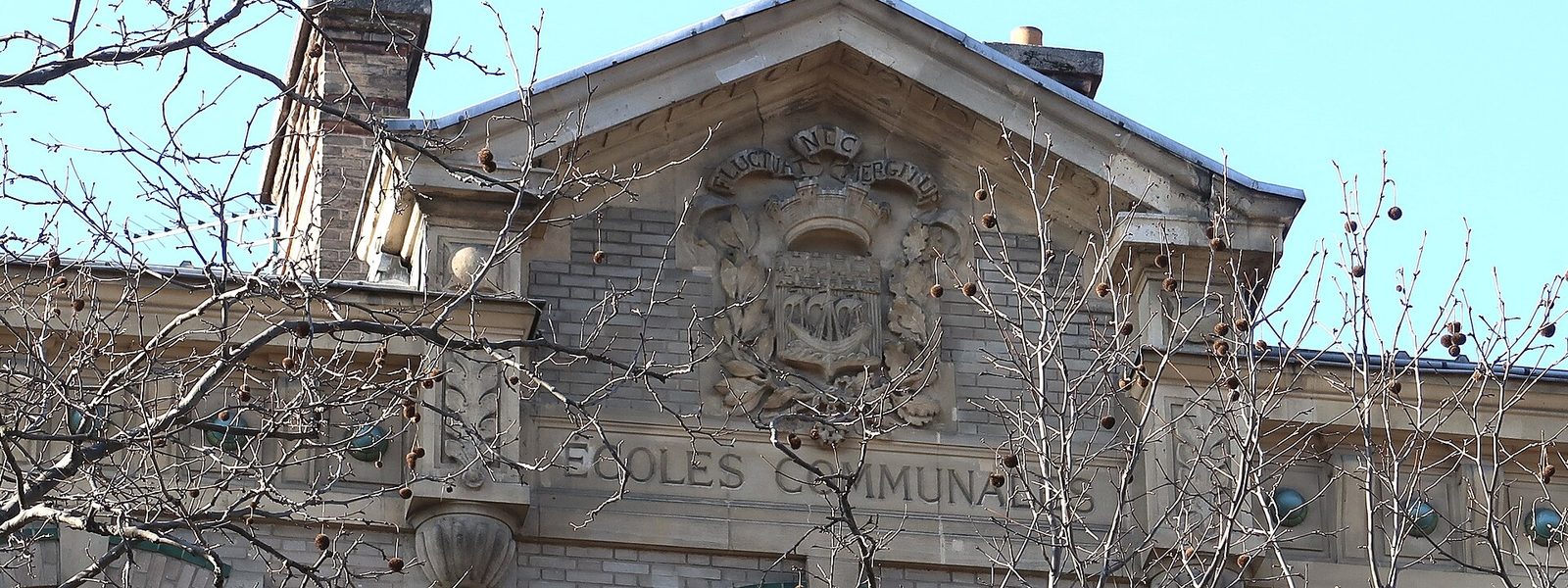
Families moving to Paris with children usually start with the school question, and they are right to. But they often treat it like choosing a flat: visit, compare, decide once you are there. Paris does not work that way. Many options close before you even arrive, because state schools depend on your address and the most sought-after tracks recruit on a calendar that starts almost a year before the school year.
This article explains how French schools work for a family arriving from abroad, then the four decisions to make before you sign a lease.
The French school system on one page
School is compulsory in France from the age of 3. There are four stages: école maternelle (nursery, three years), école élémentaire (primary, five years from CP to CM2), collège (lower secondary, from sixième to troisième) and lycée (upper secondary: seconde, première, terminale). There is no entrance exam for collège. State schools are free from nursery to the end of lycée.
What surprises families from English-speaking countries most is the age rule. In France, the year group does not depend on a cut-off birthday but on the calendar year of birth: a child starts CP in the September of the year they turn 6, whether they were born in January or in December. Two children born in the same year are in the same class, whatever the month.
| Age reached during the calendar year | Class from September |
|---|---|
| 3, 4, 5 | Maternelle: petite, moyenne, grande section |
| 6 | CP (first year of primary) |
| 7, 8, 9, 10 | CE1, CE2, CM1, CM2 |
| 11, 12, 13, 14 | Sixième, cinquième, quatrième, troisième (collège) |
| 15, 16, 17 | Seconde, première, terminale (lycée) |
The table applies the official calendar-year rule, with no skipped or repeated year. For a child arriving from abroad, the age gap with the class is, in principle, no more than two years.
State, private under contract, independent, international
Four kinds of school coexist in Paris, and their entry rules have nothing in common.
- State schools are free and zoned: your home address determines the primary school, the collège and part of the lycées open to you. The City of Paris publishes a school catchment map.
- Private schools under contract (sous contrat) follow the national curriculum; the State pays the teachers, and fees are far lower than at international schools. You apply directly to the school, which chooses its pupils. Most of the famous Paris schools, from Stanislas to the École alsacienne, are in this group.
- Independent schools (hors contrat) have no agreement with the State and do not have to follow the curriculum. They are inspected, but one detail matters: to move back into the state system at collège or lycée level, the child must pass an admission exam.
- International schools are not an official category. Each one falls under one of the statuses above, so check school by school. I compare the main ones in Which international school in Paris.
Between fully French and fully English, there is a state option that foreign families often discover too late: international sections (sections internationales). Pupils follow the French curriculum plus several hours a week in the section's language, taught by teachers from the partner country. At lycée they lead to the French international baccalaureate (BFI), which replaced the former OIB. Inside Paris, English sections exist at the collèges Montaigne (6th arrondissement), Voltaire (11th), Camille Sée (15th), Balzac (17th) and Maurice Ravel (20th), and there are sections in about ten other languages, from German to Japanese.
Enrolling your child in a Paris school: who does what
The procedure changes with age, and it is never the school itself that opens the door.
- Nursery and primary: you enrol at the town hall of your arrondissement (mairie), online or in person, with an ID, a birth certificate or family record book, proof of address and the vaccination record. The mairie issues a certificate, then the head of the school registers the child. For a family settling in France, a sworn statement can replace a missing document.
- Collège: placement is decided by the Paris education authority, normally in the catchment collège, on a file that must include the previous school's decision to move the pupil up a year. Without that document, the file is not processed.
- Lycée: entry into seconde goes through Affelnet, an online choice system where the catchment collège, the year 9 (troisième) marks and a social bonus all count. Henri-IV and Louis-le-Grand are in the first catchment group of every collège in Paris.
A child who does not speak French: the CASNAV route
For children who do not yet speak French, Paris has a separate route run by the CASNAV, the education authority's centre for newly arrived non-French-speaking pupils.
- Ages 6 to 10: the mairie sends the child to the nearest school with a reception class (UPE2A). A teacher assesses French and maths, then places the child in the reception class or in a regular class.
- Ages 11 and over: you do not contact the collège. You book an appointment online with the CASNAV, which tests French and maths and then notifies the placement by letter.
Two details weigh on a summer arrival: test slots are released in waves, and there are no tests during school holidays. A family arriving in mid-July can see their child start the year a few weeks late. In a reception class, pupils join their regular class step by step, and full inclusion usually comes after about a year. In exams, they may use a bilingual dictionary during their first four years in France.
Four decisions to make before you arrive
This is where the difference lies between a family that chooses and a family that takes what is left.
- Choose the address with the school in mind. In the state system, the catchment area decides everything. For lycée, the education authority requires a home in your own name: staying with a third party is not accepted in the placement procedure. A temporary flat or a stay with friends in the spring can shut you out of Affelnet for the year.
- Apply to an international section on time. They are free and open to families who do not live in Paris yet, but everything is decided between January and June for the following September: application, written tests, an oral in the section's language.
- Check the status of your current school abroad. A pupil from a school recognised by France follows the ordinary procedure. A pupil from an unrecognised or independent school will sit a level test.
- Measure your child's real level before choosing. A child who speaks French fluently may struggle with written French, or with maths, where the curriculum moves at a different pace. That level, more than a school's reputation, should decide between a bilingual school, an international section and an English-speaking school.
2026 calendar of the Paris international sections (collège and lycée).
- Online application from 12 January to 10 March 2026, with a statement of language practice.
- Written tests on 18 and 19 March 2026, then an oral in the section's language from 7 April to 13 May.
- Results on 15 June for collège, 30 June for lycée.
- For entry into sixième, a catchment waiver request is also needed in the spring, even for the catchment collège.
Dates change every year; the order of the steps stays the same.
Prepare the move instead of enduring it
What I do with families moving to Paris comes in three steps: measure the child's level in French, maths and English, choose two or three schools that truly fit, then keep to each school's calendar, from the file to the interview. Families who start this work before the move have a choice. The others find out in September that the choice was made for them.
Next, depending on your child's age: primary schools in Paris, middle schools in Paris and high schools in Paris.