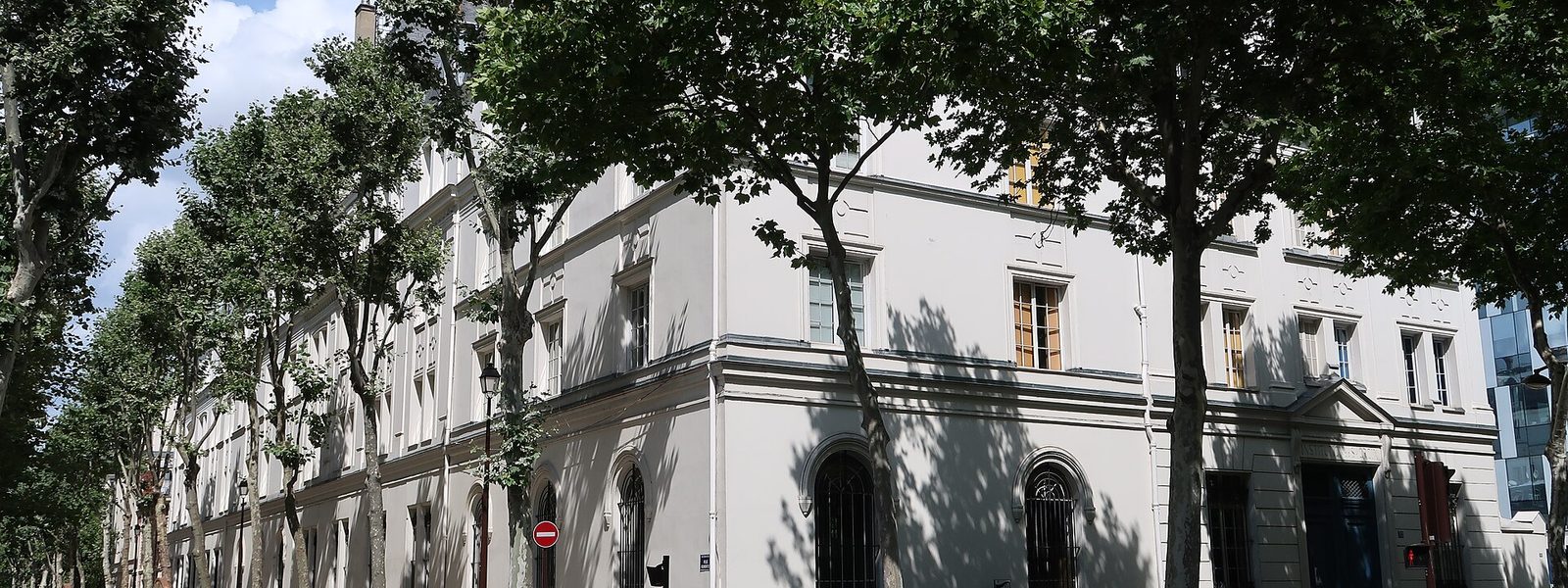
Stanislas and Saint-Jean de Passy are two of the most sought-after Catholic schools in Paris, both private schools under contract with the State, which keeps their fees low. Neither publishes a closing date or a number of places, and Stanislas reviews files the moment they arrive, so places go in order of arrival. A no in February can mean "that class is full" as much as "your child is not right for us". Neither school will tell you which. The question worth asking is what is still open, and where.
What the answer actually says
Saint-Jean de Passy publishes three possible outcomes after reading a file: an interview offer, a waiting-list letter, or a refusal before any interview. The waiting list is real. Places in the middle years and in première (Year 12, 11th grade) only open when students leave, and departures are often settled late, because every enrolment stays conditional on the end-of-year report. A family on the list should keep its file in and build a solid plan B at the same time.
Stanislas never mentions a waiting list. Its admissions page says only that "if admission is conceivable, an appointment is made". No appointment means no for the September you applied for. And an appointment is not an offer: the interview, the signed acceptance of the school's educational charter and a deposit still lie ahead. Both procedures are covered in Stanislas admission and Saint-Jean de Passy admission.
Foreign families are often surprised by one line in the Saint-Jean de Passy form. It asks parents to declare applications made elsewhere, and explains that heads of school share their lists so as not to block places for nothing. A refusal elsewhere is no stain on a file, but it won't stay private, so a coherent list you can explain works better than a scattergun one.
The calendar for entry into seconde
Most families who are turned down are aiming at seconde, the first year of lycée (Year 11, 10th grade), the main point of entry everywhere. What you can still do depends on when the answer arrives.
That last line is the expensive one. A child in the final year of a Paris private collège who ends up with no private lycée place, and whose parents missed 1 June, is left out of the June public allocation and goes to the end-of-August committee, which only hands out what is left. A refusal from Stanislas in April leaves time to avoid this. A refusal in June leaves very little.
Comparable schools, by the numbers
Rankings in the press are unreliable, so I use the French Ministry of Education's own indicators for the 2025 baccalauréat: the share of students passing with a mention (honours), and the share of seconde students who stay to sit the exam at the school, which shows whether a school keeps the students it takes.
| Lycée | Type | Seconde students | Honours | Stayed to the bac |
|---|---|---|---|---|
| Stanislas, Paris 6th | Private | 307 | 99% | 97% |
| Saint-Jean de Passy, Paris 16th | Private | 201 | 98% | 92% |
| Saint-Dominique, Neuilly | Private | 241 | 100% | 95% |
| Notre-Dame de Sainte-Croix, Neuilly | Private | 209 | 99% | 90% |
| Notre-Dame de Sion, Paris 6th | Private | 169 | 99% | 97% |
| Fénelon Sainte-Marie, Paris 8th | Private | 265 | 98% | 95% |
| Saint-Louis-de-Gonzague (Franklin), Paris 16th | Private | 177 | 99% | 85% |
| Sainte-Marie de Neuilly | Private | 102 | 98% | 88% |
| École alsacienne, Paris 6th | Private | 195 | 93% | 95% |
| Lavoisier, Paris 5th | Public | 222 | 92% | 93% |
| Fénelon, Paris 6th | Public | 174 | 91% | 96% |
Several of these schools match Stanislas and Saint-Jean on the baccalauréat. The differences lie in size, ethos, and how much room there is for students arriving from outside. A review of Saint-Dominique on L'Étudiant, the French education site, notes that most lycée students come up from its own collège, so a newcomer joins groups that already exist. Sainte-Croix parents on the same site describe staff who are "caring but also demanding" and a school they find more open than other Paris houses. Reviews of Sion talk about a family-like school with small classes. Sainte-Marie de Neuilly has a girls-only collège and a co-ed lycée of three classes per year, which makes seconde a real entry point for a boy.
Swapping one for the other
Many families' first reflex is to apply to Saint-Jean after a no from Stanislas, or the reverse. It only works if the child suits both. They are both demanding Catholic schools, but they select differently. Stanislas reads report cards and mock exams as they arrive, meets the child with the parents, and teaches on Saturdays. Saint-Jean de Passy wants a paper file, a handwritten letter addressed by name to the head, and both parents at the interview. On review sites, former Saint-Jean students describe a school "for those who fit the mould", and former Stanislas students talk of strict rules. If that kind of setting already unsettled your child during the visits, it won't feel better in September at the other school. For that child, the École alsacienne, which interviews the student alone and says it recruits "students, not their parents", may be the better lead, provided you catch its winter window (see École alsacienne admission).
If the refusal came at sixième or mid-collège
A refusal for sixième, the first year of middle school (Year 7, 6th grade), is mostly made up at seconde. In between, collège places at Stanislas, Saint-Jean, Franklin or the Alsacienne only come from departures. I rarely advise staking everything on a second attempt a year later. Three full years in a good collège and a seconde file sent the week applications open usually serve the child better. And a very strong student has a public second chance that few foreign families know about: Henri-IV and Louis-le-Grand also recruit into première, on a file, from all candidates, Paris residents included.
How I work with a family in this position
First I check where every school's calendar stands and what closes in the coming weeks. Then I go back to the child: report cards, real level in maths and French, temperament. The list that comes out is three or four schools that resemble each other, declared as such, sent early, with a public-school plan running alongside if the child is in a private collège.
That is the support Carmine offers: choosing the schools that fit the child, preparing the file, the letter and the interview, and keeping every school's dates. Our school entry support page gives the details.