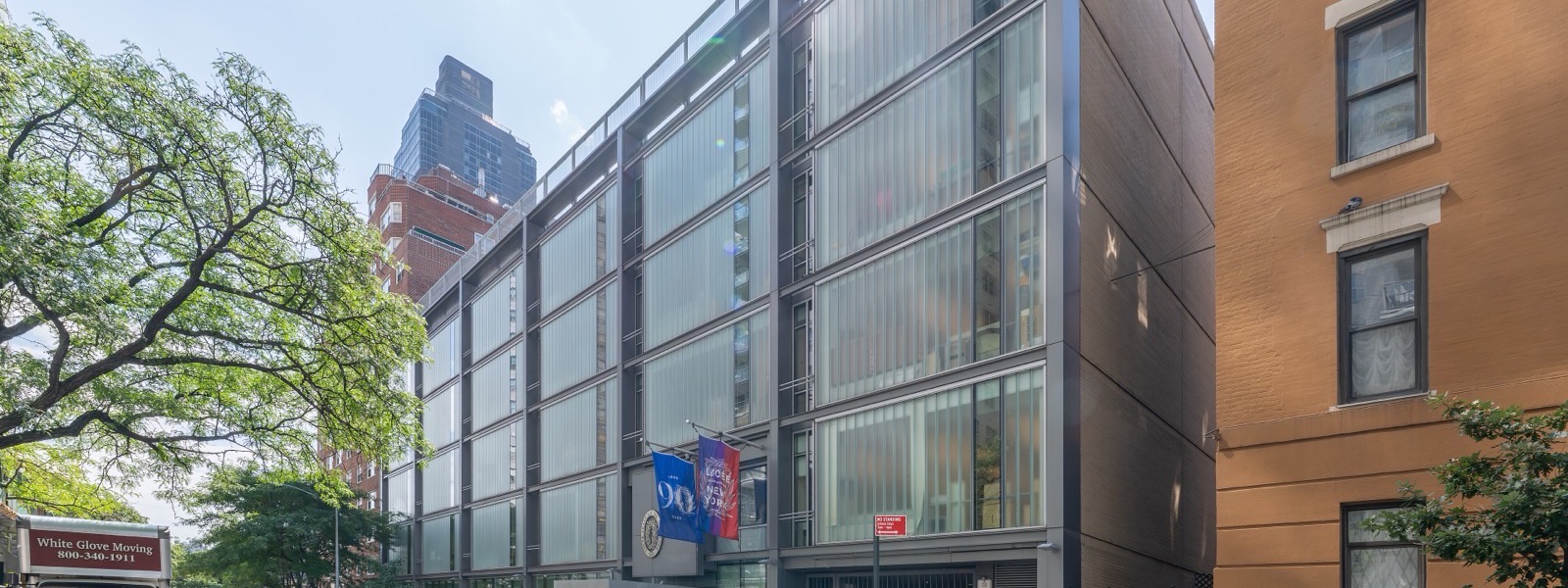
The Lycée Français de New York is one of the few schools in Manhattan where a child can do their entire schooling in French, from nursery to the final year of high school, and leave with two diplomas: the French baccalauréat and the American high school diploma. It has just over 1,200 pupils, around a third of them French and around a third American.
Every autumn the school opens its admissions round for entry the following September. What follows comes from the school's website, and separates what it publishes from what it does not.
Everything depends on your child's current school
The school does not treat every application in the same way. It all depends on the school the child attends today.
Pupil at a school accredited by the French Ministry of Education
- A school in France, or a school in the AEFE network abroad (the AEFE is the French government agency for French schools abroad).
- The application is assessed on school reports and letters of recommendation.
- No entrance exam.
Pupil at a non-accredited school
- An American or international school, or any programme outside the French network.
- Compulsory entrance exam in French and mathematics, on site in Manhattan, or remotely for families living outside the New York metropolitan area.
- From Grade 7 to Grade 12, that is from 5e to terminale in the French system, there is also an oral interview in French, by video call, wherever the family lives.
In practice, a child arriving from a French lycée in London, Singapore or Paris presents an academic record, and the school reports do the talking. A child arriving from an American school sits an exam in the two subjects where the gap between the systems is widest: written French, and mathematics.
How the year groups correspond
The school names its year groups the American way. For a family used to the French system, this is how they translate.
The calendar, and what it leaves out
For the early years there is a date: applications must be submitted before 1 December for entry the following September.
From Grade 1 to Grade 12, the school publishes no deadline. It says that the process begins in the autumn of the year before entry, and that the number of places depends each year on departures, grade by grade. It even still accepts applications for the current year, on a rolling basis, depending on places.
- A Saturday in OctoberOpen dayGuided tour by high school students, open classrooms, a meeting with the leadership team, questions about financial aid. It is the only visit possible before submitting an application: private tours are reserved for families who have applied.
- October and NovemberFinancial aid webinars
- 1 DecemberDeadline for early years applicationsNursery, Pre-K and Kindergarten. No date is published for other grades.
- After admissionSeven calendar days to signThe signed contract and the non-refundable deposit must be returned within that time.
The FAQ contains a sentence worth reading closely. To the question "do you give priority to the earliest applications?", the school answers no, the decision does not depend on the submission date. But it also states that places depend on departures. For a grade that is filling up, the two statements sit a little uneasily together. What I advise: apply in the autumn, as soon as the academic record is ready, and do not wait until spring on the strength of there being no deadline.
The exam: what we know
The school publishes the subjects, French and mathematics, and the format, on site or remote. It does not publish the content, the length or the expected level.
What can be said without making anything up is what the child is being judged on: their ability to follow, the next year, a French education delivered 70 to 80% in French. For a child coming out of an American school, the gap in mathematics is rarely a question of intelligence. It is a question of curriculum and method:
- Vocabulary and written answers. A child who does maths in English needs to be able to read a problem in French and write the answer in French. This is the first thing to give way under pressure.
- Calculation without a calculator. Fractions, order of operations, algebra in middle school: the French curriculum spends more time on these, and starts earlier.
- Geometry and justification. The French system asks pupils early on to justify an answer, not just give it. This is the most visible gap from middle school onwards.
The logic is the same as for a move back to France: you do not prepare for an entrance exam by getting ahead, you check that the foundations of the current year are solid in the system the child is moving into.
The cost, in official figures
The school publishes its fees. Those below are for the 2026-2027 school year; they are revised every year, but their structure stays the same.
- The application fee, 200 dollars, is non-refundable.
- On admission, a deposit of 4,000 dollars per pupil goes with the signed contract. It is deducted from tuition, but is non-refundable.
- After 1 May, the non-refundable deposit rises to between 50 and 100% of tuition and fees. A late admission therefore commits you to almost the whole year.
- No sibling discount. The school says so in writing, and points families towards financial aid.
Financial aid
The school says it has committed 7.6 million dollars in aid for 2026-2027, compared with 7.1 million the previous year, based on demonstrated need, regardless of nationality. The application has to be made again every year, through an online tool, and is reviewed by a committee. French families can also apply for French state school bursaries, through the consulate.
There is nothing, however, on the number of families receiving aid, the average award or the income thresholds.
Families who do not speak French
The school welcomes them and says so clearly. It does not give priority to French nationals, but it does ask for a commitment: exposing the child to French outside school. And from Grade 1 onwards, fluency in French, spoken and written, is a condition of admission, not a goal. For a non-French-speaking family, the realistic point of entry is therefore the early years.
The blind spots
- The number of places per grade and the admission rate. Only that places depend on departures.
- A deadline beyond the early years, and a reply date.
- The content and level of the entrance exam.
What can be known is enough to act on: work out which route your child falls under, apply in the autumn, and check their foundations in written French and mathematics before the exam. If you already live in New York and your child follows the French curriculum, we also support French-curriculum students in New York in mathematics, remotely.