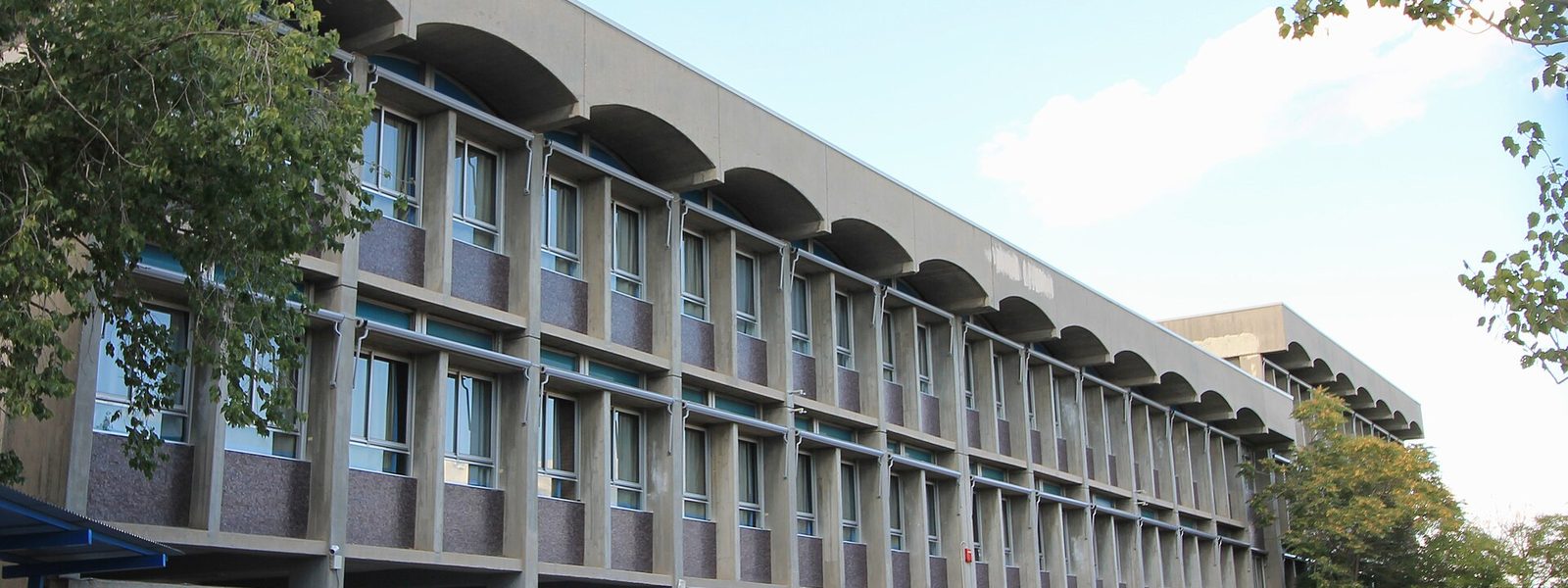
The Lycée Français de Madrid (LFM, known locally as the Liceo Francés) is one of the largest schools in the French network anywhere: over 4,300 pupils, about 300 teachers, and 140 years in the city. It is run directly by the AEFE, the French government agency for French schools abroad, which also sets its fees. What surprises parents arriving from Paris or London is the make-up of the school. According to the LFM, only half its pupils are French, dual nationals included. 41% are Spanish.
That shapes admissions. Places are not only contested among expatriates on three-year postings; Madrid families are almost as numerous as French ones, and they are not about to move away. Places mostly open up when families leave, and a school where so many families are settled for good frees up fewer of them.
Conde de Orgaz or La Moraleja
The LFM has two campuses and a single application system, with one firm rule: you apply to one site only, and you choose it on the form.
Conde de Orgaz, Plaza del Liceo
- From age 2 (toute petite section) to terminale, the final year.
- Ten classes per year group in primary and middle school.
- Eleven classes per year in high school, 33 classes over the last three years.
La Moraleja, Camino Ancho (Alcobendas)
- The Saint-Exupéry annex, from age 2 to troisième (Year 10, 9th grade).
- Three nursery classes and ten primary classes in total.
- Two classes per year in middle school, and no high school.
La Moraleja suits families living north of the city, around Alcobendas and the residential district of the same name. Parents who chose it describe a more family-like feel, but a small site means very few places per year group, and a child who does middle school there moves to Conde de Orgaz for seconde, the first year of French high school.
What a year costs in 2026-2027
Next to Madrid's international schools the LFM is inexpensive, which is part of why places are under pressure. The same holds against the rest of the French network: of the nine schools whose seconde fees I compare in my guide to French schools abroad, only Lycée Lyautey in Casablanca costs less. The figures below come from the school's published 2026-2027 fee schedule.
| Level | Annual tuition | One-off first enrolment fee | Lunch, 5 days a week |
|---|---|---|---|
| Nursery (maternelle) | €7,258 | €1,604 | €1,285 |
| Primary (élémentaire) | €6,690 | €1,604 | €1,300 |
| Middle school (collège) | €7,817 | €1,785 | €1,300 |
| High school (lycée) | €8,306 | €1,785 | €1,084 |
A pupil joining in seconde therefore costs €11,175 in the first year with lunches, then just under €9,400 a year. Tuition is billed in three instalments, the autumn term being the largest. Sibling discounts start only with the third child, at 10%, rising to 50% from the fourth. Buses are not run by the school but by the parents' association, the APA, which sets its own prices.
The first enrolment fee is not refundable, and the school says so plainly. A family keeping two schools in play until the summer pays to hold the place.
How the application works
Everything goes through an online platform, for both campuses, in six steps: current schooling, requested year and site, both parents' details, supporting documents, then confirmation. Two details trip families up. Both parents must sign electronically, and once the file is sent it cannot be changed, so a wrong year group or campus is hard to undo.
The decision arrives by email, and the family then pays the first enrolment fee within the stated deadline. Placement in a class remains subject to an assessment, which mainly concerns children coming from another school system.
The LFM publishes no priority criteria, no number of places and nothing about a waiting list. The general rules of the French network apply, explained in enrolling in a French school abroad: at a school run directly by the AEFE, a French child coming from an accredited French school goes first, within the places available. A French father living in Madrid who blogs about expat life reports that siblings and French nationality weigh in the decision, and that a waiting list can be opened for some year groups, the youngest class in particular.
Example: the campaign for September 2027.
The pre-registration platform opened in autumn 2026. Open days are on Saturday 14 November 2026 from 10 am to 1 pm at La Moraleja, and on Saturday 28 November at Conde de Orgaz, with a presentation in Spanish at 10 am and another in French at 11 am. Fees for 2027-2028 will be published from January 2027.
The class depends on calendar year of birth: in 2027-2028, a child born in 2012 enters seconde (Year 11, 10th grade), one born in 2016 enters sixième (Year 7, 6th grade), and one born in 2024 starts nursery.
Note the order of those open-day talks. Spanish comes first.
The Spanish curriculum, and the BFI
The LFM is accredited by the French Ministry of Education and recognised by the Spanish one, and Spanish law requires it to teach Spanish language and literature and Spanish history and geography. In middle school that means four hours of Spanish and one to one and a half hours of Spanish history and geography every week, for every pupil.
In high school there is a Spanish international section and a European section in seconde, then, in the last two years, the BFI (baccalauréat français international), the international option of the French baccalaureate, in a three- or four-language version with Italian or German. If your child is weighing this against the IB at one of Madrid's international schools, the criteria are in BFI or IB. At the end of seconde, pupils can have their studies recognised as the Spanish Graduado en ESO, and after the French baccalaureate, as the Spanish Bachiller.
After graduation, Spain first
According to the school, 53.4% of its graduates go on to study in Spain, 35% in France and 11.6% elsewhere. At the last baccalaureate session, 99.7% passed and 48% earned the top grade band, the mention très bien.
A French baccalaureate holder does not sit the PAU, the Spanish university entrance exam formerly called the EvAU. Instead they apply to UNED, Spain's national distance university, for UNEDasiss accreditation, which converts the baccalaureate grade into an entry grade out of 10 under a ministerial order of May 2025. Public universities rank applicants to competitive degrees out of 14. The extra four points come either from UNED's PCE subject exams, in the subjects the chosen university weights, or from recognition of subjects already examined in the baccalaureate, where the university accepts it. According to UNED, Madrid's public universities accept that recognition for subjects assessed by an external exam.
So the specialist subjects chosen in première (Year 12, 11th grade) matter for a Madrid degree as much as the overall grade. A pupil aiming at a competitive programme at the Complutense or Carlos III should look at that university's weighting tables by the end of seconde, not in the spring of the final year. For a return to France, the route is the same as from any school in the network; preparatory classes are covered in prépa from a French school abroad.
Madrid's other French schools
Besides the LFM and its Saint-Exupéry annex, the AEFE directory lists four partner schools in Madrid. These are private schools accredited by the French ministry, without agency-paid teachers, and not all of them go up to the baccalaureate.
- Lycée Français International Molière, in Villanueva de la Cañada west of the city, run by the Mission laïque française. From nursery to the baccalaureate, teaching in French, Spanish and English. In 2026-2027 the high school costs €7,560 a year, with a €1,290 first enrolment fee, and families living in the town get 15% off.
- École Saint-Louis des Français, in Pozuelo de Alarcón, Catholic and trilingual. It is accredited from age 3 to troisième, the middle-school years since June 2024. After that, pupils take the Spanish Bachillerato, the Franco-Spanish Bachibac or an American dual diploma, not the French baccalaureate.
- Union Chrétienne de Saint-Chaumond, a Catholic partner school; check its accredited year groups in the AEFE directory.
- Pomme d'Api, a nursery school.
For a French family who wants the French baccalaureate all the way through, the real choice is between the LFM and Molière. Molière is a little cheaper and smaller, but it lies outside the city to the west, which shapes where you live as much as where your child studies.
Where I start with a family
With the length of the stay. A family staying three years has different priorities from one settling in Spain whose child may well go to a Spanish university; in that case the Spanish section, the BFI and the PCE exams are planned together from seconde. Then the campus, since you only get to name one. Then the written French and maths of a child coming from another system, which decide the class they are placed in.
At Carmine we work with around twenty families a year. For Madrid that means choosing between schools, keeping the application calendar and preparing the entry assessment; the page School admissions explains how we work.