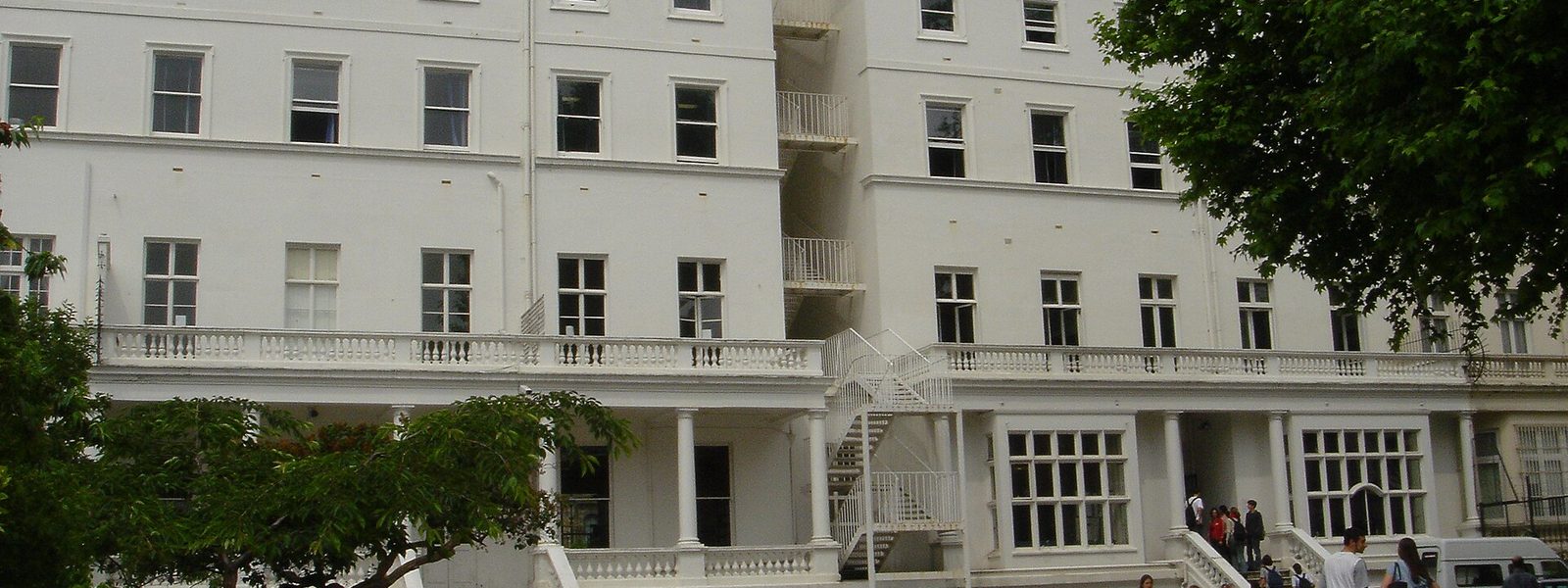
"The French Lycée" in South Kensington is not a private school in the British sense. It is run directly by the AEFE, the French government agency in charge of French schools abroad, and its fees are set by that agency. It has about 3,450 pupils aged 3 to 18 on four sites. Parents often assume that getting in means joining a queue and waiting your turn. The school does not work that way, and understanding how it does work changes when and how you should apply.
Four sites and two primary streams
The main site at 35 Cromwell Road takes nursery and primary pupils for South Kensington and the whole of the secondary school. Three primary schools belong to the Lycée: Wix, on Wix's Lane in Clapham (from Moyenne Section, age 4); Marie d'Orliac, on Clancarty Road in Fulham; and André Malraux, on Laurie Road in Ealing.
South Kensington and Ealing teach in the "bilingue anglais renforcé" stream: lessons in French, with extra English. Wix and Marie d'Orliac also run "classes internationales", the successor to the old 50/50 stream, with half the teaching in each language. From the September 2027 intake, children need an age-appropriate level in both languages and sit an interview in French and English.
At secondary level, new pupils are only ever offered a place in the standard multilingual section. The British international section, which leads to the French International Baccalaureate (BFI), is reached afterwards by test; for 6ème (Year 7), only children fully enrolled by late January (24 January 2027 for the 2027 intake) are invited to sit it, and the rest stay in the standard section for the year. The separate British Section teaches GCSEs and A levels, with entry in Year 10 and Year 12 by interview and test.
Priority, not first come, first served
Every application goes to an admissions board, and the date you apply makes no difference. What matters is the category your child falls into:
Two things surprise families. Nationality is not on the list at all: a French child at a British prep school ranks seventh, behind a Spanish child coming from the French lycée in Madrid. And the birthday ballot replaces any notion of being early, so a file submitted on the first day gains nothing over one submitted on the last day of the same round. What does help is applying in the right round, because places are handed out board by board.
Two further rules shut certain doors. Any child from outside the French system sits an assessment for entry between Year 3 and Year 12 (CE1 to Première), and the school takes no one into the last two years of the lycée, Première and Terminale, unless they already come from the French system. Children inside the French system need their previous school's formal decision to move up a year.
The waiting list that isn't one
Parents say "waiting list"; the school runs rounds. Several boards meet during the year, each one reviews the complete files received before its deadline, and allocates whatever places exist at that moment.
The detail that trips families up sits in the admissions policy. A rejected application is not carried over automatically. The school emails to ask whether you want to be considered at the next board, and you have to reply within the stated window; otherwise you start a new application. The guide also says the second parent must e-sign within three days of submission, or the file is void. The enrolment guide also warns parents to watch their junk folder around decision dates, as offers go out through a mass-mailing platform, and says decisions are never given by phone. There is no appeal.
On south-west London parents' forums, the picture is less grim than the reputation. Parents report that it can take "a few months on a waiting list", and one wrote in 2024 that Marie d'Orliac still had places, with classes close to thirty. The Good Schools Guide calls the Lycée oversubscribed and "full of contradictions", demanding yet warm, with days ending as late as 6pm depending on the year group.
Example: the September 2027 intake.
Children from London's AEFE schools entering CP (Year 2), 6ème (Year 7) or Seconde (Year 11): 8 October to 1 November 2026, decisions in the second half of November.
All other applications, in six rounds closing on 29 November 2026 (decisions late December), 21 February 2027 (early March), 11 April (late April), 23 May (early June), 15 August (early September) and 5 September (late September). Children from non-French systems sit their tests on 14 December 2026, 8 March, 26 April, 7 June, 1 September or 20 September 2027.
Source: the Lycée's 2027-2028 application and admission calendar.
My reading of that calendar: if you already know you are moving to London for September, apply in the first round, the one that closes in late November. It is the only round where every place freed by departing families is still available. Waiting until spring to have "this year's reports" is a mistake; the school asks for last year's and collects the current ones in June.
Arriving mid-year
In-year places, after a relocation, follow a separate process. The school asks families to contact admissions one to two months before arrival, with a residence permit, proof of a London address and proof of employment. For an October start, the file has to be in by early September. Fees are then pro-rated by month from the start date the school offers.
Two conditions stop otherwise valid applications. The child must live with at least one parent, so no host families or boarding arrangements. And the Lycée does not sponsor child student visas: a child who is neither British nor Irish needs a dependant visa, settled or pre-settled status, or a diplomatic exemption. An ETA (the electronic travel authorisation) is not accepted, and without the right document the child cannot start.
Year groups also work differently. The Lycée groups children by calendar year of birth, as in France, while English schools cut off on 1 September. A child born in November can therefore find themselves one year ahead of where they were in an English school.
Fees for 2026-2027
Fees are set by the AEFE on the school's proposal and published every year. Since January 2025, UK VAT at 20% applies to tuition, except in the nursery year.
| Level | Annual tuition, VAT included |
|---|---|
| Petite Section (nursery, age 3) | £13,484 (no VAT) |
| Moyenne and Grande Section, enhanced English | £13,410 |
| Moyenne and Grande Section, 50/50 stream | £15,459.60 |
| Primary, enhanced English | £10,297.20 |
| Primary, 50/50 stream | £12,556.80 |
| Secondary (Years 7 to 13) | £12,556.80 |
| Secondary, international section (BFI) | £12,867.60 |
| British Section | £21,542.40 |
On top of that comes a first-registration fee of £1,800 including VAT (£1,500 for nursery), due within a few days of the offer, neither refundable nor deductible, and lost if the child does not start on the agreed date. Lunch costs £1,425 a year in South Kensington, £982 at Marie d'Orliac and André Malraux, and £799 at Wix. A new Year 7 pupil at Cromwell Road who eats at school therefore costs £15,781.80 in the first year. Fees are billed in three instalments (40%, 30%, 30%), and any term started is due in full.
The school has no bursaries of its own. French families on the consular register can apply for a means-tested French government grant through the French consulate, in a campaign that starts in February for the following September. How that works is covered in enrolling in a French school abroad.
Over ten years the rise has been steep. A parents' group quoted by lepetitjournal.com put secondary fees at £6,348 in 2015 and £12,310 in September 2025. The Good Schools Guide notes the same trend and still describes the fees as excellent value next to other London private schools. The AEFE's network-wide fee rise of September 2026, and where London sits among nine French schools from Casablanca to New York, are in my guide to French schools abroad.
Where pupils go next
Most pupils take the French baccalauréat. In 2026, 62% earned a "mention très bien", the top honours grade, according to the Good Schools Guide, which lists 2025 entries to UCL (21), Bath (21), Warwick (16), King's College London (11), Imperial (5), Oxford (3) and Cambridge (2). Many students therefore apply to UK universities with a French qualification, and UCAS with the French baccalaureate explains how admissions tutors read it. Others go back to France, often to a prépa, the two-year preparatory classes for the grandes écoles; getting into a prépa from a French school abroad covers that route.
If no place comes
London has other French government-accredited schools, from the Collège Français Bilingue in Kentish Town to the Lycée Winston Churchill in Wembley and Jeannine Manuel in Bloomsbury; I compare them in which French school in London. For a child already in the French system, full-time CNED enrolment moves them to fifth place for the next round, ahead of every child coming from an English school. And for a bilingual teenager aiming at UK universities, the Lycée's own British Section, entered in Year 10 or Year 12, has a separate selection.
When a family comes to me, I start with two questions: which category does the child fall into, and which round are we aiming at. The rest follows, including the French and maths assessment for children from other systems and the choice between the standard and international sections. At Carmine we work with around twenty families a year on timing, applications and test preparation; our school entry page explains how.