For some families, the question is not "Jeannine Manuel or an international school". They are French, settled in Paris, and they are hesitating between Jeannine Manuel and the École alsacienne, Stanislas, Franklin, or a lycée such as Henri-IV or Louis-le-Grand. All of these schools have excellent results. They do not suit the same child.
I teach maths to students at these schools and prepare children for their entrance procedures. If the family is hesitating instead with EIB, an international section or an American school, the comparison is different, and I make it in Jeannine Manuel vs bilingual and international schools.
Very different houses
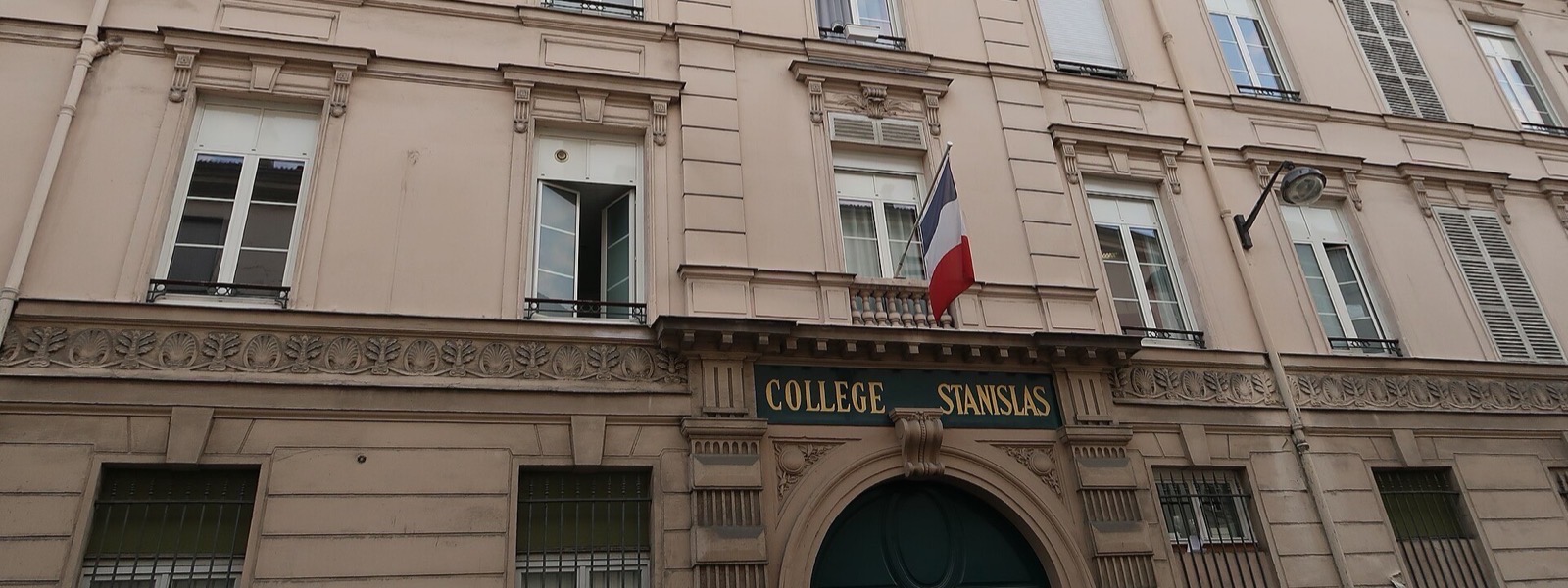
Families and former students describe these schools in fairly consistent terms. Stanislas: a Catholic setting, firm discipline, and a royal road to its own prépa. Franklin: demanding, with a good atmosphere among students. The Alsacienne: secular, caring, wary of the cult of performance. Henri-IV and Louis-le-Grand: strong pressure, which some students love and others endure, for teenagers who are already very solid. Jeannine Manuel: demanding and caring, but with a pace that leaves little room for a child who struggles, since everything happens in two languages.
This is often the criterion that decides. A child who needs structure does not thrive in the same place as a child who needs room, and a bright but fragile student does not experience Louis-le-Grand the way a student who enjoys competition does. I describe these schools at more length in Best schools in Paris.
English: a goal, or a bonus?
Academically, these schools are on a par. In the 2025 baccalauréat, the French end-of-school exam, the ministry's indicators show 99% of students earning a mention (an honours grade) at Jeannine Manuel, Stanislas, Franklin and Sion, and 97% at Louis-le-Grand. What sets Jeannine Manuel apart is English: the school adds its own teaching in English, science and Chinese to the French programme, and its students end up reading, writing and reasoning in both languages.
In the other schools, English remains a subject, often very well taught. For a child whose English must become a working language, the difference is real. For a child who will need it as a good second language, it does not on its own justify choosing Jeannine Manuel.
After the bac: France or the world
Stanislas, Franklin and Sion run their own classes préparatoires, the two-year courses that prepare for the competitive entrance exams of the French grandes écoles, and the path they put forward is the French one: prépa, then grande école. Henri-IV and Louis-le-Grand sit at the top of that path, with prépas leading to the École polytechnique and the École normale supérieure. Jeannine Manuel follows a different slope. According to the Good Schools Guide, its class of 2024 went on to France (65 students), the United Kingdom (63) and the United States (23).
For a child who might want to study in London, Oxford or the United States, Jeannine Manuel gives a head start that is hard to make up later: written English at university level, and a school used to these applications. For a child who sees themselves in a prépa, the leading French schools do just as well, and Jeannine Manuel adds nothing decisive. In between are most families, who do not know yet, and that is where the choice really needs discussing.
Getting in: calendars that do not match
This is where families lose the most places. Each school has its own calendar, and they do not overlap.
- Jeannine Manuel: application file, tests in French, English and maths, interview with the parents. Applications close in mid-January for families living in France.
- Franklin: for sixième (the first year of collège, age 11), files can only be submitted for two weeks, in September of the year before. A family starting in January has already missed the window.
- Stanislas: online file with a cover letter and school reports, an exam fee, and a compulsory interview.
- The Alsacienne: files from November to early January, French and maths tests for entry into sixième, and an interview where the child is seen alone. About 60 places in sixième, fewer than 10 in other years.
- Henri-IV and Louis-le-Grand: entry happens mainly in seconde, the first year of lycée (age 15). A pupil in a Paris collège goes through Affelnet, the state allocation system, with these two lycées as first choices, on school results and bonus points. Everyone else submits a file on a dedicated platform between January and April.
Nothing prevents a family from applying to several of these schools at once, and it is almost always what I advise. Provided you keep every calendar at the same time, starting in September.
And the fees?
They matter, without deciding on their own. All the private schools here hold a contract with the French state, yet Jeannine Manuel charges €11,185 a year in collège (ages 11-15) in 2026-2027, while Stanislas charges €2,398 and Franklin at most €3,313, depending on family income. At the Alsacienne, fees depend on income, from €0 to €1,447 per term. Henri-IV and Louis-le-Grand are state schools and free. A family that chooses Jeannine Manuel is paying for English, and it is a good investment if English is part of the child's plans.
How I decide with families
I ask three questions. Should English become a real working language for the child, or stay a good second language? Where do they see themselves after the bac, even vaguely? And what kind of setting do they need to give their best? If English is a goal and studying abroad is one of the possibilities, Jeannine Manuel is worth its price. If not, one of the leading French schools will do as well, and sometimes better.
With those answers, we build a list of schools and a calendar at Carmine, then prepare the child for the tests and interviews of each one. For families aiming at Jeannine Manuel, that also means working on reading and writing in English, which is what the school's tests measure most closely.
Example: the 2026 and 2027 admission rounds. For September 2027, Franklin took sixième applications from 15 to 30 September 2026, Stanislas had opened pre-registration by early October 2026, and Jeannine Manuel closes applications on 12 January 2027 for families living in France. For September 2026, the École alsacienne took files from 7 November 2025 to 2 January 2026, and the Henri-IV and Louis-le-Grand platform opened on 12 January 2026, with the seconde file to be completed by 7 April.
Sources. Official websites and 2026-2027 fee regulations of Jeannine Manuel, Stanislas, Saint-Louis-de-Gonzague and the École alsacienne; Paris education authority for Henri-IV, Louis-le-Grand and Affelnet; 2025 lycée results indicators from the French Ministry of Education; Good Schools Guide (2026) for the destinations of Jeannine Manuel's class of 2024; recurring reviews by families and former students on several platforms for school climate. Fees and calendars change every year.