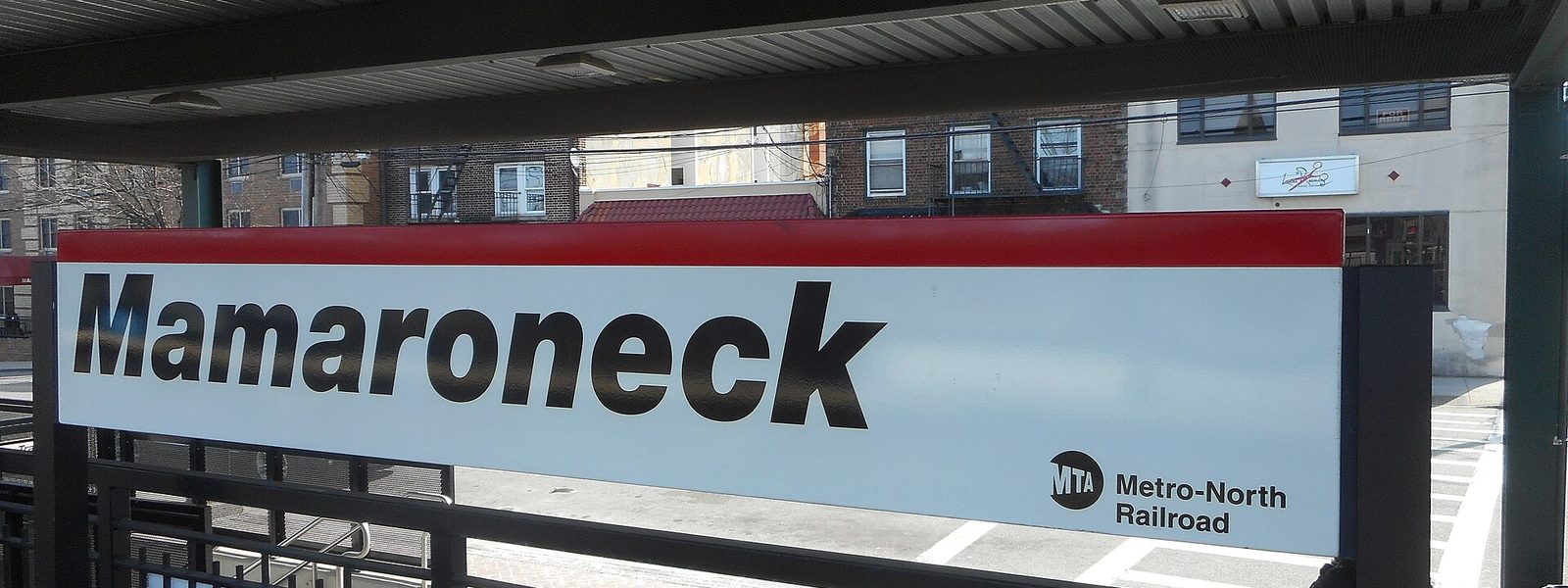
FASNY, the French-American School of New York, is not in the city. Its three buildings are in Larchmont and Mamaroneck, in Westchester County, on the Long Island Sound shore north-east of Manhattan. Two teachers from the Lycée Français de New York founded it in 1980 because they wanted a school that was bilingual in practice and not only on paper. It opened in one room with 17 nursery and pre-K children; it now has more than 700 students, from age three to the final year of high school.
Parents tend to frame the decision as FASNY against the Lycée. In my experience the choice is settled by two plainer questions: where the family is going to live, and which diploma the child will sit at 18. I have covered the Lycée Français de New York on its own in a separate article, and only bring it in here for comparison.
Three sites along the Boston Post Road
Nursery to Grade 3 is at 111 Larchmont Avenue, the original building. Grades 4 to 8 are at 145 New Street in Mamaroneck. Since 2017 the high school, Grades 9 to 12, has occupied the renovated former Most Holy Trinity school at 320 East Boston Post Road. Three children can therefore mean three drop-offs. The school's 2023-2028 strategic plan lists the search for a permanent site among its goals.
Transport is where families relocating from Europe are most often caught out. New York State law (Education Law, section 3635) requires school districts outside the large cities to bus resident children to a private school up to 15 miles away, provided the parents file a written request with their district, usually by April 1 for the following year. A family in Larchmont, Rye or New Rochelle can therefore get a district bus to FASNY. City districts, New York City included, are not bound by that rule, so a child living in Manhattan takes Metro-North from Grand Central to Mamaroneck, twice a day.
One school, two programmes
This is what sets FASNY apart from the Lycée. From Grade 1, parents pick one of two tracks.
French-American Program
- French national curriculum, taught mainly in French.
- From Grade 1, applicants must work in French at grade level.
- Optional American BFI in the last two years: English literature, history-geography and a Global Studies seminar, taught in English.
- Leads to the French baccalaureate.
International and IB Program
- Opened for Grades 1 to 8 in 2020, with about 70% of subjects in English and 30% in French.
- No French required on entry.
- High school taught in English; in Grades 11 and 12 every course is an IB course.
- Leads to the IB Diploma.
The BFI, or French international baccalaureate, is the French bac with extra exams in a second language and literature; it is not the IB. FASNY describes itself as the only school in the New York area accredited for both the French baccalaureate and the IB. The Lycée prepares for the French bac. Kennedy International School in Midtown teaches the French programme up to Grade 10, then switches to the IB. At FASNY the two diplomas share one building and one college counselling office, which starts individual work with students in Grade 10.
The published 2026 results are strong on both sides. In the bac, every candidate passed; 38% earned the highest honours (mention très bien), 55% the next level (mention bien), four received the jury's congratulations and 18 took the BFI. In the IB, all 19 diploma candidates passed, with a mean of 32.8 points against a world mean of 30.9. The 2023-2026 matriculation list runs from Harvard, Princeton, Yale and MIT to École Polytechnique, Sciences Po, the Lycée Saint-Louis preparatory classes, McGill, EPFL and Bocconi. FASNY also points to the ranking the French network of schools abroad (the AEFE) draws from bac results: sixth of roughly 600 schools in 2024, and first in North America in its size band.
French families should know one financial consequence of the track choice before they sign. Students in the International or IB track, from Grade 6 to Grade 12, cannot receive the French government's means-tested school grants, the bourses scolaires paid through the consulate. The school states it plainly. A family counting on that grant loses it by moving its child to the IB track.
FASNY admissions, step by step
The Lycée publishes no deadline beyond kindergarten and reviews files as they come in. FASNY runs a proper admissions season with a filing deadline and a common decision date, then switches to rolling review for late files if seats remain. It keeps waitlists at every grade.
Many parents search for "FASNY ISEE", since most independent schools in Westchester and Manhattan ask for that test. FASNY's admissions page mentions neither the ISEE nor the SSAT; it runs its own assessments. For the French-American track it adds that admission rests on school records and teacher recommendations, following French ministry rules, so a child coming from a French-accredited school is read first on its reports, as at the Lycée.
The essay and the interview weigh more than French families expect. The school calls a family's commitment to its mission "critical". A twelve-year-old from a school in France has usually never written a personal essay, nor talked about themselves alone with an adult they have just met; those are the two pieces I have students prepare first.
Example: the cycle for entry in September 2027.
Portal opened on August 1, 2026. Applications and teacher forms by December 15, 2026. School reports by January 10, 2027. Assessments from January to the end of the school year. Financial aid forms by February 1, 2027. Decisions emailed on February 5, 2027. The contract deadline had not been set as of October 2026.
What a year costs once fees are added
2026-2027 fees, from FASNY's published schedule.
Annual tuition: $39,660 for nursery to kindergarten, $42,030 for Grades 1 to 8, $46,825 for Grades 9 to 12.
First registration fee: $5,500, charged once per student; $3,000 for a sibling of a FASNY student and for the child of an alumnus; waived for entry into nursery.
On top: a $230 trip provision each year from Grade 6 (Grade 5: $210), optional tuition refund insurance at 1.55% of the amount covered, lunch, and exam fees for the French brevet, the bac and the IB, none of which are in tuition.
For a new Grade 10 student the first year comes to about $52,700 without insurance: $46,825 tuition, $5,500 registration, $230 trips and the $150 application fee. Insuring the tuition takes it to about $53,400. Worked out from the Lycée's official schedule, the same student would cost about $56,200 there. The gap, around $3,000 in year one and $5,000 after that, is real. In my view it should not decide anything; the address matters far more. Both schools sit at the top of the network's price range anyway: the Lycée Français has the most expensive seconde of the nine French schools, from Casablanca to Singapore, that I compare in my guide to French schools abroad.
Financial aid exists. FASNY reports about $2.3 million going to 17.6% of its students, on need alone, decided after admission and with no effect on it. French nationals must apply first for the consulate grant before asking the school. The school's own figures show the number of FASNY students receiving that French grant falling from 30 in 2020-21 to 18 in 2024-25.
What families notice once they are in
Bilingual schooling costs hours. Interviewed by the French expatriate paper Le Petit Journal New York, the head of school said the French programme alone fills about eight hours a day, which leaves little room for the American side and forces the school to make choices. A child used to a French school day settles quickly; one coming from an American school has to adjust to noticeably longer days.
The school has also changed a great deal in ten years. In 2015 the Rye local paper described it as a place a non-French speaker could join only in preschool or in Grade 11 on the IB track, with middle and high school sharing New Street. The high school moved to the Boston Post Road in 2017, and the International Program of 2020 opened entry at every grade. Many parent reviews online describe the old set-up, so I check their date before I give them any weight.
The other French options in New York
For a family settling in Manhattan the choice is wider than two names.
| School | Where | Grades | Final diploma | High school tuition 2026-2027 |
|---|---|---|---|---|
| FASNY | Larchmont and Mamaroneck, Westchester | Nursery to Grade 12 | French bac (with or without BFI) or IB | $46,825 |
| Lycée Français de New York | Upper East Side, Manhattan | Nursery to Grade 12 | French bac | $51,925 |
| Kennedy International School (formerly Lyceum Kennedy) | Midtown East, Manhattan | Pre-K to Grade 12 | IB, after the French programme to Grade 10 | $45,000 |
| The École | Flatiron, Manhattan | Pre-nursery to Grade 8 | IB, through a high school pathway with Léman Manhattan | $50,500 (to Grade 8) |
Kennedy International School was founded in 1964 by a former Lycée teacher and was long known as Lyceum Kennedy. It is accredited by the French ministry. From Grade 6 to Grade 10, students spend about 75% of their time in French, then take the IB in the last two years. It charges no application fee but expects middle and high school applicants to be fluent in written and spoken French. The École, also French-accredited and affiliated with the Mission laïque française network, stops at Grade 8 and describes a "quasi-automatic" route into Léman Manhattan's high school, with electives in French in Grades 9 and 10 and a bilingual IB afterwards.
How I would choose
I would take three questions in order.
The address first. For a family moving to Westchester, FASNY is close to the obvious answer, with a district bus and a commute a ten-year-old manages easily. For a family in Manhattan, the daily trip to Mamaroneck weighs on the week, and the Lycée or Kennedy are more realistic.
Then the child's French. The Lycée, like FASNY's French-American track, expects grade-level French from Grade 1, so a child who does not speak French realistically joins in kindergarten or earlier, and Kennedy wants fluent French at middle school. Of the three schools that run to Grade 12, only FASNY, through its International Program, takes a middle or high schooler who has no French yet.
Last, the diploma, which is often the hardest call at 14. A student who might go back to France for the two-year preparatory classes (the prépas) behind the grandes écoles should keep the French bac; a student aiming at American universities can succeed with either. I compare what each diploma opens and closes in IB or French baccalaureate. FASNY's real advantage is that the choice can wait until the end of Grade 10 without changing school, friends or commute.
At Carmine we work with families planning a move to New York or Westchester: choosing a school for the neighbourhood and the diploma, the application calendar, and preparation for the French and maths assessments, the essay and the interview. Our school entry page explains how we work.