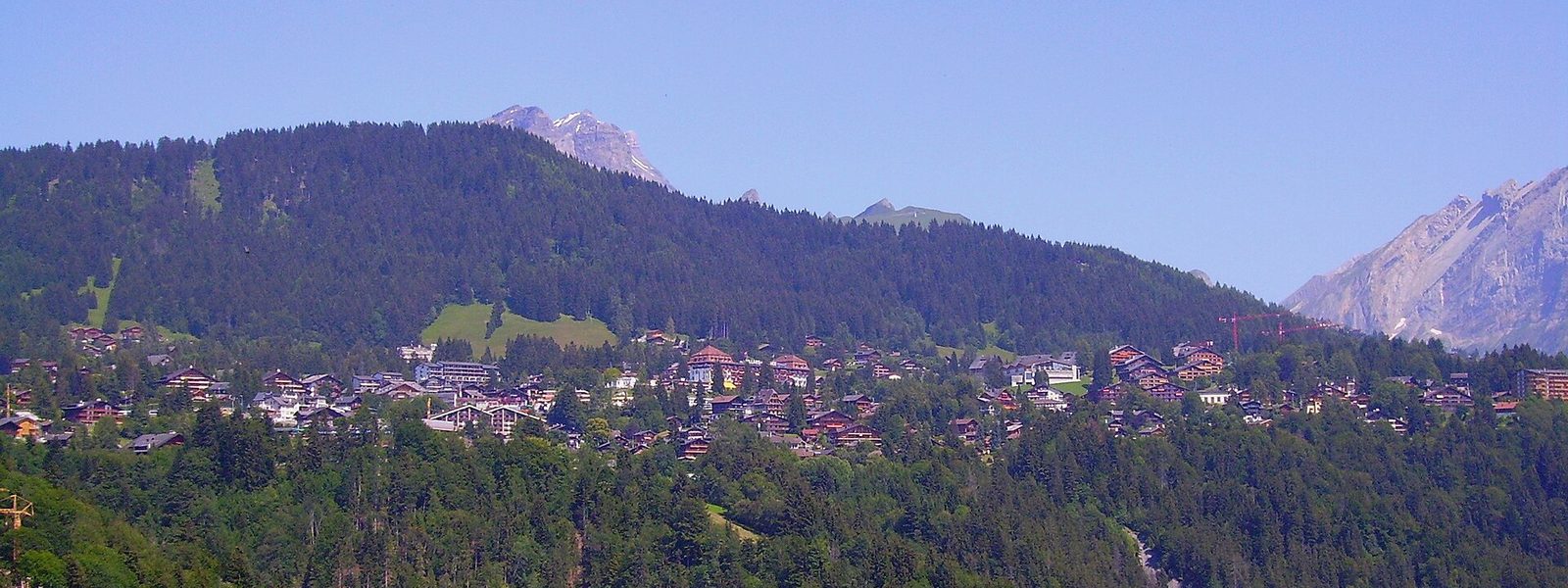
Aiglon College was founded in 1949 in Chesières, on the edge of Villars-sur-Ollon, by John Corlette, who had taught at Gordonstoun, the Scottish school built on Kurt Hahn's ideas. It opened with six pupils. It has around five hundred, aged 7 to 18, from more than sixty-five countries, living in some ten chalet-style boarding houses. It is a not-for-profit foundation and belongs to no group.
Hahn believed adolescents build character by facing real physical challenges, outdoors, in a team, with some genuine risk. Aiglon kept that at its core, and a family should look at it before they look at fees or league tables.
A school built on effort at altitude
The motto speaks of the balanced development of mind, body and spirit. In practice that means compulsory expeditions (hiking, climbing, kayaking, ski touring) with nights outside, and a winter timetable rebuilt around skiing, which every student learns. Pupils walk to the lifts on their own and pack their own bags for multi-day trips. A tradition of early-morning meditation, recorded from the school's early decades, is part of its identity too.
The Good Schools Guide, the independent British school guide, puts it bluntly: "Not for the sofa-bound." It describes a place "for those who want more than just grades" and who "don't mind the odd blister".
The school names five guiding principles, challenge, respect, responsibility, diversity and service, and says it assesses applicants against them.
There is no French baccalaureate and no French programme. A child arriving from a French collège moves into a British-style curriculum, and the way year groups map across systems, which catches many families out, is set out in French school years and their UK, US and IB equivalents.
What the admissions team looks for
Aiglon calls its process "selective, yet untraditional". It starts with an enquiry form, after which the admissions team takes over. The application carries a non-refundable registration fee of CHF 3,000. According to the Good Schools Guide, candidates then sit a series of admission tests and have an interview with the head, and the school asks their current school for references. Spear's adds that families can apply up to a year ahead, that Year 12 candidates do the interview and tests on campus, and that a decision usually comes within about four weeks.
The school says it looks at two things: whether the child can manage the curriculum, and whether they can manage mountain boarding life. The second carries real weight. A strong student who has never slept away from home, never carried a pack for a day's walk and cannot picture themselves on skis at eight in the morning will struggle to convince in the interview, whatever their grades.
The tests are not published anywhere, and there is no acceptance rate. Even so, parents quoted by the Good Schools Guide describe the process as "welcoming and remarkably stress-free", one of them as "like a smooth oiled machine".
If I prepare a child for that interview, I do not hand them answers. I help them find two or three moments in their own life when they did something hard without being made to, a competition, a camp, a commitment kept for a whole year, and practise telling them plainly in English. That is the ground on which a school founded by a Hahn disciple wants to hear a teenager.
Aiglon fees for 2026-2027
Fees for 2026-2027, as published by the Good Schools Guide (October 2026 update).
The school's own site, which offers its fee schedule in a document called "Tuition Information", was down in October 2026; the figures below are the guide's.
Annual fees run from CHF 49,700 for a junior day pupil to CHF 168,000 for a boarder in Years 12 and 13. Once, on entry: CHF 3,000 registration, CHF 4,000 to the scholarship and development fund, CHF 2,000 to the alumni association and a CHF 15,000 deposit. Uniform costs CHF 3,900 to 5,200, and a boarder's pocket money is set at CHF 1,365 a year.
For a student joining Year 12 as a boarder, the first year therefore means paying out around CHF 198,500, of which CHF 15,000 is a deposit returned when they leave. Expeditions are included in tuition, and so is English as a second language. Optional subjects, private lessons and learning support cost extra.
Le Rosey's published tuition for 2027-2028 is CHF 164,400, and its IB package for the final two years brings that to CHF 178,300; its payment terms are covered in our Le Rosey article. The two schools sit in the same range, a year apart.
Scholarships, funded by parents and alumni
Aiglon is one of the few Swiss boarding schools at this level with a real scholarship programme. According to Spear's, it has twenty-one scholars at present, and 133 students have benefited since 1991. Funding comes in equal thirds from alumni, parents and the school, which is what the CHF 4,000 paid by every new family is for. The Good Schools Guide mentions a dedicated fund for students from African and Asian countries. These awards are few and aimed at specific profiles; they are not a discount a wealthy family can negotiate.
Daily life, as families describe it
Parents speaking to the Good Schools Guide describe discipline as "firm but fair". Drugs mean zero tolerance, with random testing, and smoking is banned on campus. Phones are not confiscated, which surprises many French families: the school opted for self-regulation, built on a four-word rule, "Meet, Eat, Feet, Sleep", meaning no screens when meeting someone, at meals, while walking, or in bed.
The same guide finds that staff children, scholars, day pupils and boarders from everywhere "blend well", rates the ESL teaching as excellent (many students are Spanish speakers or from Asia), and notes support for mild to moderate learning needs such as dyslexia or ADHD.
On results, the class of 2026 averaged close to 37 out of 45 in the IB, with a 100% pass rate for the sixth year running, two perfect 45s and nineteen students at 40 or above, again according to the Good Schools Guide. University guidance starts in Year 9 and continues after students leave.
Which child it suits
Aiglon suits a child who learns better on the move, or who would gain from being pulled out of a comfortable routine, with parents who accept that the school will hand real responsibility to a twelve or thirteen-year-old. Teenagers need working English, even though the school supports non-native speakers. For a student who wants to stay in the French system or aim for a French prépa, it is the wrong choice; for one heading to British or American universities through the IB, it is among the best in Switzerland. How it compares with the other boarding schools, fee by fee, is in Swiss boarding school fees.
Between Aiglon, Le Rosey and the rest, the choice depends on the child more than on reputation, and an application takes months: which school and which entry year, the file, preparation for the tests and for an interview in English. That is what we do at Carmine; our school admissions page explains how.