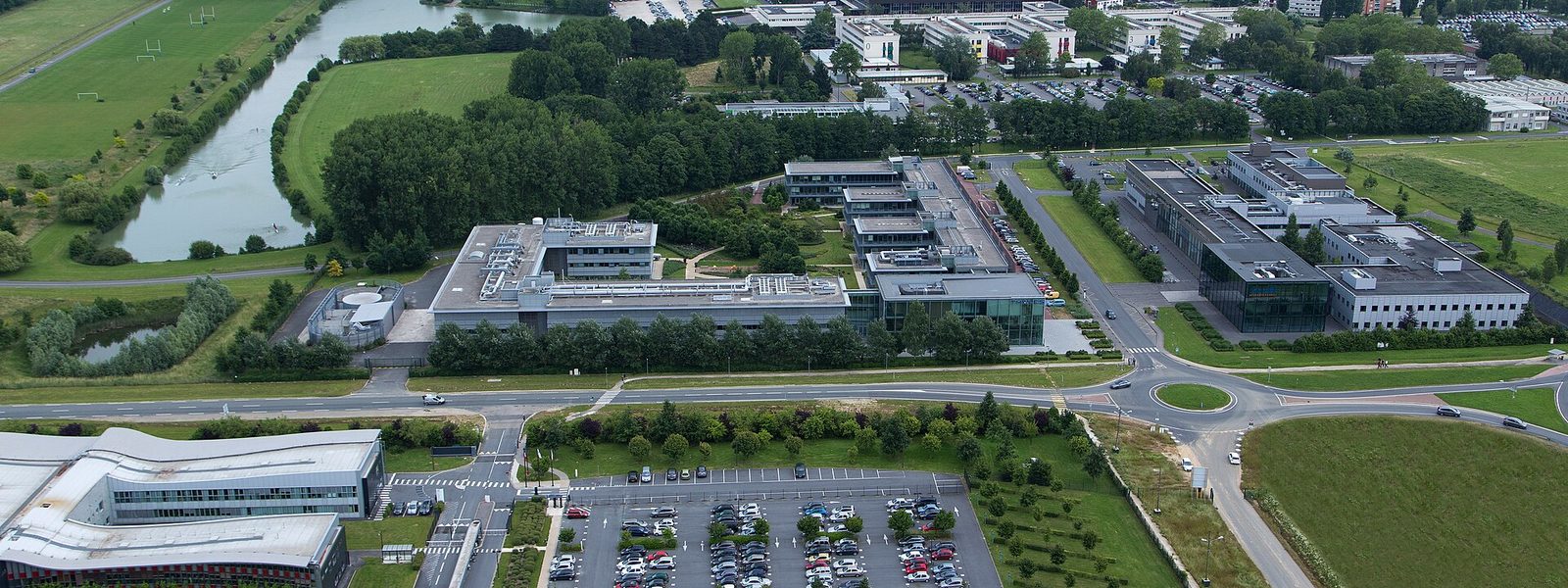
École polytechnique, known in France as "l'X", is best known for its engineering degree, which students enter after two years of prépa (the intensive classes préparatoires) and a national competitive exam. Its Bachelor of Science is a different programme: a three-year undergraduate degree taught in English, recognised by the French state as a licence (bachelor's) degree, with admission straight from high school on grades and an interview. It is not a back door into the engineering programme, and the school says so plainly: there is no automatic transfer. Families who see it as "the X without prépa" are looking at the wrong programme. Those who take it for what it is, a demanding and very international science degree, often find it suits them better than what they were looking for.
Two routes, one application a year
Students apply either through the school's own portal, in three rounds, or through Parcoursup, the French national platform for higher education. The school says applicants cannot use both in the same year, and that there is no quota per round or per nationality. The file includes school reports, a cover letter, a CV and two referees, at least one of them a current maths teacher; referees upload their letters themselves. The application fee is €105 on the portal and €95 on Parcoursup, waived for French scholarship holders.
The choice of route matters. The portal's first round opens in mid-September, closes at the end of October and gives results in January. A student in terminale (the final year of French lycée) who applies there knows the outcome before entering their Parcoursup choices, and can shape the rest of the list around it. Through Parcoursup, the answer comes in June along with everything else. For a student confident in their file, I recommend the first round.
Acceptance rate: what the data shows
The only public figures come from Parcoursup, which covers part of the intake. In the 2025 round, the Bachelor offered 25 places there. 371 candidates applied, 52 were ranked, 51 received an offer and 26 enrolled, an acceptance rate of 14%. Of the 23 admitted students who had just sat the French bac général, 22 had a mention très bien (the top honours band, 16 out of 20 or above), and 11 of those had the jury's félicitations (18 or above). Women made up 38% of those admitted.
As far as I can find, the school publishes neither the total number of applicants across both routes nor the exact size of each cohort. The overall acceptance rate is therefore unknown.
The Parcoursup listing does show how the panel weighs the file:
There is no minimum grade. French bac students need the maths spécialité plus another science spécialité, taken in première and kept in terminale; IB students need maths and at least one science at Higher Level. English must be at C1, shown by IELTS (6.5), TOEFL iBT (90) or a Cambridge exam; IGCSE English is not accepted. The certificate can follow the application, in which case the offer is conditional.
The 50-minute interview
Shortlisted candidates have a video interview, entirely in English: thirty minutes of maths based on the high school syllabus, then twenty minutes on scientific culture and motivation. Parcoursup applicants are interviewed in early May.
The school publishes advice from admitted students, and their accounts match. The first questions are routine, sketching a curve, a limit, a derivative; then comes a longer, multi-step problem the student has never seen. Examiners care more about how the student searches than about the final answer, and they will give hints. Several students say they prepared with interview problems from British universities and the old SAT Subject Test Math Level 2, and above all by learning maths vocabulary in English, which most students from French schools have never done. The school also runs a MOOC in pre-university maths.
In my view, what trips up a very strong student in this kind of interview is rarely the level. It is silence: a student used to handing in a correct paper who cannot think aloud, in English, in front of a problem that resists.
The real cost
For 2027 entry, the Bachelor's FAQ gives tuition of €15,900 a year for EU students and €19,600 for non-EU students; some other school pages and the Parcoursup listing still show €19,200 for non-EU students. Two non-refundable deposits of €1,500 are deducted from the first year.
Campus housing is guaranteed for all new students: a single 18 m² room with private bathroom, at €606 a month for 2026 entry, utilities included. The school estimates living costs, housing included, at about €12,000 a year and warns that the workload rules out a part-time job. For an EU student, three years therefore come to around €84,000 in tuition and living costs.
Financial aid exists but is never automatic: an excellence scholarship and a "Women in Science" scholarship of €4,800 a year each, needs-based fee waivers, French state grants (CROUS) for eligible students, and a full scholarship for international olympiad medallists, capped at €78,750 for EU students and €87,900 for others. Every student, even with a waiver, pays €1,500 in administrative fees each year. The school advises applying for aid in the early rounds, as funds are limited. For students with an olympiad record, see what olympiads add to an application.
The Columbia track
The BS/MS Track is a five-year programme: three years of the Bachelor in Palaiseau, then a two-year master's at Columbia Engineering in New York. Since 2025, one application covers both tracks, and the final choice is made in the second semester. The Columbia years are billed at Columbia's rates, which the school does not state, so check them with Columbia before committing. The track drops the minor and the exchange semester in favour of more engineering-oriented courses.
The double major chosen at the end of first year opens or closes master's programmes at Columbia.
| Master's at Columbia | Maths and physics | Maths and computer science | Maths and economics |
|---|---|---|---|
| Financial Engineering, Operations Research, Earth and Environmental Engineering | yes | yes | yes |
| Computer Engineering, Biomedical Engineering, Quantum Science and Technology | yes | yes | no |
| Mechanical Engineering, Chemical Engineering | yes | no | no |
Excerpt from École polytechnique's table, which lists thirteen eligible master's programmes. A student drawn to quantitative finance keeps every option with maths and physics; with maths and economics, most of the engineering master's are out of reach.
Where graduates go
The school's 2025 survey of the class that graduated in 2021 found that 90% of respondents were still studying, in master's or doctoral programmes, 80% of them in Europe and 44% in France. 46% had started a PhD. The most common fields were data science, maths or physics (36%) and management, finance or economics (27%). Among those already working, average pay in France was €53,000 gross a year, and the top countries of employment were the UK (38%), France and the US (23% each).
To join the engineering programme afterwards, a Bachelor graduate must pass the competitive exam for university graduates, like any licence student. The school says some do, but most choose other master's programmes.
Bachelor or prépa for a student who is very strong in maths?
This is the question families ask me most about the programme. The two lead to different places. Prépa MP, free in a state lycée, prepares students over two years for the engineering schools' competitive exams, including the X's own; its grade profile is set out in MPSI: the grades you need. The Bachelor leads in three years to an English-taught degree and then a master's, often abroad. It is expensive, but it spares the student two years of exam preparation.
For a student set on the ingénieur polytechnicien degree, prépa remains the route. For a student already thinking about a PhD, a master's at Cambridge, ETH or Columbia, or a career outside France, the Bachelor is often the better choice, because English and research are part of the course from the first year. For a student who is torn, applying in the first round gives an answer in January, and an MPSI can stay on the Parcoursup list. Other grandes écoles also run bachelors open straight after the bac, with different tests; I compare two of them in HEC-Bocconi and ESSEC-CentraleSupélec bachelors.
Example: the rounds for September 2027 entry.
First round from 17 September to 20 October 2026, interviews in the first two weeks of December, results in January 2027. Second round from 21 October 2026 to 6 January 2027, interviews in February and March, results in March. Third round from 7 January to 8 February 2027 at 14:00 CET, interviews in March and April, results in April. For comparison, Parcoursup interviews in the 2026 round took place from 5 to 11 May 2026. Tuition for 2027: €15,900 (EU).
The Bachelor application turns on three things French lycées rarely prepare students for: a cover letter in English, a maths interview in English, and teacher references that need to be requested early. At Carmine, we help families choose the round, fit this application around Parcoursup and universities abroad, and we prepare the maths interview with the student. To talk it through, get in touch, or see our admissions support.