When the time comes to choose a second language, almost every French family picks Spanish: according to the DEPP, the statistics department of the French Ministry of Education, 57.5% of collège pupils (lower secondary, ages 11 to 15) studied it at the start of the 2024 school year. That is precisely the reason to choose Chinese. For a family aiming at an ambitious path, the second language is one of the first choices that can set a pupil apart from everyone else, and Chinese does it better than any other.
Why choose Chinese as a second language
A pupil's file goes before several panels over the years: entry to a selective collège or lycée, an international section, a prépa (France's two-year preparatory classes), a university abroad. The languages line is nearly always the same, English and Spanish. A pupil with five or six years of Chinese and good results has a line nobody else in the pile has, and it says something: care, regularity, the ability to stick with a demanding subject.
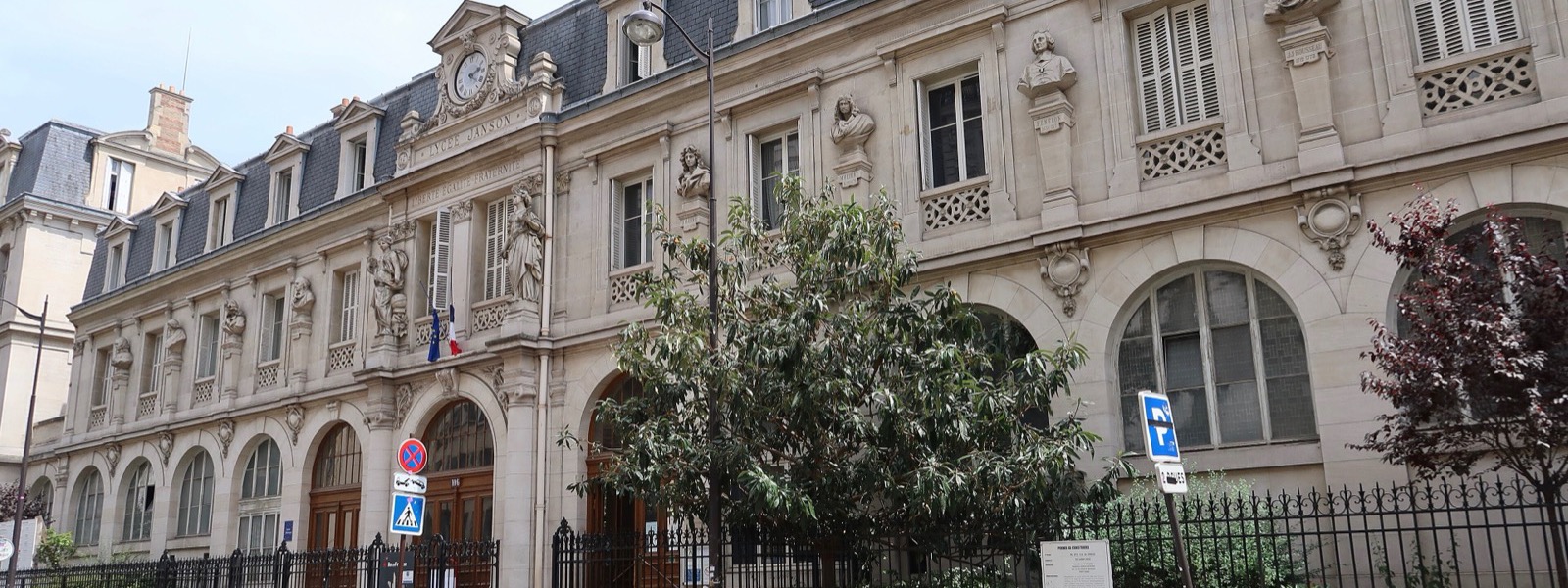
Chinese also opens concrete doors in Paris. The schools that teach it in a reinforced section are among the most sought after: Janson-de-Sailly has a Chinese international section from collège to lycée, and Louis-le-Grand an oriental language section in Chinese. And in the Chinese international section, history and geography are replaced by mathematics, taught in Chinese: a path that combines a rare language with solid maths, exactly the profile selective programmes look for.
Spanish remains a sound choice for a child you want to spare extra workload. Chinese is the choice of a family already thinking about their child's application five or six years ahead. I explain what the language brings in more detail in the article why have your child learn Chinese.
What this choice demands
Chinese cannot be improvised. It takes daily work from the first week, and it only pays off if it is kept up to the baccalauréat. Chinese dropped at thirteen sets nothing apart. Two conditions make the difference: a child who enjoys precise work, or parents ready to support them through the first months, and if possible a start before secondary school, so that the second language does not begin from zero. That is the idea behind Xiaomo, our Chinese app, free to use in our resources: one short session a day, from primary school.
Chinese as a second language in Paris middle schools: where to learn it
Chinese is not taught everywhere, and choosing Chinese often means choosing a school. The Académie de Paris, the city's education authority, does not publish a consolidated list of the collèges that teach it as a second language on its website. The only reliable method is to ask the school you have in mind directly, before the sixième (age 11) placement procedure.
Be wary of the lists circulating online. Some still mention “oriental language sections” in Chinese at collège level. The Académie's page on oriental sections, updated in January 2026, names only two at collège level, in Japanese and Vietnamese, both at Collège Jean-de-La-Fontaine.
In the private sector, École Jeannine Manuel says it teaches Mandarin to all pupils from CE2 (age 8), then as an option from cinquième (age 12).
The Chinese international section in Paris
For a child who already speaks Chinese, at home or after time in China, Taiwan or Singapore, the royal road is the international section. It leads to the baccalauréat français international, with four hours of language and literature and mathematics taught in Chinese.
| Level | School | Arrondissement |
|---|---|---|
| Collège | Paul-Gauguin, sixième and cinquième only | 9th |
| Collège | Gabriel-Fauré | 13th |
| Collège | Janson-de-Sailly | 16th |
| Collège | Jean-de-La-Fontaine | 16th |
| Lycée | Jacques-Decour | 9th |
| Lycée | Claude-Monet | 13th |
| Lycée | Janson-de-Sailly | 16th |
How to get in
Applications are made online, on an Académie platform, at the start of the calendar year for the following September, up to ten ranked choices. For entry into sixième, admission is based on the file and on written and oral tests. For cinquième, quatrième and troisième, there is a shortlisting on the file and a written test, then an oral in the language. The Académie looks at the level reached in the language, motivation and the pupil's ability to follow the programme. Recruitment is open to children who do not live in Paris, and a Parisian family applying for sixième must also file an exemption request, even for their catchment school.
These tests are prepared like a competitive exam: written level in the language, an oral on motivation, and school reports that hold up, in maths above all. That is the work we do for school entry, and, for maths, in one-to-one tutoring.
Example: the campaign for September 2026 entry. Platform open from 12 January to 10 March 2026; written tests on 18 and 19 March; orals between 7 April and 13 May; panel in early June; results on 15 June 2026. The calendar repeats from year to year, but the Académie changed it recently: check it every year on its page.
Paris high schools with Chinese: the oriental language sections
In lycée (upper secondary, ages 15 to 18), a pupil who chose Chinese in collège can reinforce it in an oriental language section, which puts the words “section de langue orientale” and the language on the baccalauréat diploma. In Chinese, the Académie lists three: Janson-de-Sailly and Louis-le-Grand, with their own selection, and Gabriel-Fauré, in the 13th arrondissement, open to lycée pupils who study Chinese as a first or second language. It is the natural outcome of a choice made at eleven or twelve, and the line that will make the difference in the university application.