The British international section is the most widespread way, in France, to follow a full French education while keeping native-level English. It exists in state and private primary schools, collèges (lower secondary, ages 11 to 15) and lycées (upper secondary, ages 15 to 18), and leads to the BFI (baccalauréat français international). Yet it remains little known, and is often confused with the European section, which is much lighter.
What an international section is
International sections rest on partnerships between France and foreign countries. French education law gives them two aims: to welcome foreign students into the French system, and to give French students an in-depth command of a language, used in some subjects. Students follow the French curriculum, with additional teaching on top.
In collège, this means four extra hours a week of the section's language and literature, and one subject, history and geography, taught half in the section's language. In seconde, the first year of lycée, the four hours of language and literature remain, and history and geography takes four hours, two in English and two in French. From première onwards, the term is no longer "section" but classes leading to the BFI.
Where to find a British section
According to the Ministry of Education's published data for 2026, France has 222 British sections: 40 in primary schools, 102 in collèges and 80 in lycées. It is the most common language among international sections. They are spread across every education authority, with a concentration in the Paris region.
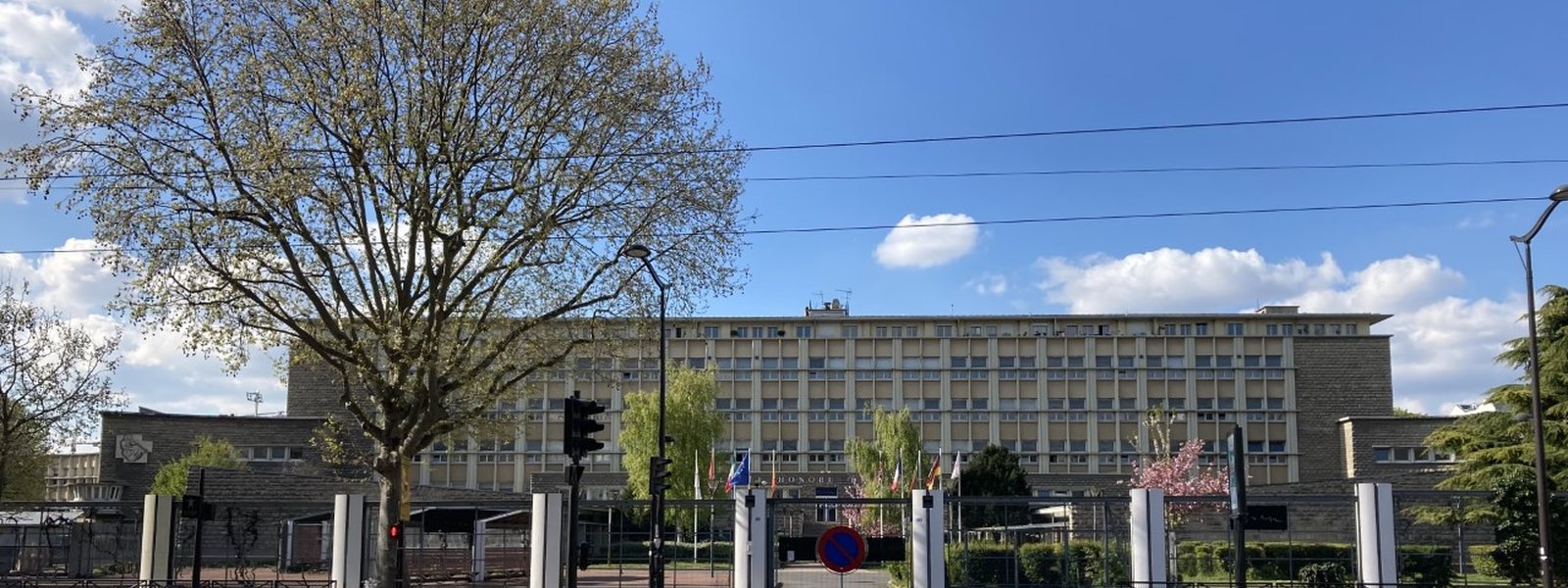
In Paris, the collèges with a British section are Honoré-de-Balzac, Voltaire, Camille-Sée, Maurice-Ravel, Raymond-Queneau, the Montaigne school and, in the private sector, EIB Monceau; at lycée level, Honoré-de-Balzac, Maurice-Ravel, Camille-Sée and, privately, the École Active Bilingue Étoile. West and south-west of Paris there are sections at the Lycée International in Saint-Germain-en-Laye, in Sèvres, Buc, Courbevoie, La Celle-Saint-Cloud, Palaiseau, Pontoise and Versailles; to the east, in Nogent-sur-Marne, Vincennes, Noisy-le-Grand and Fontainebleau. The full list, updated every year, is on data.education.gouv.fr.
How to get in
These sections bring together children of foreign families, children of dual nationality and French children who have been to school in an English-speaking country or have sufficient English. Admission is formally granted by the local education authority, on the proposal of the head of school, after checking that the student can follow the section's teaching. In practice this means a file and English tests, written and oral at collège and lycée level.
Test dates and formats vary between schools and education authorities: check with the school well before the start of the school year. Living in the school's catchment area is not enough to get in.
British section or European section? The European section adds language hours and a subject partly taught in English, for French-speaking students learning English. The international section requires near-native English, adds four hours of language and literature, and leads to the BFI. They differ in entry level and in the diploma they lead to.
What it costs
In a state school, French teaching is free, but some sections charge a contribution to fund their teaching: that is the case at the Lycée International in Saint-Germain-en-Laye. In a state-contracted private school, the section is added to tuition: at the EIB, it costs €1,755 more a year in collège for 2026-2027. Ask each school.
And afterwards?
The British BFI is a full French baccalauréat. It keeps the French prépas and degree programmes open, and British universities know it well and widely accept it as proof of English. The choice between the BFI and the IB depends mainly on the intended studies: see BFI or IB.
At Carmine, we help families find the right section and prepare the file and the tests; our School admissions page describes this support. For maths, which section students take in French, I teach them in private lessons.